When the Indian summer is at its fiercest, linen is one of the most comfortable fabrics you can wear.
It is made from the fibres of the flax plant, and it is known for being cool, breathable, strong and beautifully textured.
In recent years, linen ethnic wear has become a favourite for office sarees, summer kurtas, smart casual sets and even day weddings, because it looks elegant while feeling effortless in the heat.
Linen also has a relaxed, slightly crumpled character that many people love, and it softens beautifully with every wash.
This guide focuses on practical summer dressing: the types of linen used in sarees and kurtas, how to style linen for work and occasions, how to manage creases, how to choose good quality, what it costs and how to care for it.
For background on the fibre itself, see our article on linen: the fabric of breathability, elegance and natural style.
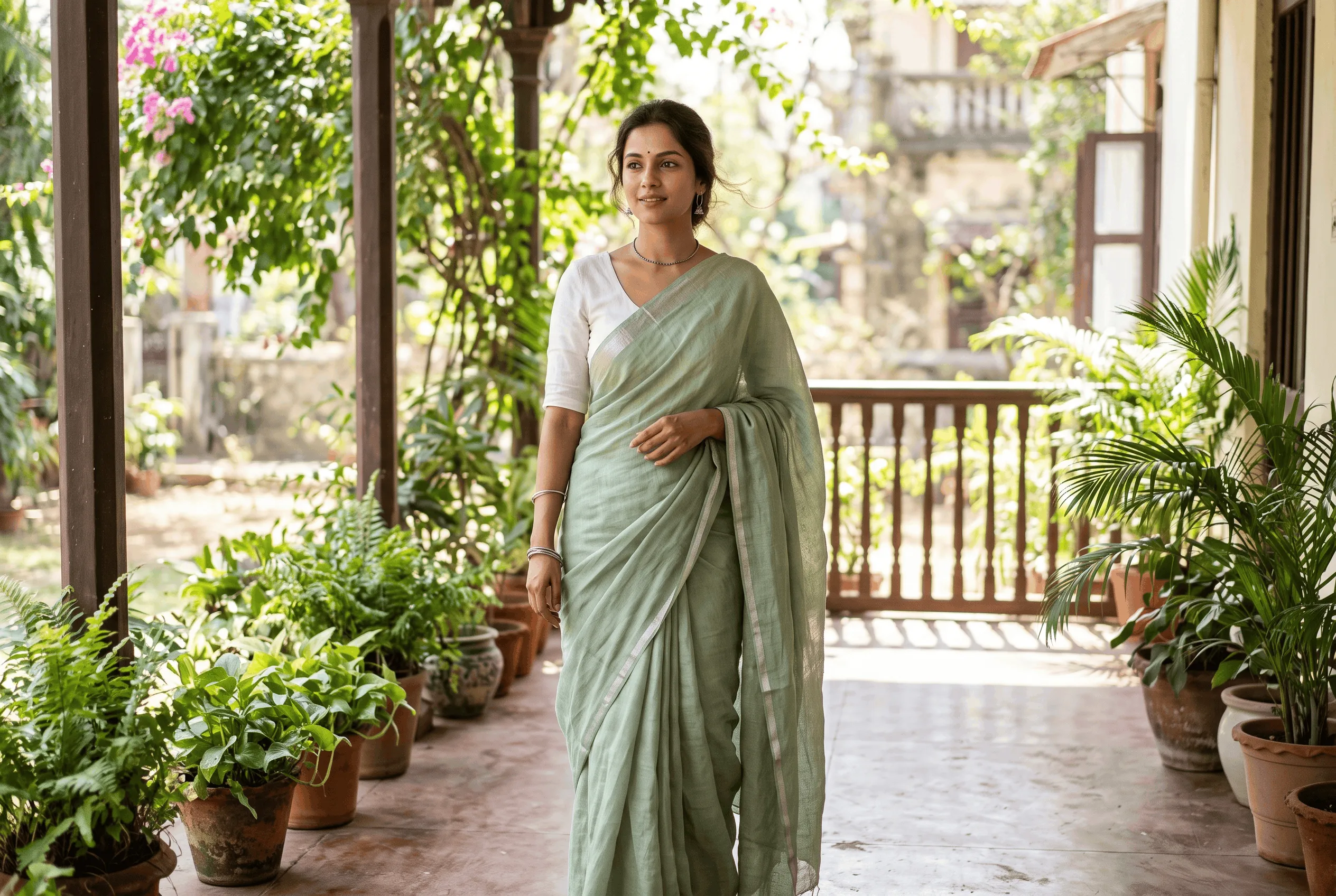
Why Linen Is Perfect for Indian Summers
It breathes exceptionally well. Linen's natural fibres allow air to circulate freely, which keeps you cool.
It absorbs and releases moisture quickly. Linen wicks sweat away from the skin and dries faster than many fabrics.
It feels cool to the touch. Many people notice that linen feels fresh against the skin on hot days.
It is strong and long-lasting. Linen is one of the strongest natural fibres and can last for years.
It gets softer with time. Each wash makes linen more comfortable.
It is a natural fibre. Pure linen is biodegradable and often considered a sustainable choice.
Types of Linen Used in Ethnic Wear
| Type | Feel | Best for |
|---|---|---|
| Pure linen | Crisp at first, softens with washing | Sarees, kurtas, summer office wear |
| Linen-cotton blend | Softer, fewer creases | Daily wear, suits, casual sarees |
| Linen-silk blend | Light sheen, elegant drape | Festive daywear, day weddings |
| Linen with zari border | Textured body, dressy edge | Office events, family functions |
| Printed or embroidered linen | Decorative | Casual and festive daywear |
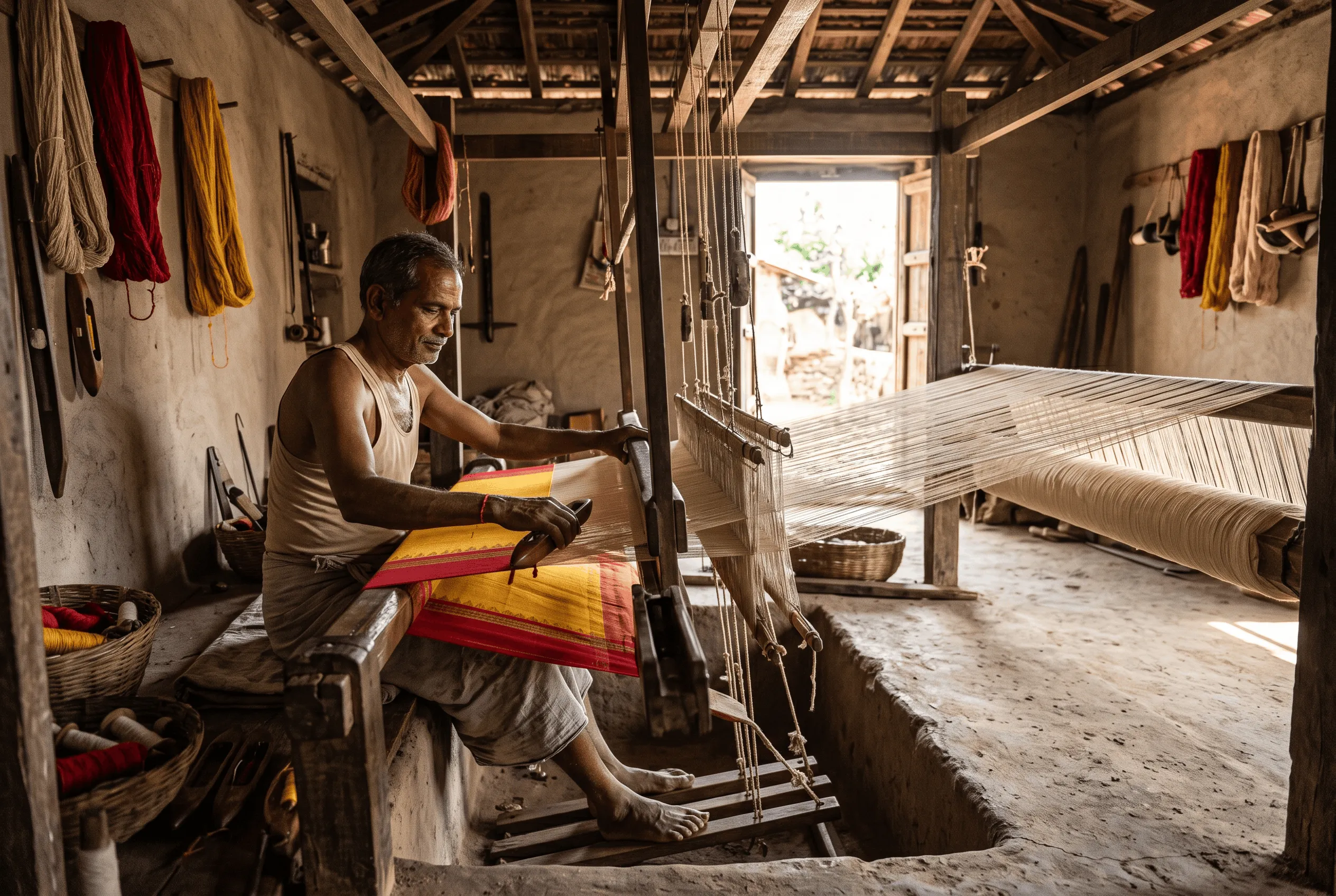
Bhagalpur in Bihar, known for its silk weaving, is also associated with linen sarees, and many handloom linen sarees are woven there.
Linen Sarees: What Makes Them Special
Linen sarees have a crisp, structured drape that looks polished and modern.
They are usually lighter than they look, which makes them comfortable for long summer days.
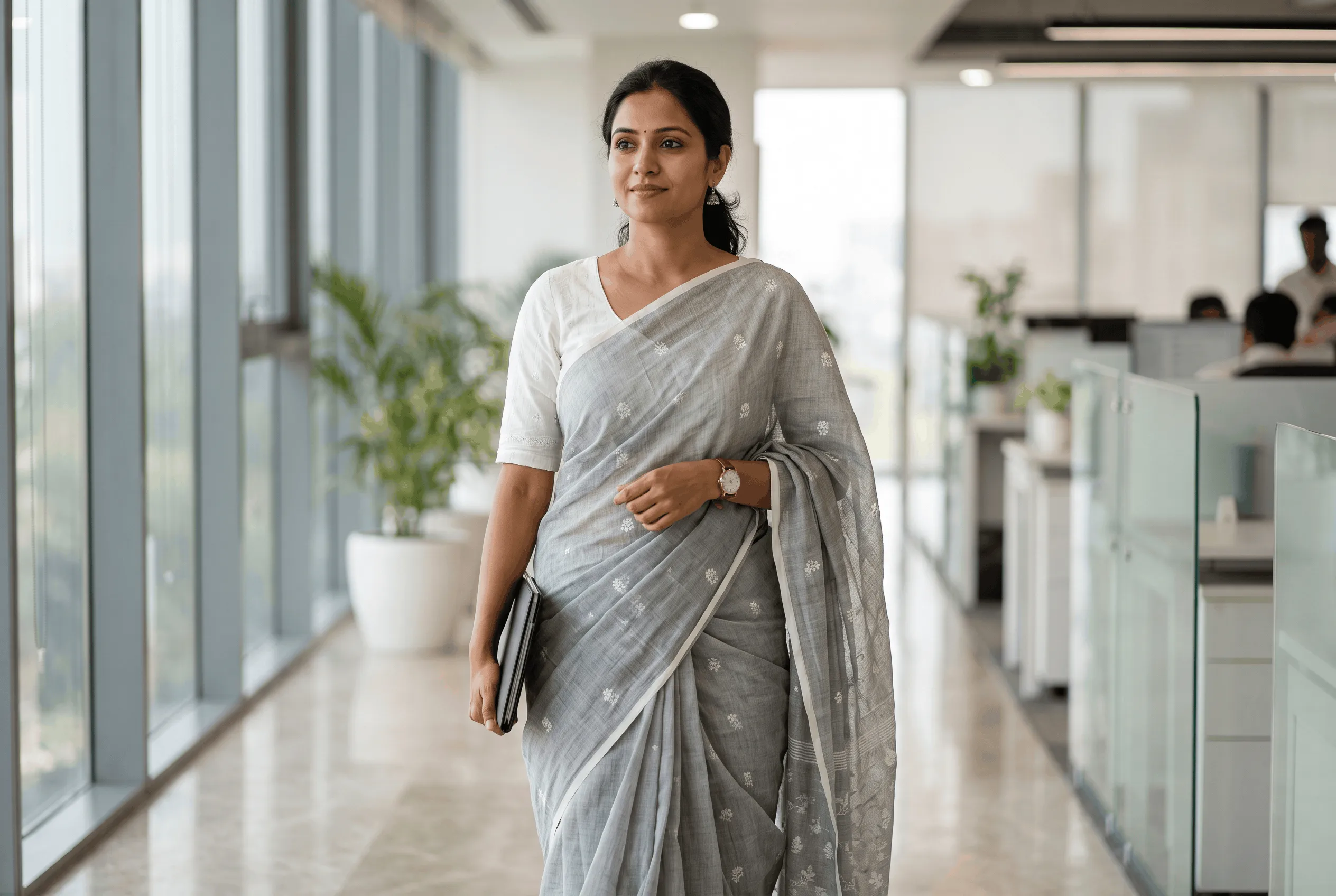
Solid linen sarees with zari or contrast borders are popular for office wear, while printed and embroidered linen sarees suit casual and festive daytime events.
Linen sarees photograph beautifully in natural light, because the textured weave catches the sun softly.

Linen Kurtas and Suits
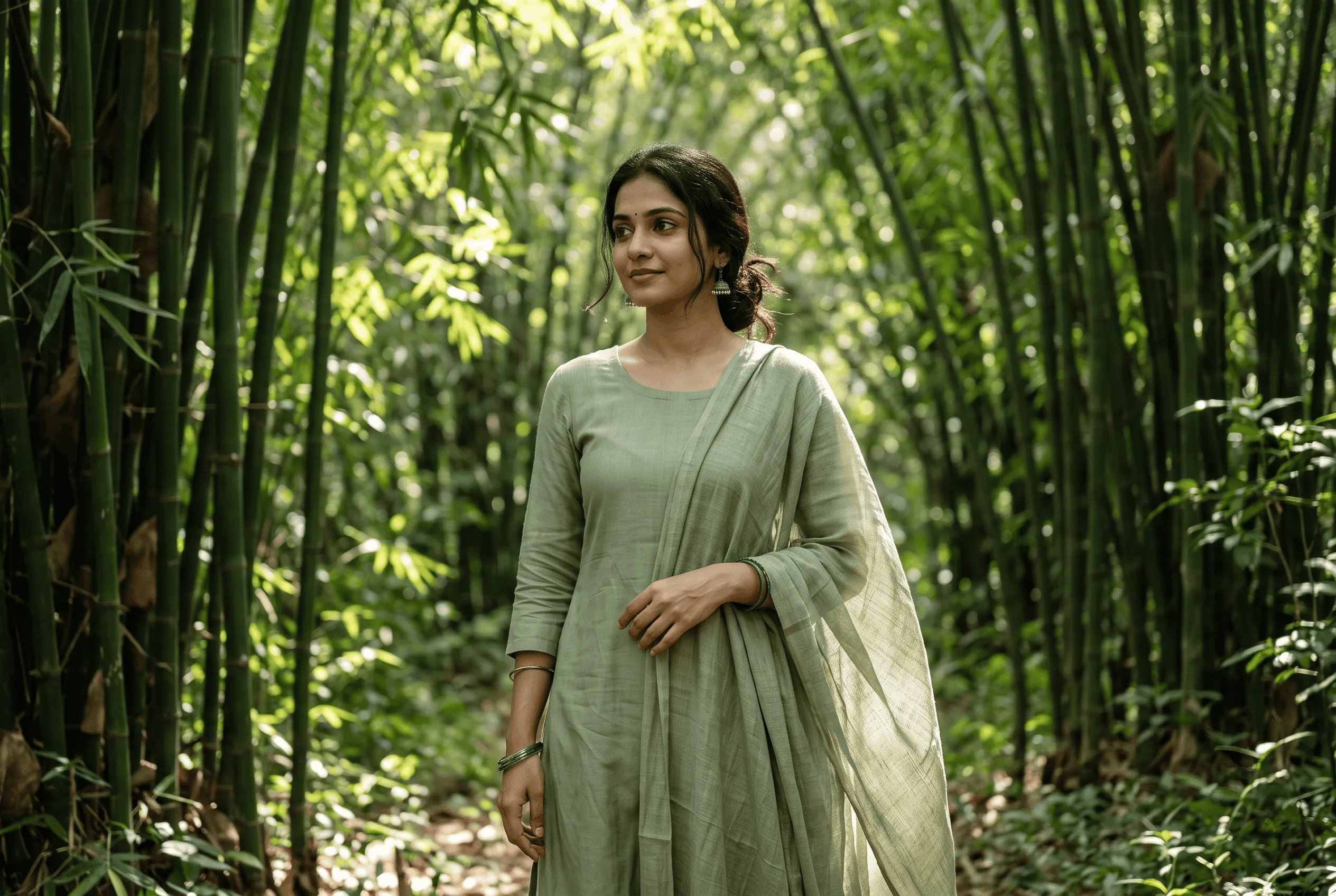
Linen kurtas are among the most comfortable summer garments you can own.
Straight linen kurtas with cotton or linen pants look smart for office wear.
Linen co-ord sets with a short kurta and matching trousers are popular for travel and smart casual events.
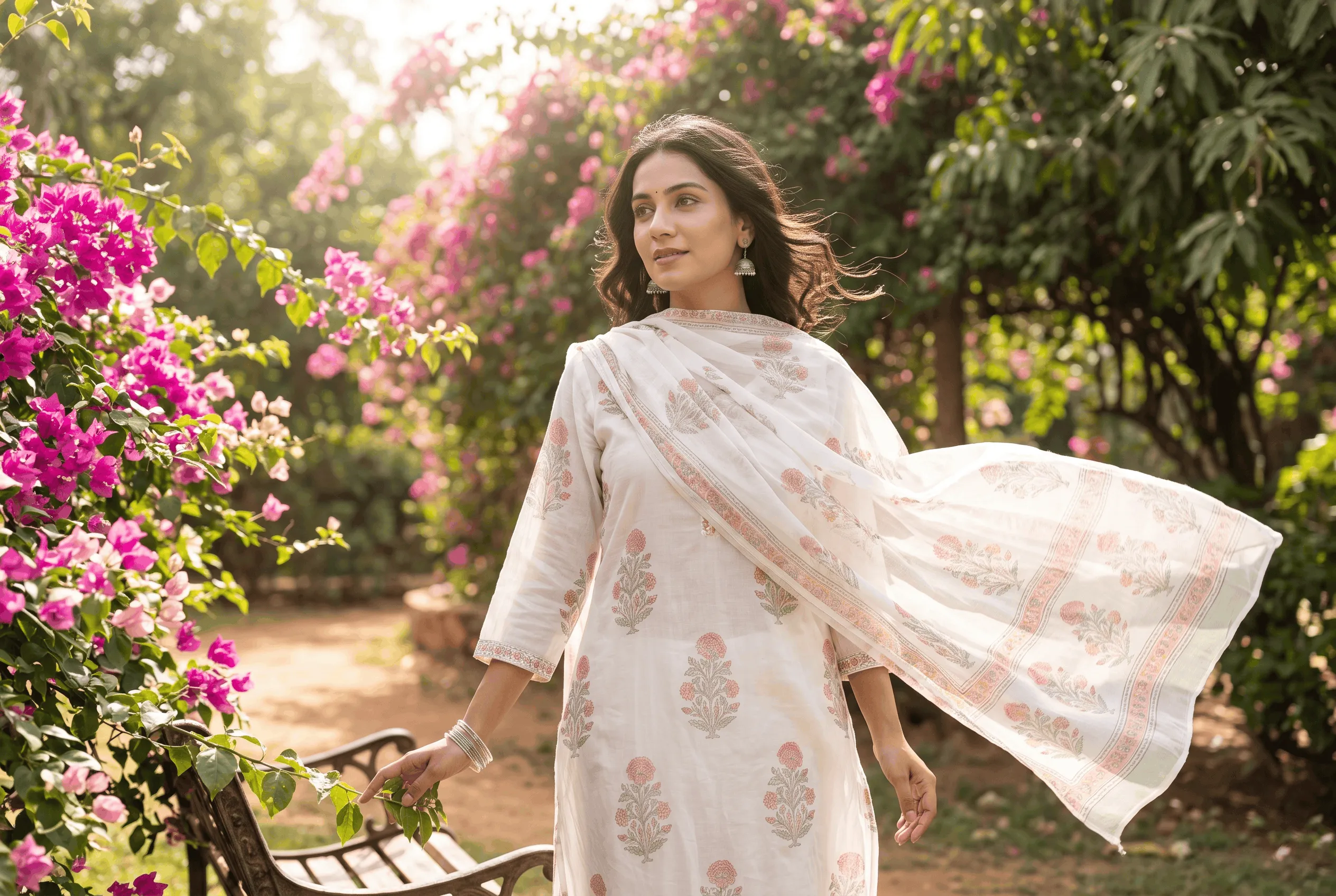
Embroidered linen kurtas with a light dupatta work well for daytime festivities.
Men's linen kurtas and Nehru jackets are also widely worn for summer weddings and functions.
How to Style Linen for Office Wear
Choose solid colours or subtle checks. Grey, navy, olive, beige, white, sage and soft pastels look professional.
Add a structured blouse. Collared, boat-neck and three-quarter-sleeve blouses look polished.
Keep jewellery minimal. Silver studs, a thin chain or a watch are enough.
Embrace light texture. A few soft creases are part of linen's character and look natural rather than untidy.
How to Style Linen for Day Events and Weddings
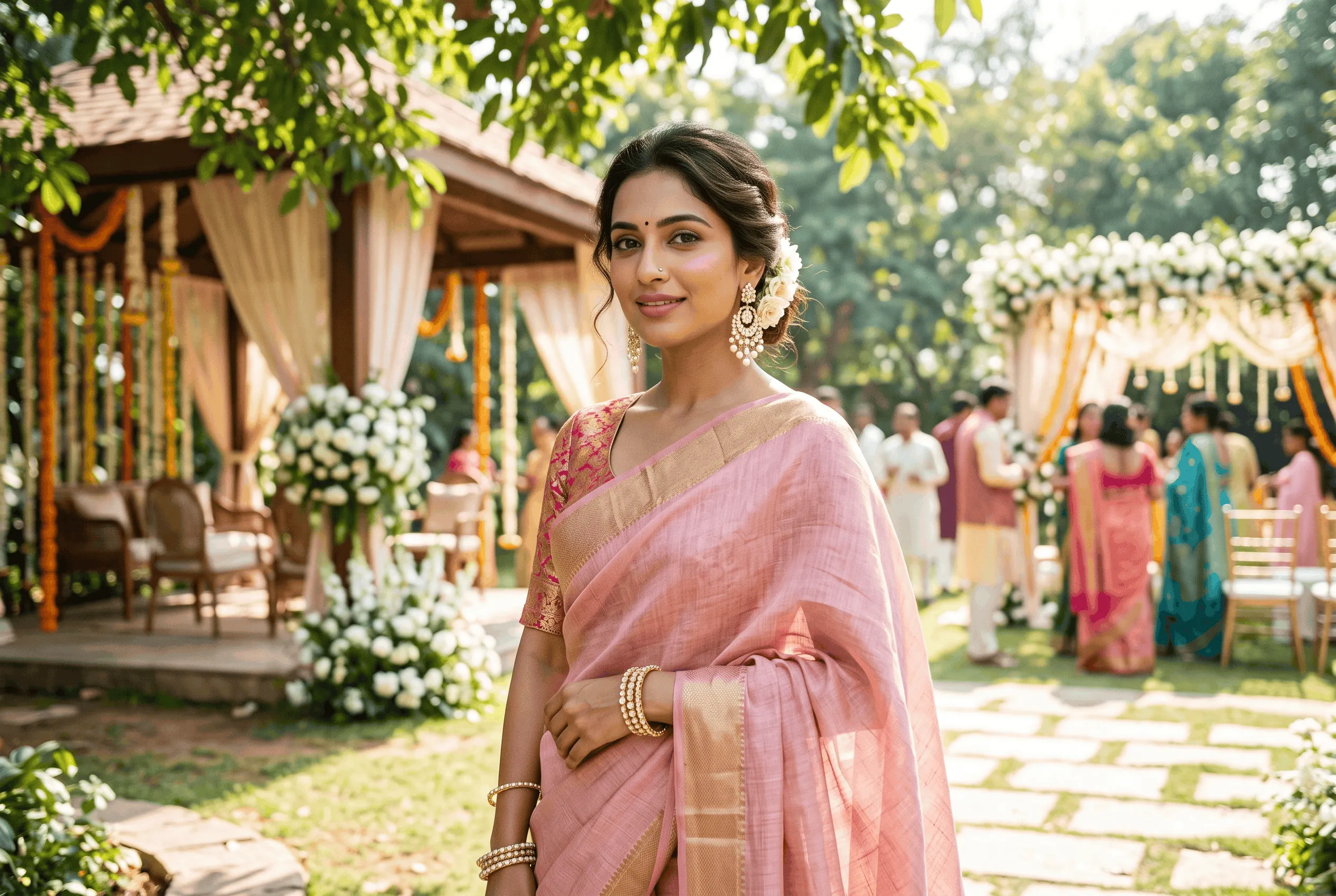
Linen-silk sarees in pastel shades with zari borders look elegant at day weddings and engagements.
Embroidered linen sarees with floral or Chikankari-style work suit brunches and summer celebrations.
Statement jewellery such as oxidised silver, polki or pearls adds a festive touch.
Contrast blouses in brocade or silk dress up a simple linen saree.
See our wedding guest saree ideas for function-wise suggestions.
Linen for Different Body Types
Linen's crisp structure makes it easy to tailor and flattering on many figures.
Petite women look best in solid linen sarees with narrow borders and kurtas that end just above the knee.
Curvy women can choose linen-silk or linen-cotton blends, which drape a little more softly, and straight-cut kurtas that skim the body.
Tall women carry wide borders, bold block prints and long, flowing linen kurtas especially well.
Accessories That Complement Linen
Linen's natural texture pairs beautifully with handmade and understated accessories.
Jewellery: oxidised silver, pearls, terracotta, wooden beads and minimal gold.
Bags: jute, cane, canvas and leather totes suit linen's relaxed elegance.
Footwear: kolhapuris, leather sandals, juttis and simple block heels.
Watches and sunglasses: classic, minimal designs complete a polished summer look.
Keep accessories light in summer so the outfit stays cool and uncluttered.
Colours That Suit Linen
Linen looks especially beautiful in natural, earthy and soft shades.
Neutrals: white, ivory, beige, oatmeal, grey and charcoal.
Earthy tones: olive, rust, terracotta and mustard.
Pastels: sage, mint, powder blue, lilac and blush.
Deeper shades: navy, bottle green and wine for a richer look.
Linen's texture softens bright colours slightly, which gives them a relaxed, sophisticated feel.
Managing Creases in Linen
Linen creases easily, and this is part of its natural charm.
If you prefer a crisper look, there are simple ways to reduce creasing.
Choose blends. Linen-cotton and linen-silk blends crease less than pure linen.
Iron while damp. Linen irons best when slightly damp, at a medium to high setting.
Steam before wearing. A quick steam refreshes the fabric.
Hang immediately after washing. Smoothing the fabric while it dries reduces wrinkles.
Accept a relaxed look. Many people prefer linen's softly lived-in appearance.
How to Drape a Linen Saree
Linen sarees hold pleats well because of their crisp texture.
Iron the saree before draping for neat pleats.
Pin the pleats at the top, as linen can spring open slightly.
An open pallu shows off the texture beautifully, while a pleated pallu looks neater for office wear.
Our Nivi drape tutorial explains each step.
How to Choose Good Quality Linen
Check the fibre content. Pure linen is labelled as 100% linen; blends will list other fibres.
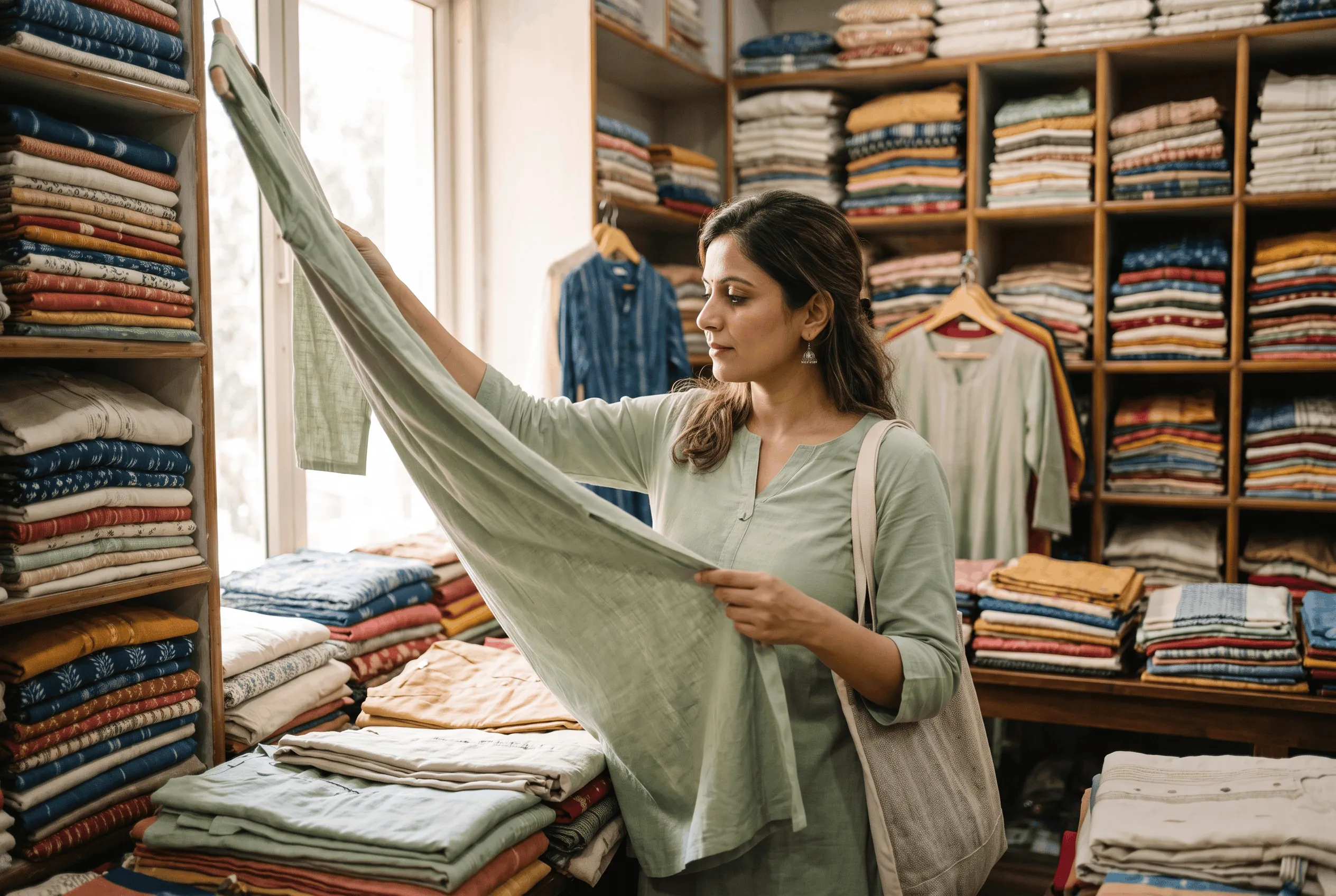
Feel the fabric. Good linen feels smooth and substantial, not rough or papery.
Look at the weave. Small slubs are natural, but the weave should be even overall.
Hold it to the light. Very thin, see-through linen may wear out faster.
Check the borders and finishing. Neat zari or woven borders indicate better craftsmanship.
Linen vs Cotton for Summer
| Feature | Linen | Cotton |
|---|---|---|
| Breathability | Excellent | Very good |
| Moisture handling | Dries quickly | Absorbs well, dries slower |
| Creasing | Creases easily | Creases moderately |
| Strength | Very strong | Strong |
| Texture | Slubby, crisp | Smooth to textured |
| Price | Medium to high | Low to medium |
For more on cotton, read our cotton sarees and suits guide.
Price Guide
These are indicative 2026 ranges. Prices vary by city, seller, fibre content and design.
| Item | Indicative price range |
|---|---|
| Linen-cotton blend saree | ₹1,500 – ₹4,000 |
| Pure linen saree | ₹2,500 – ₹10,000 |
| Linen saree with zari border | ₹3,000 – ₹12,000 |
| Linen-silk saree | ₹4,000 – ₹15,000+ |
| Linen kurta | ₹1,200 – ₹5,000 |
| Linen co-ord set | ₹2,000 – ₹7,000 |
How to Care for Linen
Wash in cold or lukewarm water with mild detergent.
Expect a little shrinkage in the first wash, especially with pure linen.
Avoid wringing. Gently press out water and hang to dry in the shade.
Iron while slightly damp for the smoothest finish.
Dry-clean linen-silk and sarees with delicate zari or embroidery.
Store folded loosely or hang on padded hangers to avoid deep creases.
Linen Through the Seasons
Summer: linen is at its best, keeping you cool and comfortable.
Monsoon: linen dries faster than many cottons, which helps in humid weather.
Festive season: linen-silk and zari-bordered linen sarees work for daytime events.
Winter: linen layers well with shawls and jackets for mild winter days.
Linen as a Sustainable Choice
Flax, the plant linen is made from, is generally considered less resource-intensive than many other fibres.
Linen is also durable, so a good linen saree or kurta can last for many years.
Choosing quality linen over fast fashion reduces waste and supports a slower, more thoughtful wardrobe.
Read our guide to sustainable handloom fashion for more.
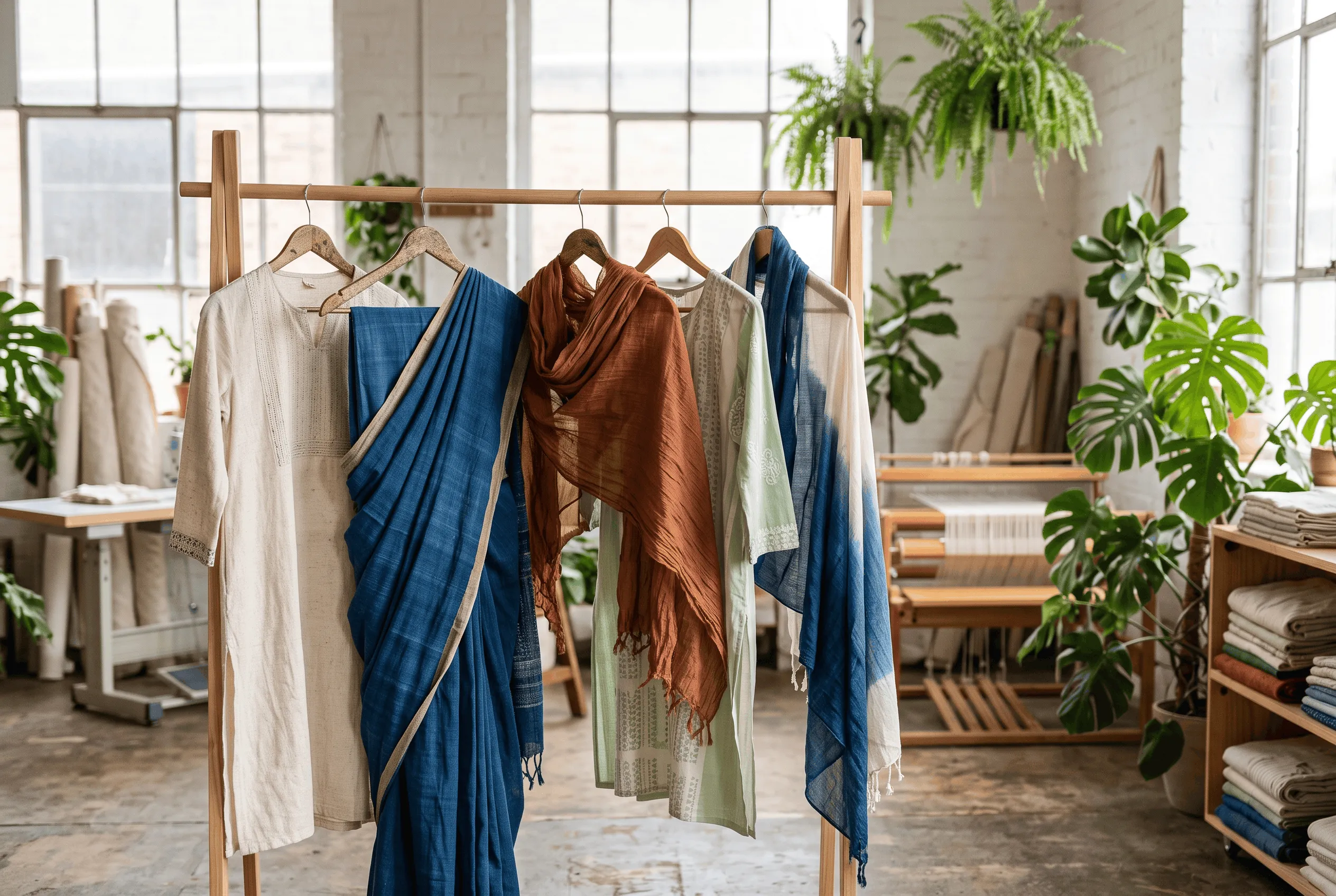
Building a Summer Linen Wardrobe
Two pure linen sarees in neutral and pastel shades for office.
One linen-silk saree for day weddings and festive lunches.
Three linen kurtas in versatile colours.
One linen co-ord set for travel and smart casual events.
These pieces will keep you cool and polished all summer.
Linen for Men and Family Coordination
Linen is equally popular for men's ethnic wear in summer.
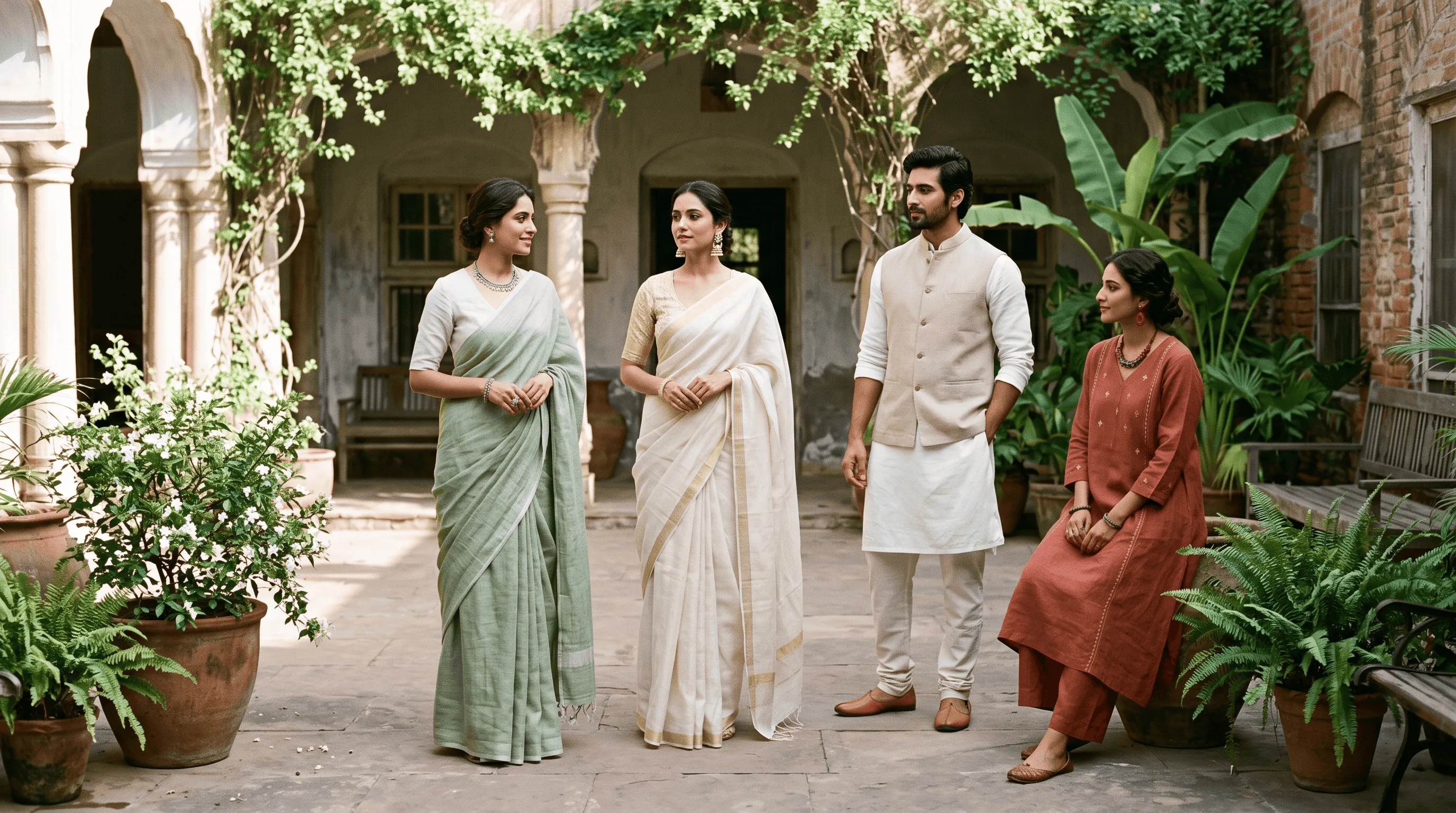
Linen kurtas with churidars or straight pants, and light linen Nehru jackets, look smart at day functions.
For family events, coordinating colours in linen, such as a sage saree for one person and a sage kurta for another, creates a cohesive and comfortable look in photographs.
Linen for Travel
Linen is a favourite travel fabric because it is light, breathable and dries quickly.
Linen kurtas and co-ord sets pack easily and look smart on arrival.
If you dislike creases, choose linen-cotton blends for long journeys, and roll rather than fold your clothes in the suitcase.
Common Mistakes With Linen
Washing linen in hot water and causing shrinkage is the most common mistake.
Another is expecting linen to stay perfectly smooth all day; creasing is natural.
Some people also buy very thin, cheap linen that wears out quickly.
Finally, avoid drying linen in harsh direct sun for long periods, which can fade colours.
Why Linen Belongs in Your Summer Wardrobe
Linen ethnic wear offers a rare mix of comfort, elegance and durability.
It keeps you cool on the hottest days, looks sophisticated at work and day events, and softens beautifully with time.
Choose the right type of linen for the occasion, embrace a little texture and care for it gently, and it will become one of your summer favourites.
Explore more summer fabrics in our Central India handlooms guide and the traditional wear trends 2026 guide.
Comments (0)
Leave a Thought
No comments yet. Be the first to share your thoughts!