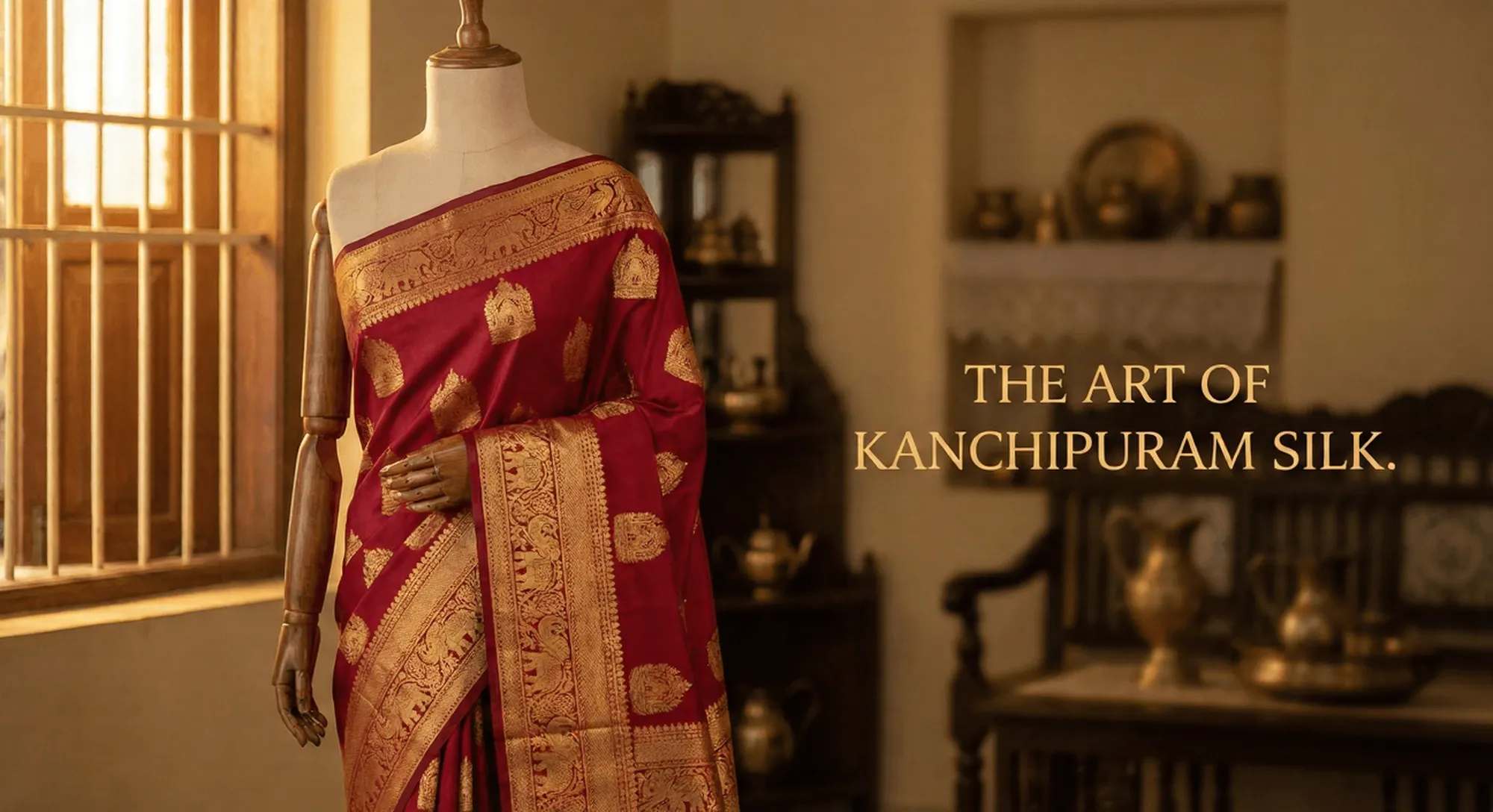
Introduction: Why Kanchipuram Silk Is More Than Just a Saree
Kanchipuram silk is not simply a fabric. It is a cultural textile legacy, deeply woven into South Indian traditions, rituals, and craftsmanship. Known for its weight, durability, and iconic zari borders, Kanchipuram silk stands apart from all other silk varieties in India.
For buyers, brides, collectors, and textile learners, understanding Kanchipuram silk helps avoid confusion with look-alike silks and ensures informed purchasing. This blog explains the fabric from its roots to real-world usage in a clear, non-academic way, suitable for a high-quality textile website.
Weaving Process: Step-by-Step Craftsmanship
Kanchipuram silk weaving is one of the most technically complex handloom processes in India.
Step 1: Silk Yarn Preparation
- Silk yarn is twisted and strengthened to handle heavy zari work.
Step 2: Dyeing
- Yarns are dyed separately using vibrant, colorfast dyes.
Step 3: Warp & Weft Setup
- Body, border, and pallu are woven separately
- Later interlocked using a korvai technique
Step 4: Korvai Technique
- This interlocking method ensures:
- Borders never detach
- Saree remains structurally strong for decades
Step 5: Motif Weaving
Traditional motifs include:
- Temple towers
- Checks and stripes
- Floral vines
- Mythological symbols
Origin & Geographical Identity (GI Importance)
Kanchipuram silk holds a Geographical Indication (GI) tag, meaning only sarees woven in and around Kanchipuram using traditional methods can legally be called “Kanchipuram Silk.”
Why GI Tag Matters
- Protects authentic weavers
- Prevents misuse of the name
- Ensures specific weaving standards
Authentic Kanchipuram silk uses:
- Pure mulberry silk
- Pure zari (silver coated with gold)
- Handloom weaving only
Raw Materials Used in Kanchipuram Silk
Silk Yarn
- High-quality mulberry silk sourced mainly from Karnataka and Tamil Nadu
- Thicker silk yarn compared to other sarees
- Gives weight, strength, and longevity
Zari
- Core silver wire
- Electroplated with gold
- Used for borders, pallu, and motifs
Unlike many other silk sarees, Kanchipuram silk never uses artificial zari in traditional weaving.
Weaving Process: Step-by-Step Craftsmanship
Kanchipuram silk weaving is one of the most technically complex handloom processes in India.
Step 1: Silk Yarn Preparation
- Silk yarn is twisted and strengthened to handle heavy zari work.
Step 2: Dyeing
- Yarns are dyed separately using vibrant, colorfast dyes.
Step 3: Warp & Weft Setup
- Body, border, and pallu are woven separately
- Later interlocked using a korvai technique
Step 4: Korvai Technique
- This interlocking method ensures:
- Borders never detach
- Saree remains structurally strong for decades
Step 5: Motif Weaving
Traditional motifs include:
- Temple towers
- Checks and stripes
- Floral vines
- Mythological symbols
Design Language & Motifs
Kanchipuram silk designs are deeply inspired by:
- South Indian temple architecture
- Nature (flowers, mango motifs)
- Mythology and folklore
Common Motifs
- Gopuram (temple towers)
- Mayil (peacock)
- Rudraksha
- Annapakshi (mythical bird)
Each motif is woven, not printed, giving depth and longevity.
How Kanchipuram Silk Differs from Other Silks
| Feature | Kanchipuram Silk | Banarasi Silk | Mysore Silk |
|---|---|---|---|
| Weight | Heavy | Medium | Light |
| Zari | Pure | Pure/Blended | Minimal |
| Durability | Very High | High | Medium |
| Texture | Firm | Soft | Smooth |
Uses of Kanchipuram Silk
Traditionally, Kanchipuram silk is worn for:
- Weddings
- Religious ceremonies
- Festivals
- Family heirloom preservation
Modern adaptations include:
- Bridal lehengas
- Dupattas
- Temple decorations
- Luxury home textiles
Comfort & Durability
Comfort
- Naturally breathable silk
- Best suited for moderate climates
- Weight provides graceful drape
Durability
- One of the longest-lasting silk fabrics
- Borders and pallu do not tear easily
- With proper care, lasts 30–50 years
Authenticity Checks for Buyers
Simple Identification Tips
- Heavy feel compared to fake silks
- Border and body interlock visible
- Zari does not peel easily
Advanced Tests
- Silk burn test (burnt hair smell)
- Zari thread cutting test (silver core)
Care & Maintenance Guide
Washing
- Dry clean only
- Avoid frequent cleaning
Storage
- Store folded with soft cotton cloth
- Avoid plastic covers
- Refold every 6 months to prevent creases
Ironing
- Low heat
- Always iron on reverse side
Protection
- Keep away from moisture and perfumes
- Use neem leaves or silica gel to prevent insects
Common Myths About Kanchipuram Silk
- Kanchipuram silk is uncomfortable – ❌
- All heavy silk sarees are Kanchipuram – ❌
- Machine-made versions are the same – ❌
True Kanchipuram silk is handcrafted and regulated, not mass-produced.
Comments (0)
Leave a Thought
No comments yet. Be the first to share your thoughts!