Introduction: Why Central Indian Ethnic Wear Fabrics Matter
If you are searching for Central Indian ethnic wear fabrics, you are likely trying to understand which fabrics originate from Central India, what makes them different from North or South Indian textiles, how tribal and handloom traditions shape them, and which fabrics are suitable for daily wear, festivals, or sustainable fashion.
Having worked with handloom clusters in Madhya Pradesh and Chhattisgarh, visited Maheshwar, Chanderi, Bastar, Kosa silk units, and tribal weaving communities, I can confidently say that Central Indian fabrics are among the most honest, sustainable, and culturally rooted textiles in India.
These fabrics are not about excess ornamentation. They are about balance, comfort, symbolism, and human touch—woven to suit the land, the climate, and the everyday lives of the people.
This guide will help you understand the history, varieties, quality markers, uses, and care of Central Indian ethnic wear fabrics so you can choose them consciously and respectfully.
History and Cultural Origins of Central Indian Fabrics
Central India—primarily Madhya Pradesh and Chhattisgarh—has always been a meeting ground of tribal cultures, forest economies, and royal patronage.
Key influences include:
- Tribal communities like Gond, Baiga, Muria, and Bhil, who favored durable, breathable textiles
- Forest-based livelihoods, influencing natural fibers and dyes
- Royal patronage from the Holkar dynasty (Maheshwar) and Bundela rulers (Chanderi)
- Hot climate, which demanded lightweight yet strong fabrics
Unlike Mughal-influenced North Indian textiles or temple-centric South Indian silks, Central Indian fabrics evolved as functional art—beautiful but deeply practical.
Major Types of Central Indian Ethnic Wear Fabrics
1. Chanderi Fabric (Madhya Pradesh)
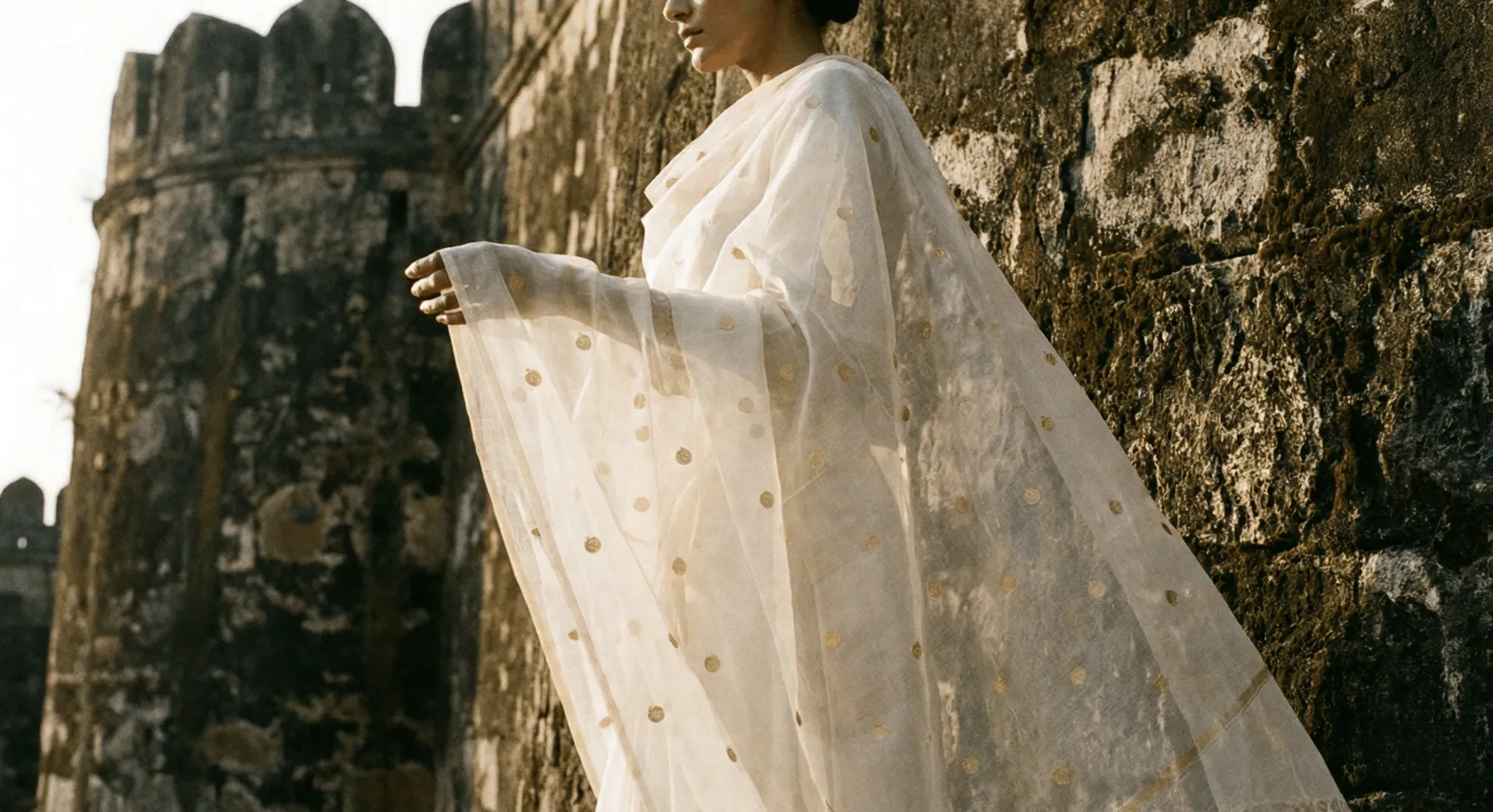
Chanderi is one of India’s most celebrated handloom fabrics, known for its sheer texture and lightweight elegance.
Key characteristics:
- Cotton, silk, or cotton-silk blend
- Transparent, airy weave
- Gold or silver zari butti motifs
- Soft sheen without heaviness
Chanderi was historically worn by royalty and is ideal for summer weddings and day functions.
2. Maheshwari Fabric (Maheshwar, Madhya Pradesh)
Maheshwari fabric was revived under Queen Ahilyabai Holkar and remains a symbol of refined simplicity.
Key characteristics:
- Cotton-silk blend
- Reversible borders
- Stripes and checks inspired by temple architecture
- Lightweight yet structured
Maheshwari is perfect for formal ethnic wear and office-friendly sarees.
3. Kosa Silk (Chhattisgarh)
Kosa silk is a unique variety of tussar silk, produced from wild silkworms.
Key characteristics:
- Soft yet textured feel
- Natural dull gold tone
- Extremely breathable
- Eco-friendly and durable
Kosa silk is widely used for sarees, dupattas, and tribal ceremonial wear.
4. Bastar Tribal Fabrics (Chhattisgarh)
Bastar textiles are deeply connected to tribal identity and ritual life.
Key characteristics:
- Handwoven cotton
- Bold geometric patterns
- Natural dyes
- Often paired with tribal embroidery
These fabrics are traditionally worn during festivals, dances, and rituals.
5. Tussar Silk (Central Indian Belt)
Central India is a major producer of wild tussar silk, distinct from mulberry silk.
Key characteristics:
- Matte finish
- Slight irregularities (a quality sign)
- Breathable and climate-friendly
- Often used for minimalist festive wear
6. Tribal Handloom Cottons (Madhya Pradesh & Chhattisgarh)
These fabrics are woven for daily use, focusing on comfort and longevity.
Key traits:
- Thick cotton yarns
- Minimal ornamentation
- Earthy colors like indigo, rust, and off-white
How to Identify Quality and Authenticity
1. Feel the Fabric
- Handloom fabrics feel breathable and warm
- Synthetic imitations feel slippery or overly smooth
2. Check Weave Irregularities
- Minor unevenness indicates hand weaving
- Perfect uniformity often means powerloom
3. Silk Texture Test
- Kosa and Tussar silk have a natural grain
- Pure silk warms quickly when rubbed
4. Labels & GI Tags
- Chanderi and Maheshwari carry GI tags
- Look for cooperative or weaver labels
Uses and Occasions
| Fabric | Best Uses |
|---|---|
| Chanderi | Summer weddings, day functions |
| Maheshwari | Office wear, formal events |
| Kosa Silk | Festive wear, cultural functions |
| Bastar Fabrics | Tribal festivals, ethnic styling |
| Tussar Silk | Minimalist celebrations |
| Tribal Cotton | Daily wear, sustainable fashion |
Care and Maintenance Tips (From Practical Experience)
- Dry clean silk fabrics whenever possible
- Hand-wash cotton fabrics in cold water
- Avoid soaking tussar and kosa silk
- Store silk wrapped in muslin or cotton cloth
- Refold sarees every few months to prevent crease damage
Common Myths and Buying Mistakes
Myth 1: Central Indian fabrics are plain or boring
Reality: Their beauty lies in subtlety, texture, and weave intelligence.
Myth 2: Lightweight fabrics are low quality
Reality: Chanderi and Maheshwari are light yet premium.
Common Mistake:
Assuming all shiny silk is pure silk—many are synthetic blends.
Comments (0)
Leave a Thought
No comments yet. Be the first to share your thoughts!