An Indian wedding is rarely one event.
There may be a haldi in the morning, a mehendi in the afternoon, a sangeet at night, the wedding ceremony and then a reception, sometimes all within two or three days.
Choosing the right wedding guest saree for each function can feel like planning a small wardrobe.
The goal is simple: look festive, respect the occasion and the family's customs, stay comfortable and never compete with the bride.
This guide explains what to wear to every function, which colours to choose and avoid, regional customs, how to re-wear one saree in different ways, blouse and jewellery ideas and a practical budget guide.
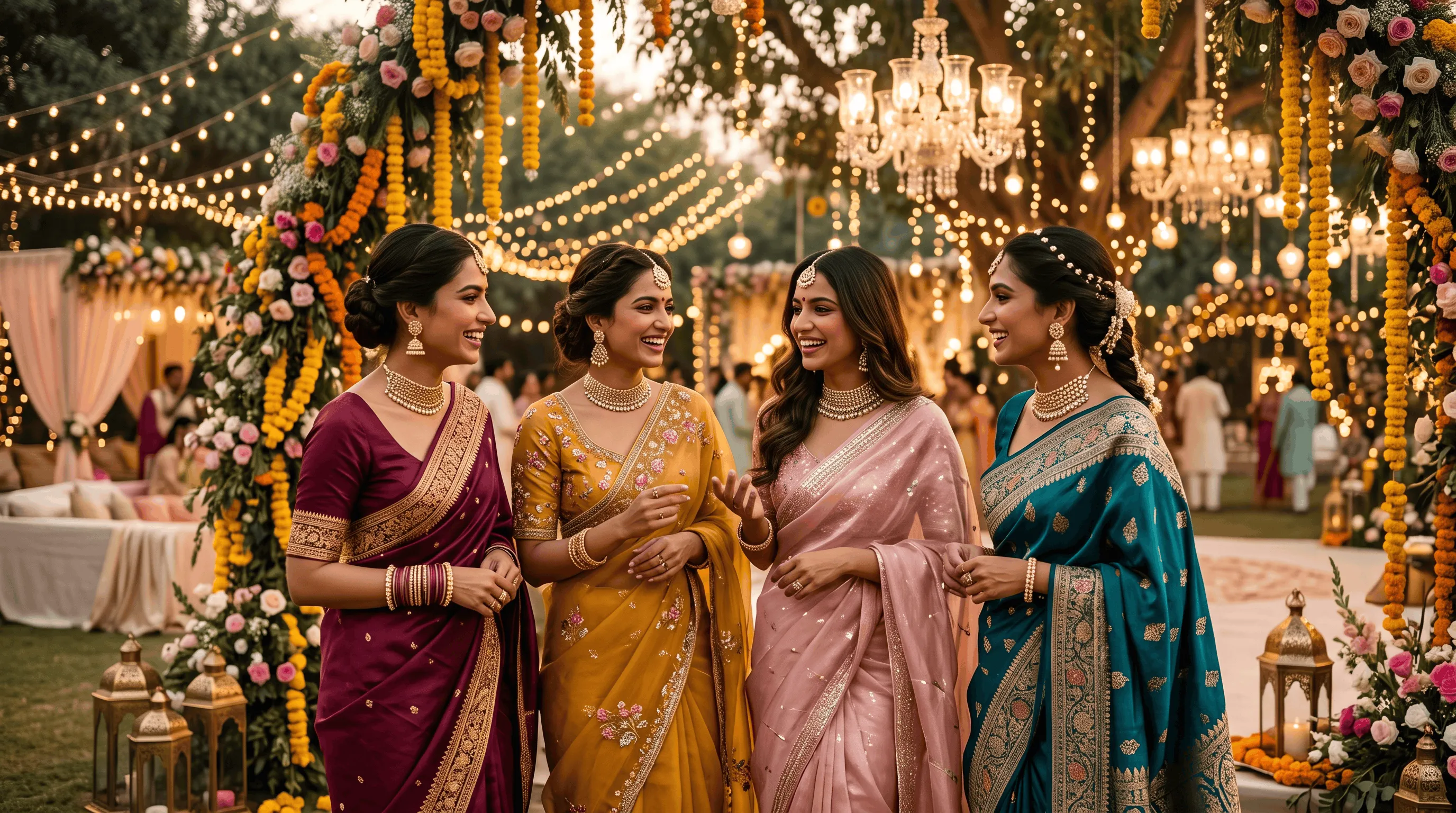
Wedding Guest Saree Rules Every Guest Should Know
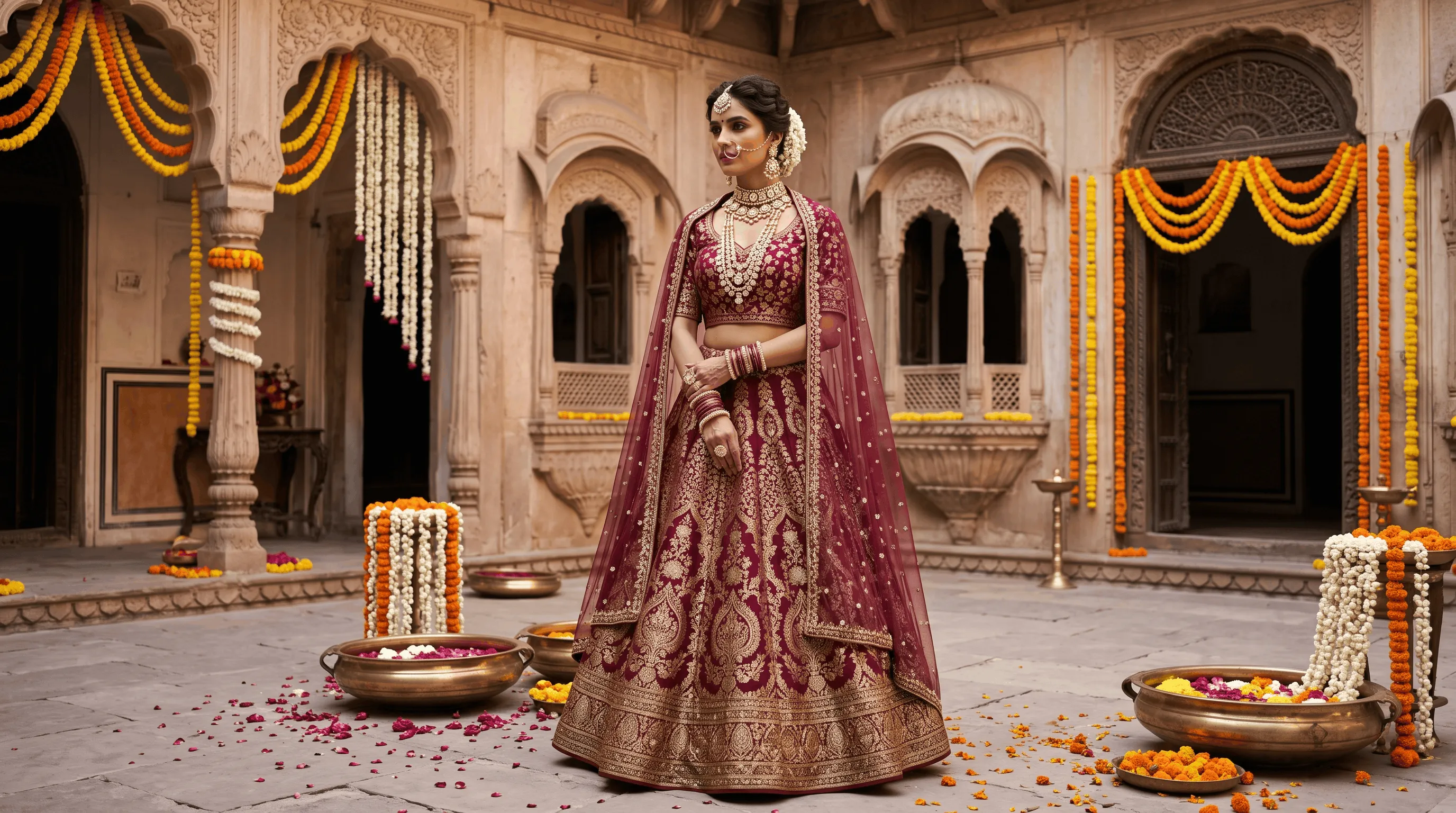
Do not upstage the bride. Avoid a heavy red bridal-style saree with full bridal jewellery, especially at the main ceremony.
Check the colour customs. In many communities, plain white and black are avoided at weddings, while in others white or ivory with gold is perfectly normal.
Match the time of day. Lighter fabrics and softer colours suit day events, while richer silks and deeper shades suit evenings.
Think about comfort. You may stand, eat, dance and sit on the floor for hours.
Follow any theme. Many families now set colour themes for each function, so plan around them early.
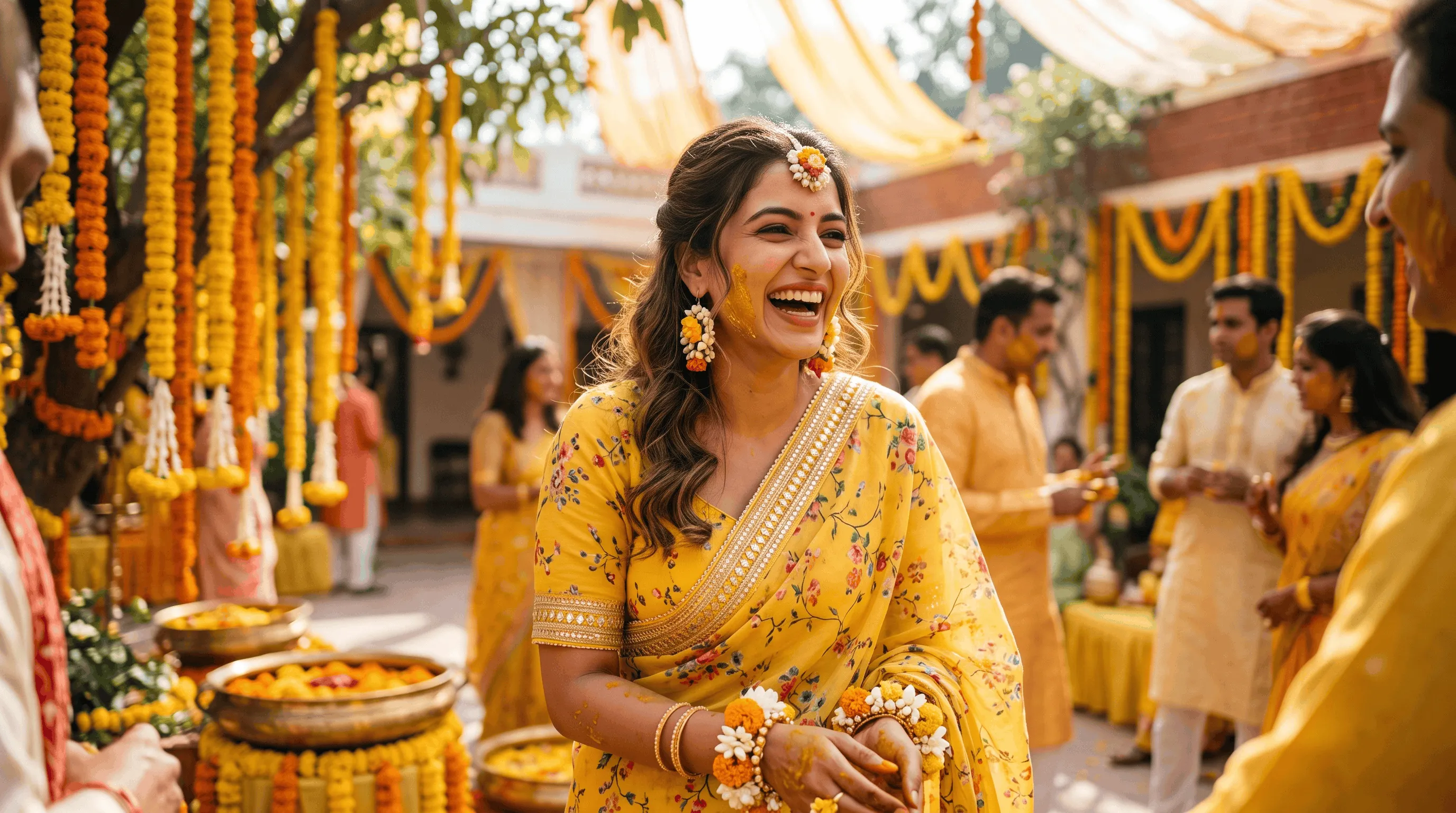
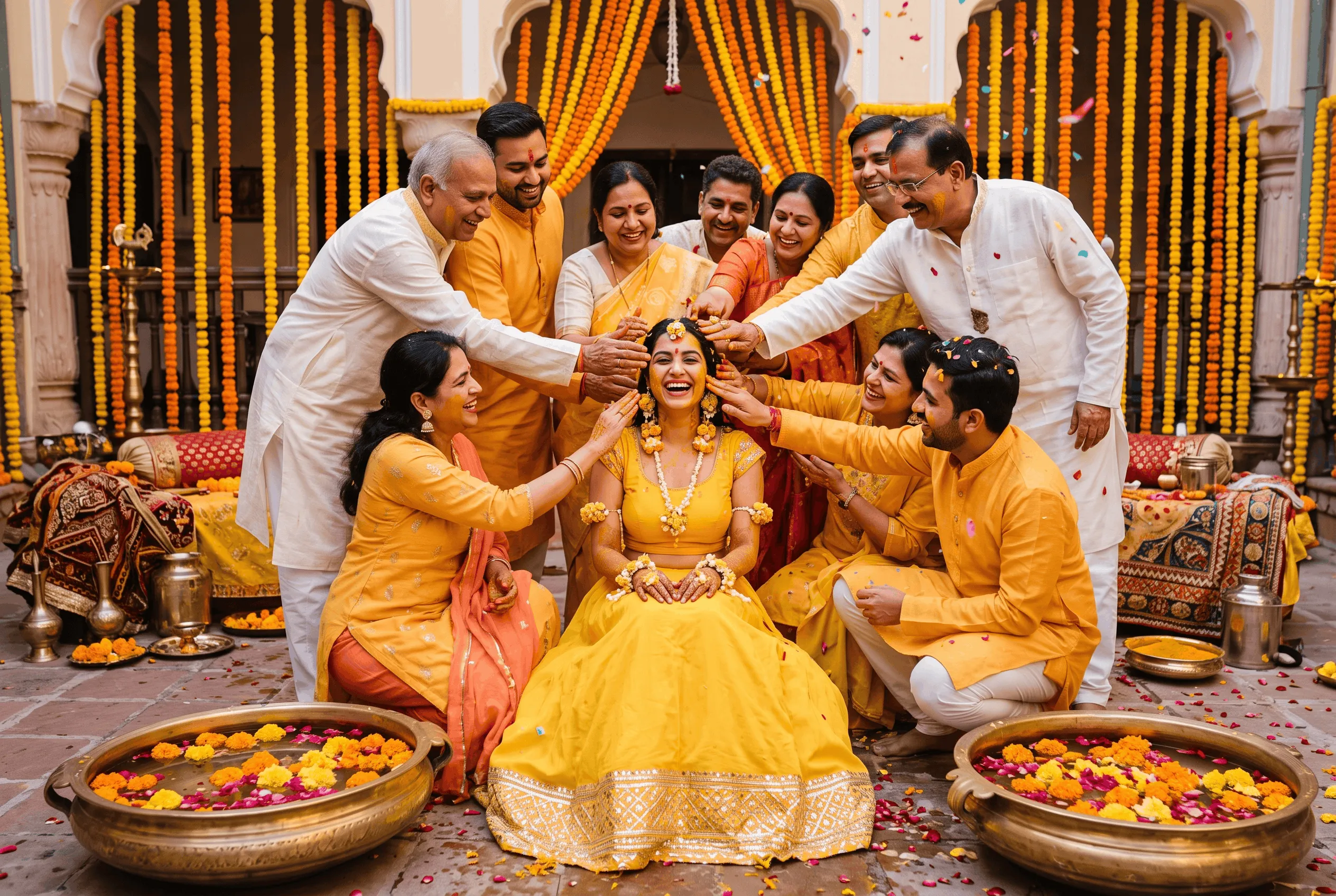
1. Haldi: Yellow Cotton and Floral Prints
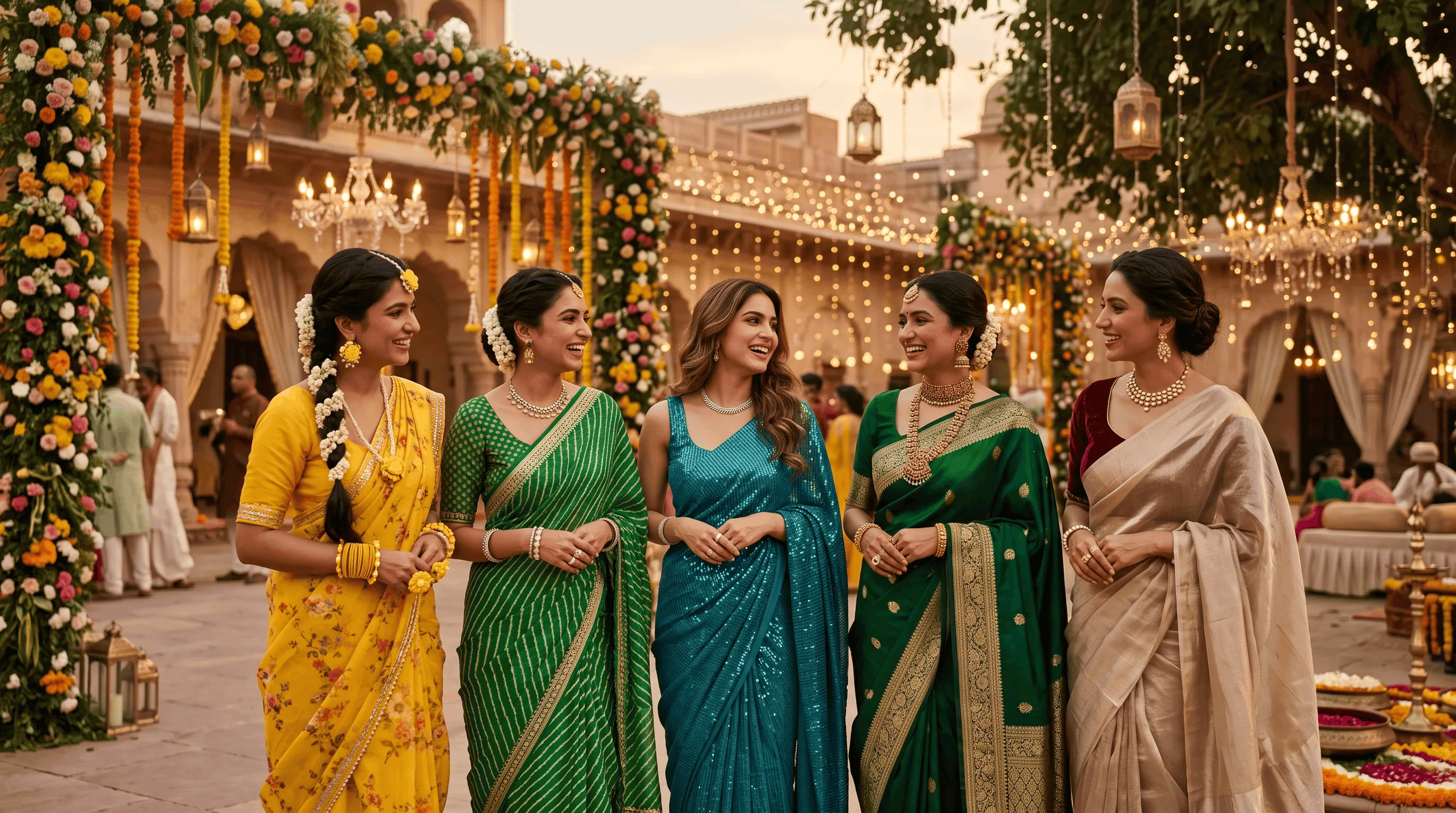
Yellow is the classic haldi colour, along with white, mint, lime and light orange.
Choose cotton, mulmul, Chanderi or light georgette, because turmeric stains easily.
Floral prints, gota-patti borders and simple mirror work suit the cheerful mood.
Do not wear your best silk to a haldi.
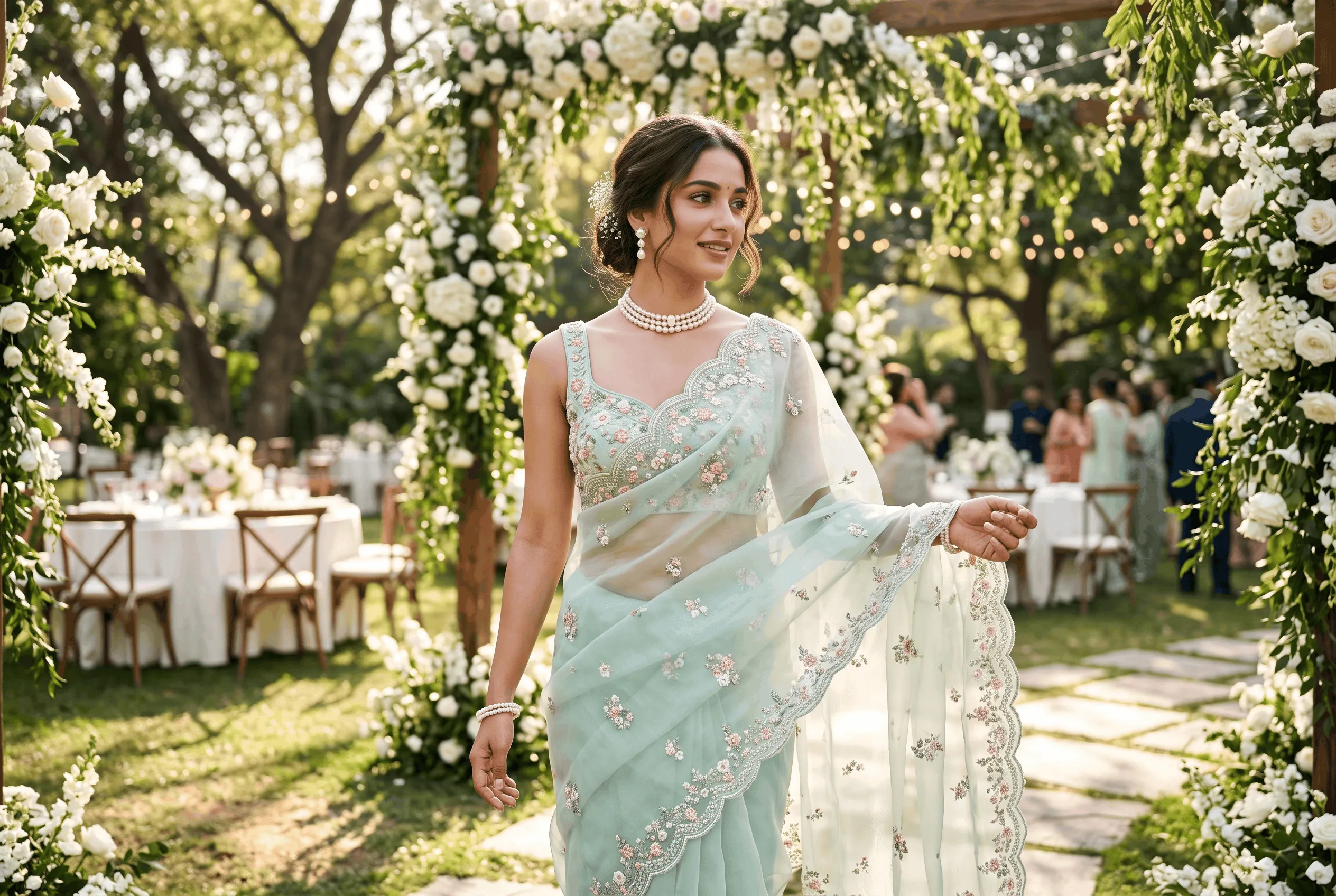
2. Mehendi: Leheriya, Bandhani and Light Organza
Green is traditional for the mehendi, but pink, coral, mustard and multicolour prints also work well.
Leheriya, Bandhani and light organza with floral embroidery are popular choices.
Keep sleeves short or three-quarter so your own mehendi does not smudge while it dries.
For more ideas, see our haldi and mehendi outfit ideas.
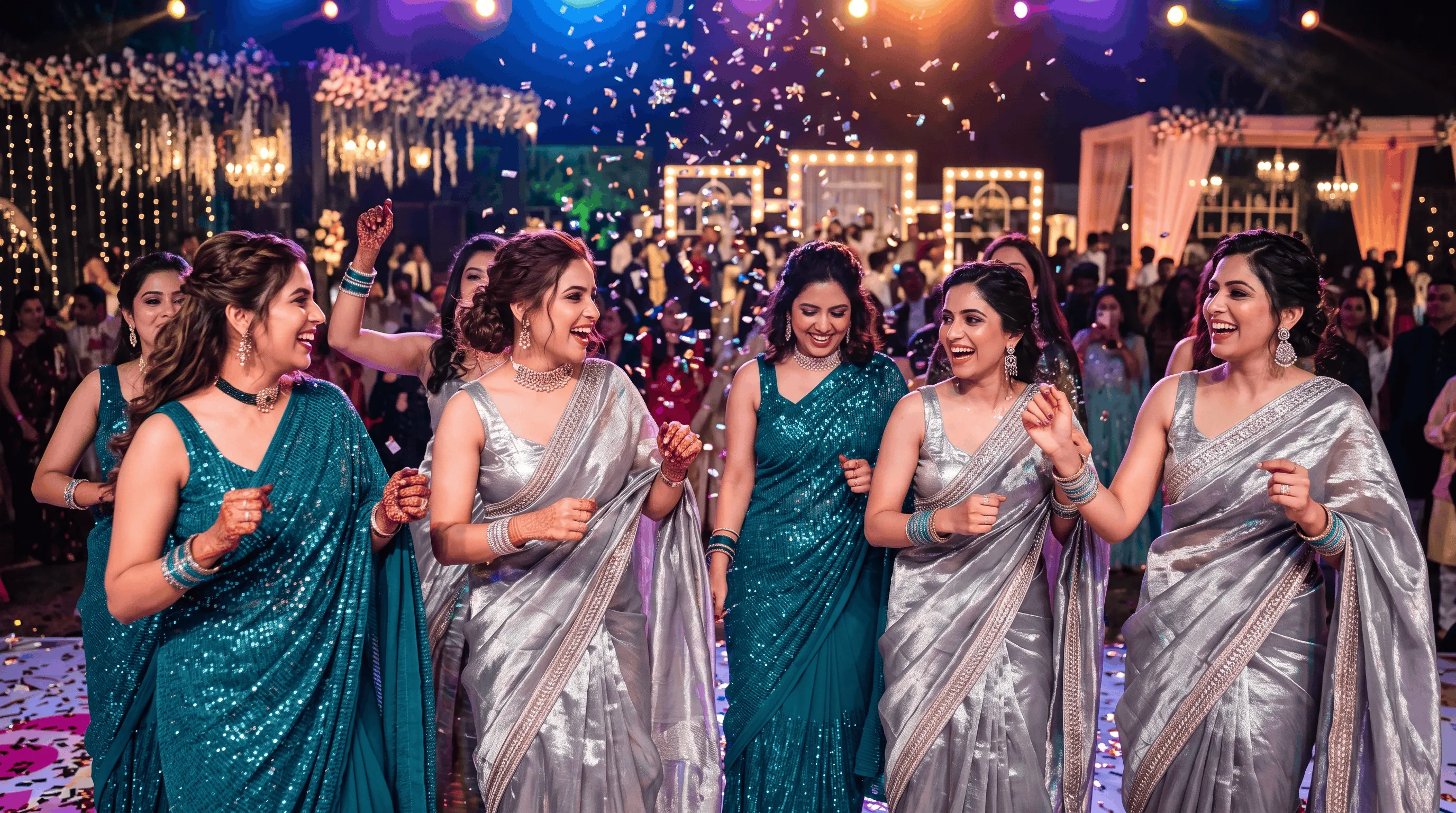
3. Sangeet: Sequinned Georgette and Pre-Draped Sarees
The sangeet is the night to dance, so choose a light, flowy saree that moves well.
Sequinned georgette, shimmer chiffon, tissue and pre-draped sarees are all popular.
Jewel tones and metallics look great under stage lights.
A pre-draped saree is ideal if you plan to dance all night.
4. Day Wedding Ceremony: Chanderi, Soft Silk and Tussar
For a daytime ceremony, choose lighter silks such as Chanderi, soft silk or tussar.
Mustard, peach, teal, soft pink and mint look fresh in daylight.
These fabrics stay comfortable in the heat, especially at outdoor venues.
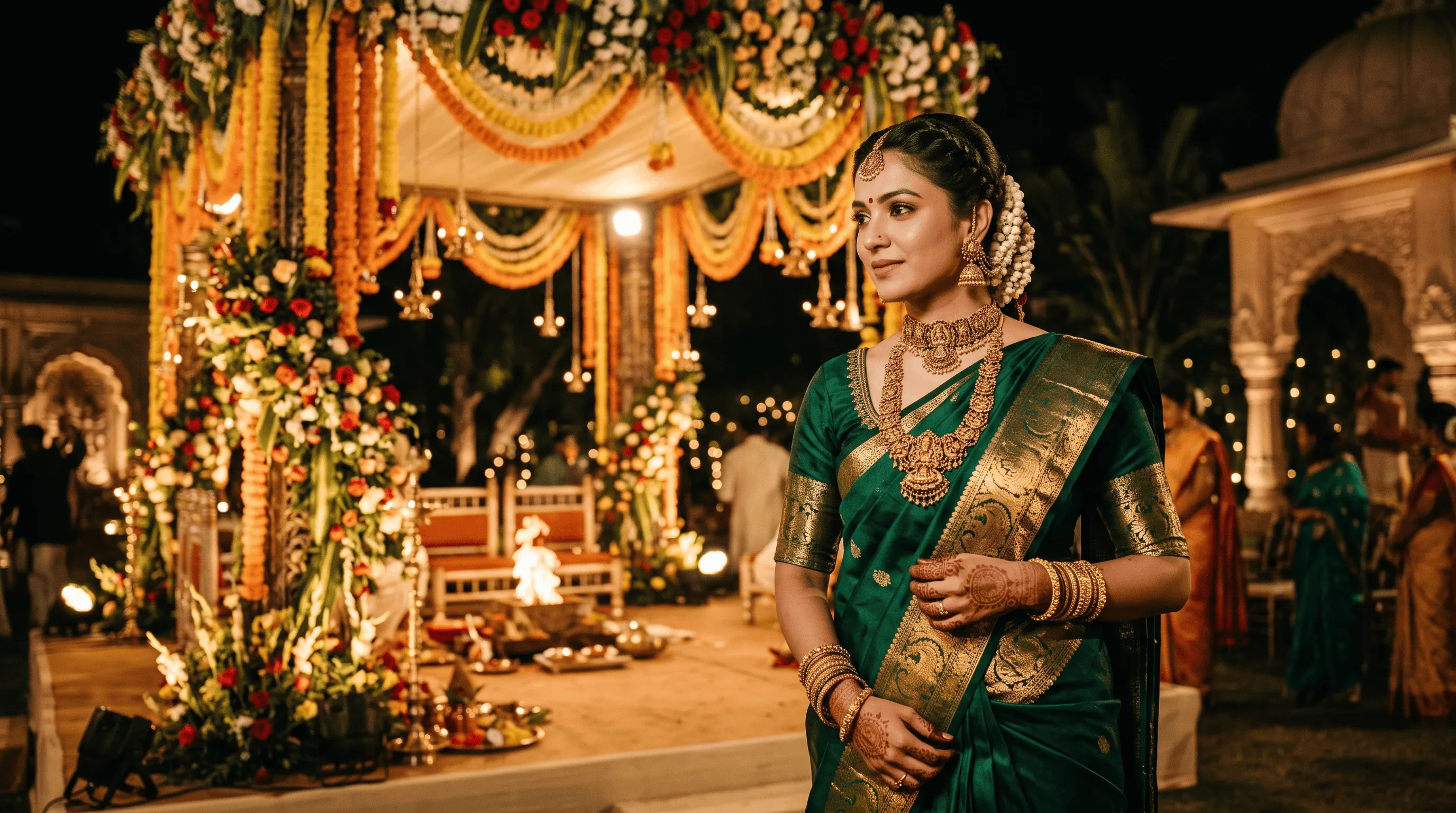
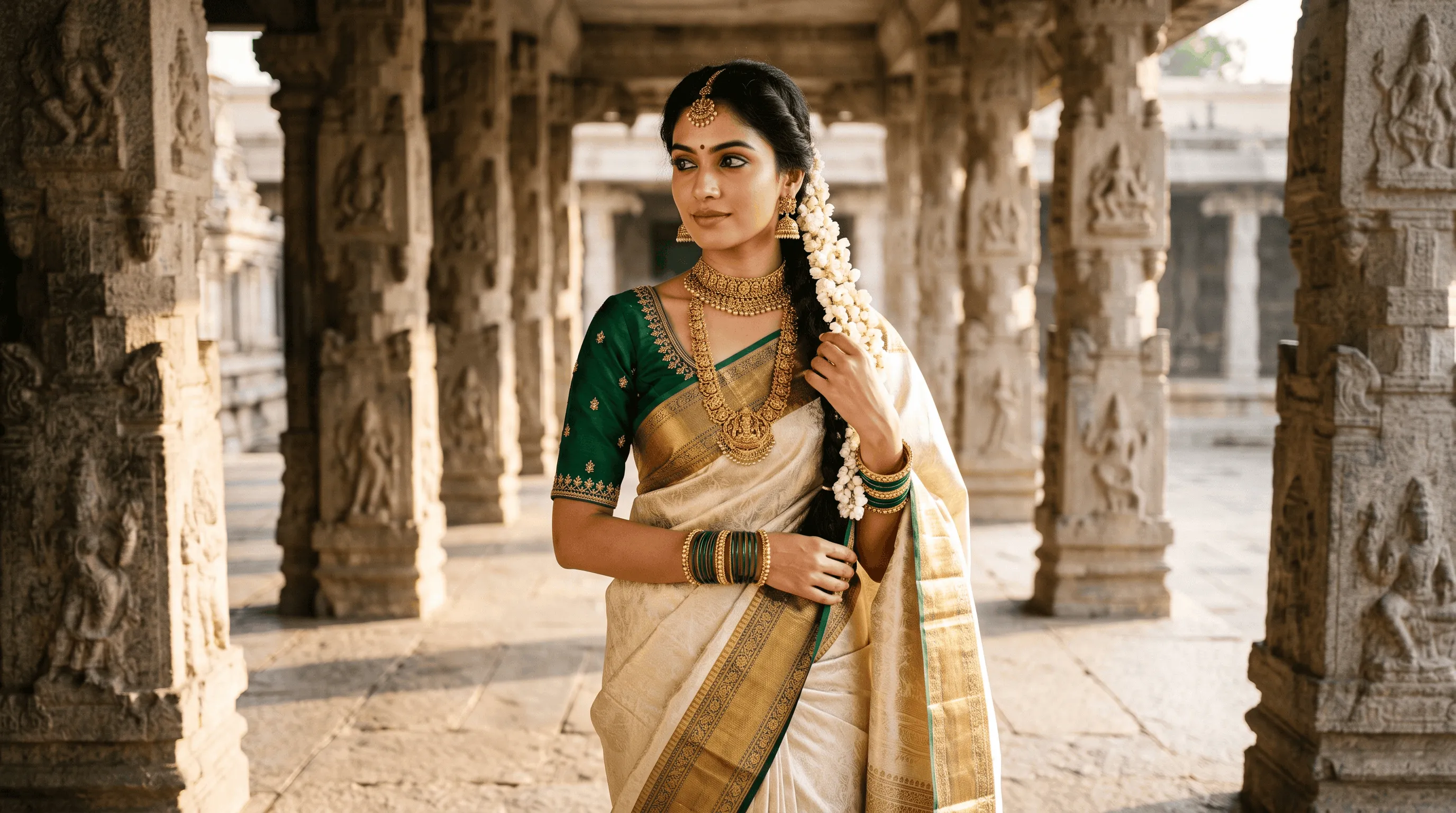
5. Evening Wedding Ceremony: Kanjivaram, Banarasi and Paithani
The main evening ceremony is where a rich silk saree shines.
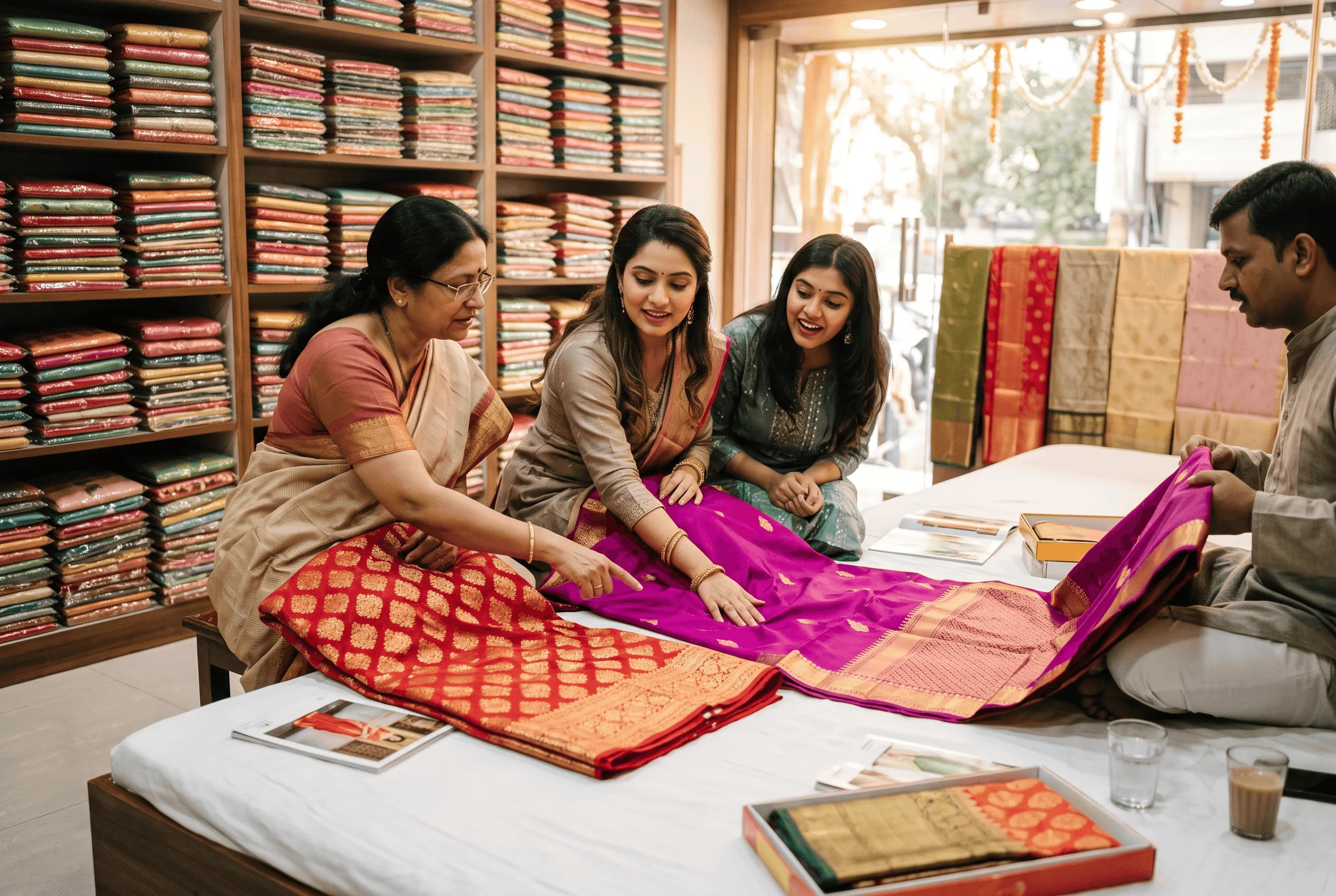
A Kanjivaram, Banarasi, Paithani or Patola in emerald, royal blue, magenta, mustard, purple or peacock green is an elegant and safe choice.
Avoid bridal red unless the family says it is welcome.
Weighing up Banarasi and Kanjivaram? Our compare page shows the differences side by side.
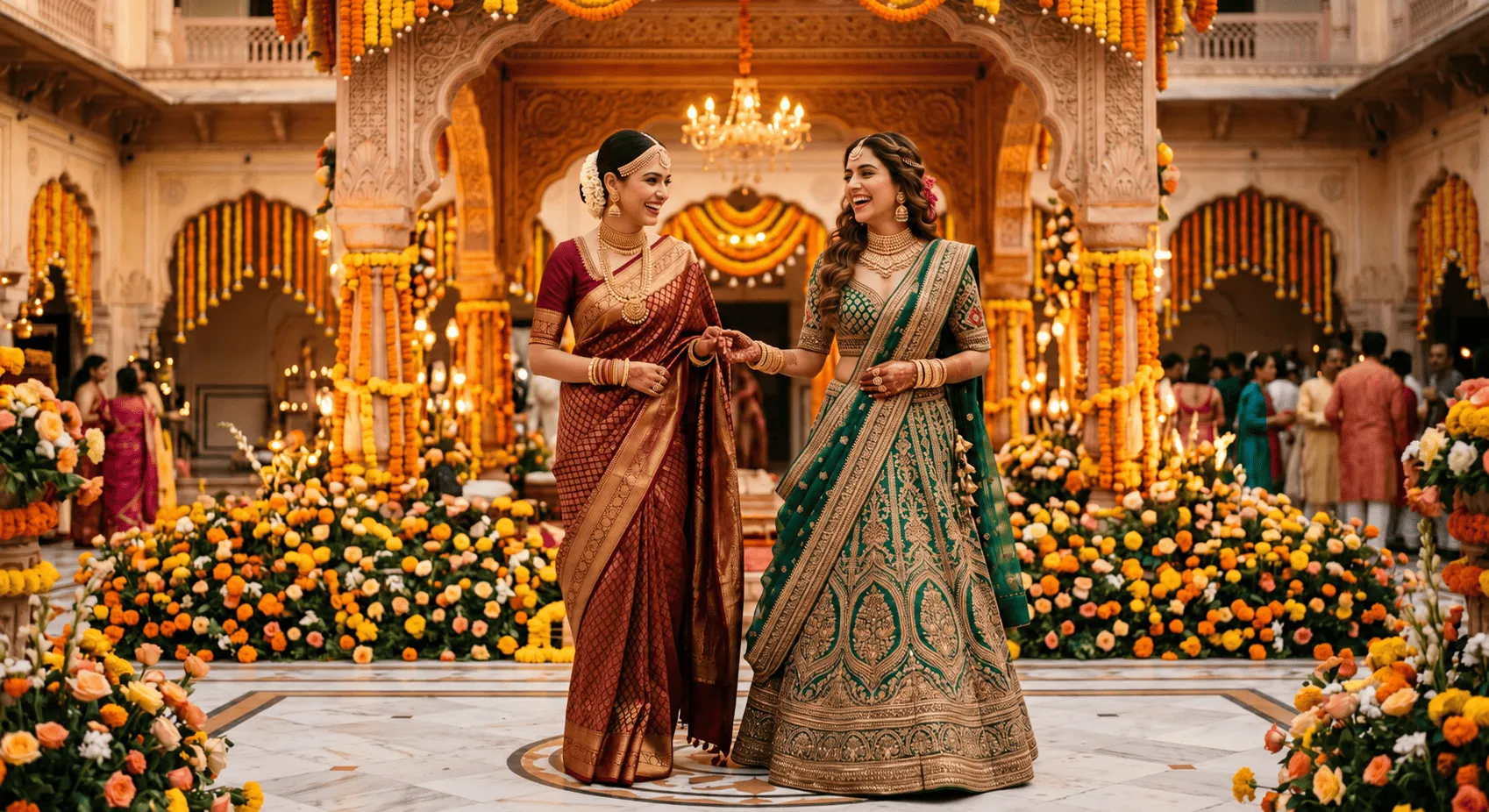
6. Reception: Organza, Tissue and Satin Silk
Receptions are usually more modern and glamorous.
Embroidered organza, tissue silk, satin silk and sequinned georgette all work beautifully.
Champagne, wine, midnight blue, silver and deep teal look elegant in evening light.
7. Engagement and Roka: Pastels and Light Silk
Engagements and roka ceremonies are often smaller, family-focused events.
Pastel organza, light silk and Chanderi in blush, lavender, mint or peach suit the softer mood.
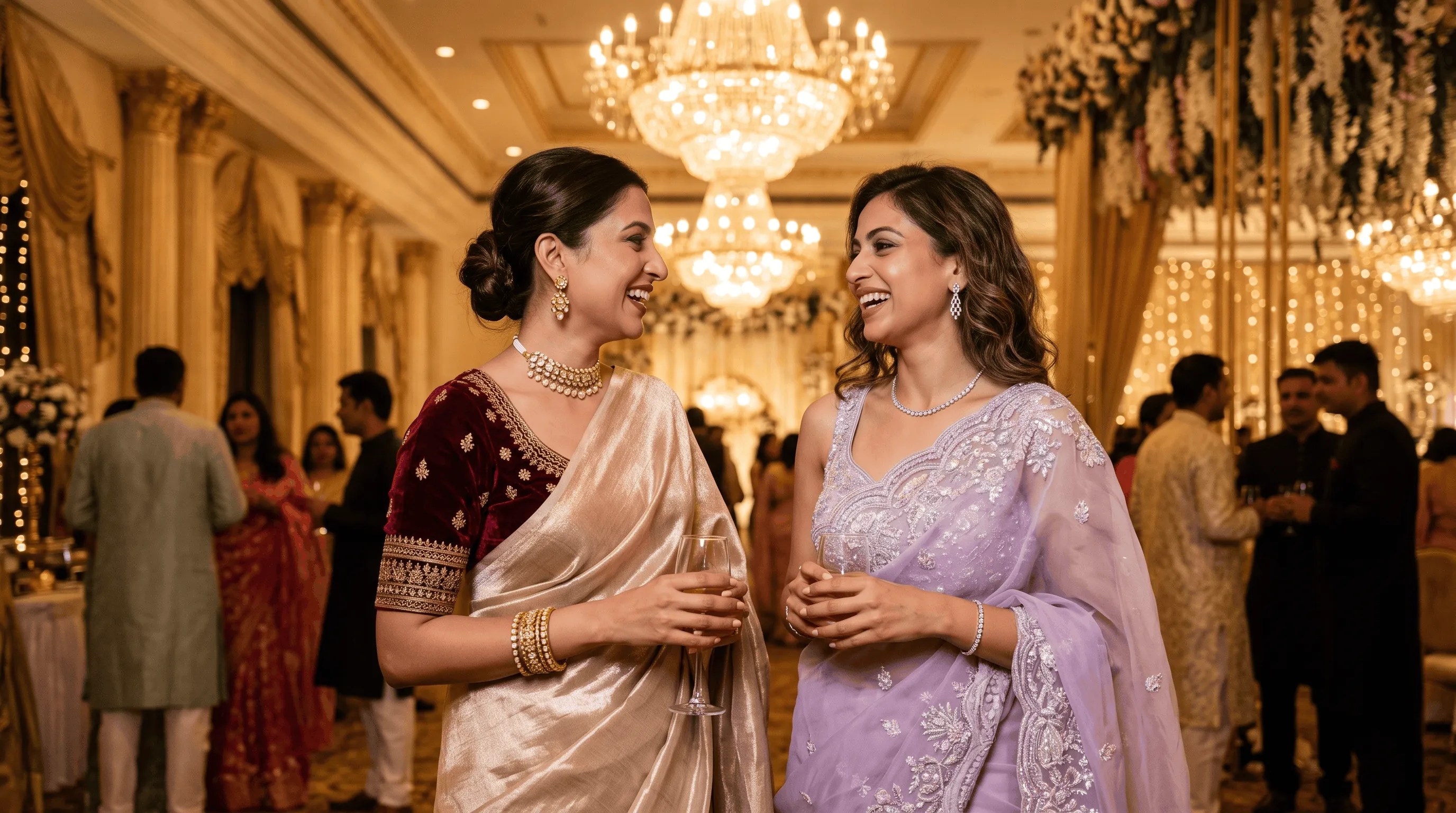
Quick Function Guide
| Function | Colours to choose | Fabrics | Avoid |
|---|---|---|---|
| Haldi | Yellow, white, mint, light orange | Cotton, mulmul, Chanderi | Expensive silk, dry-clean-only pieces |
| Mehendi | Green, pink, coral, multicolour | Leheriya, organza, georgette | Long full sleeves |
| Sangeet | Jewel tones, metallics, pastels with shine | Georgette, tissue, pre-draped | Heavy, stiff silk |
| Wedding (day) | Mustard, peach, teal, soft pink | Chanderi, soft silk, tussar | Very heavy zari in the heat |
| Wedding (night) | Emerald, royal blue, magenta, purple | Kanjivaram, Banarasi, Paithani | Bridal red, black, white (unless customary) |
| Reception | Wine, champagne, midnight blue, silver | Organza, tissue, satin silk | Anything that matches the bride's outfit |
Colours to Choose and Colours to Avoid
Safe colours for most weddings: emerald, royal blue, mustard, magenta, teal, peach, wine and champagne.
Use with care: bright bridal red, especially with heavy bridal jewellery.
Check customs first: plain white and black, which are avoided in many North Indian communities but accepted in others.
If you are unsure, ask the family or follow the dress code on the invitation.
For help choosing shades that suit you, see our guide to trending saree colours 2026.
Wedding Guest Sarees by Region
South Indian weddings usually call for silk, especially Kanjivaram and soft silk. Ivory or cream with a gold border is often fine, particularly at Kerala weddings.
Gujarati weddings suit Bandhani, Gharchola-inspired designs and Patola. See Bandhani vs Leheriya vs Patola.
Bengali weddings often feature Banarasi, Baluchari and Jamdani. Read our Jamdani saree guide.
Marathi weddings are a beautiful occasion for a Paithani or a nauvari drape. See our Paithani saree guide.
Punjabi and North Indian weddings welcome bright, shiny and richly embellished looks, especially in the evening.
Saree Choices for Close Family Members
Close family members usually dress a little more formally than other guests.
Mothers of the bride and groom often choose rich handloom silks such as Kanjivaram, Banarasi or Paithani in jewel tones, with traditional gold jewellery.
Sisters and cousins may coordinate colours for each function. Matching the colour family rather than the exact outfit looks more natural in photographs.
Grandmothers often prefer soft silk, Chanderi or light Kanjivaram sarees that look elegant without being heavy.
Bridesmaids can choose pre-draped or easy-to-manage sarees, because they are busy helping throughout the day.
Whatever your role, ask the family about colour themes early so your outfit fits the overall look.
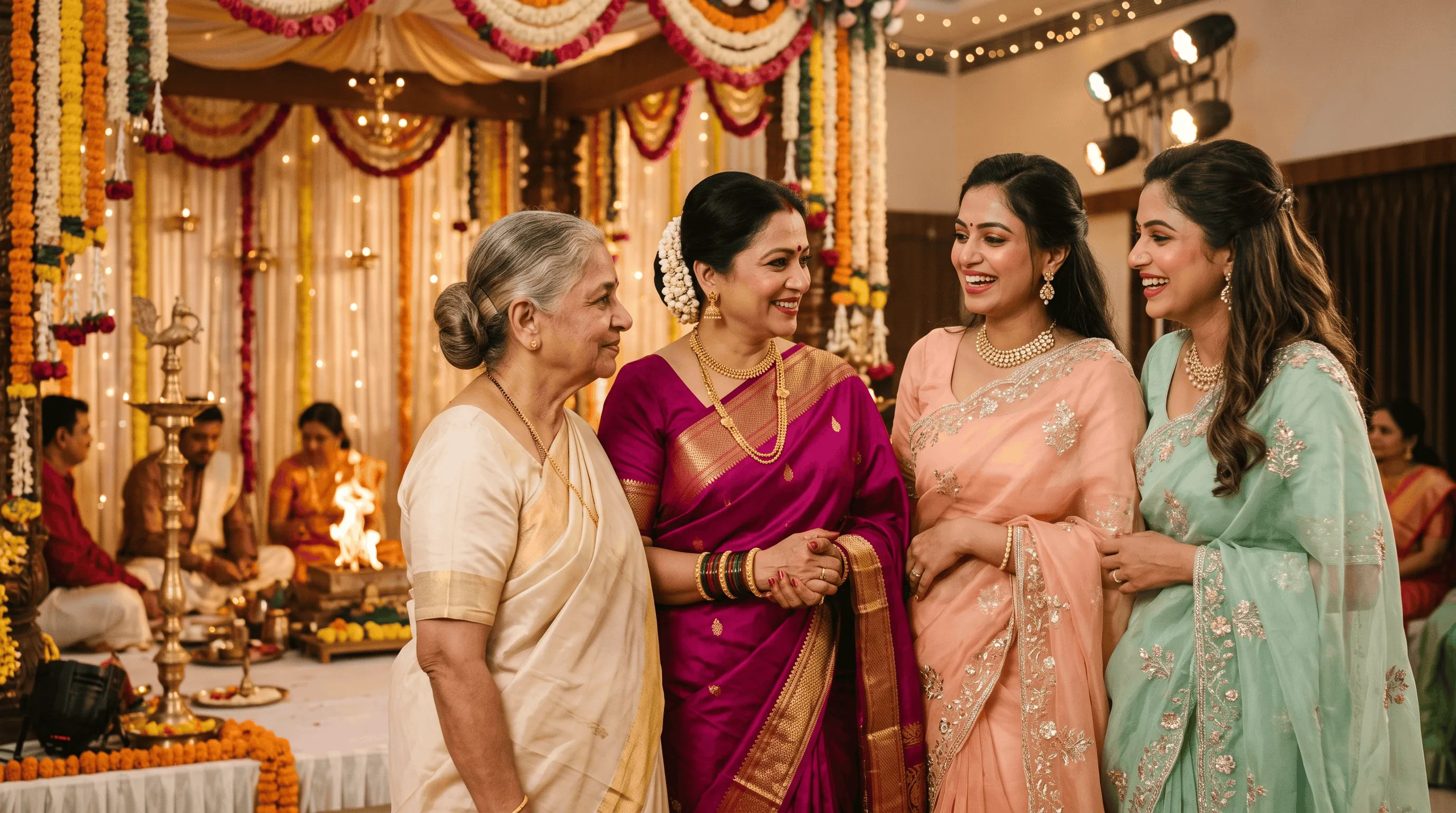
How to Re-Wear One Saree Across Functions
You do not need five new sarees.
Change the blouse. Use a plain blouse for the day and a brocade or sequinned blouse for the night.
Change the drape. Wear a Nivi drape for the ceremony and a pinned or belted drape for the sangeet. Our saree draping styles guide has easy options.
Change the jewellery. Choose gold or kundan for the wedding and statement earrings alone for the reception.
Add a belt or cape. A metal belt or sheer cape makes a classic saree look modern.
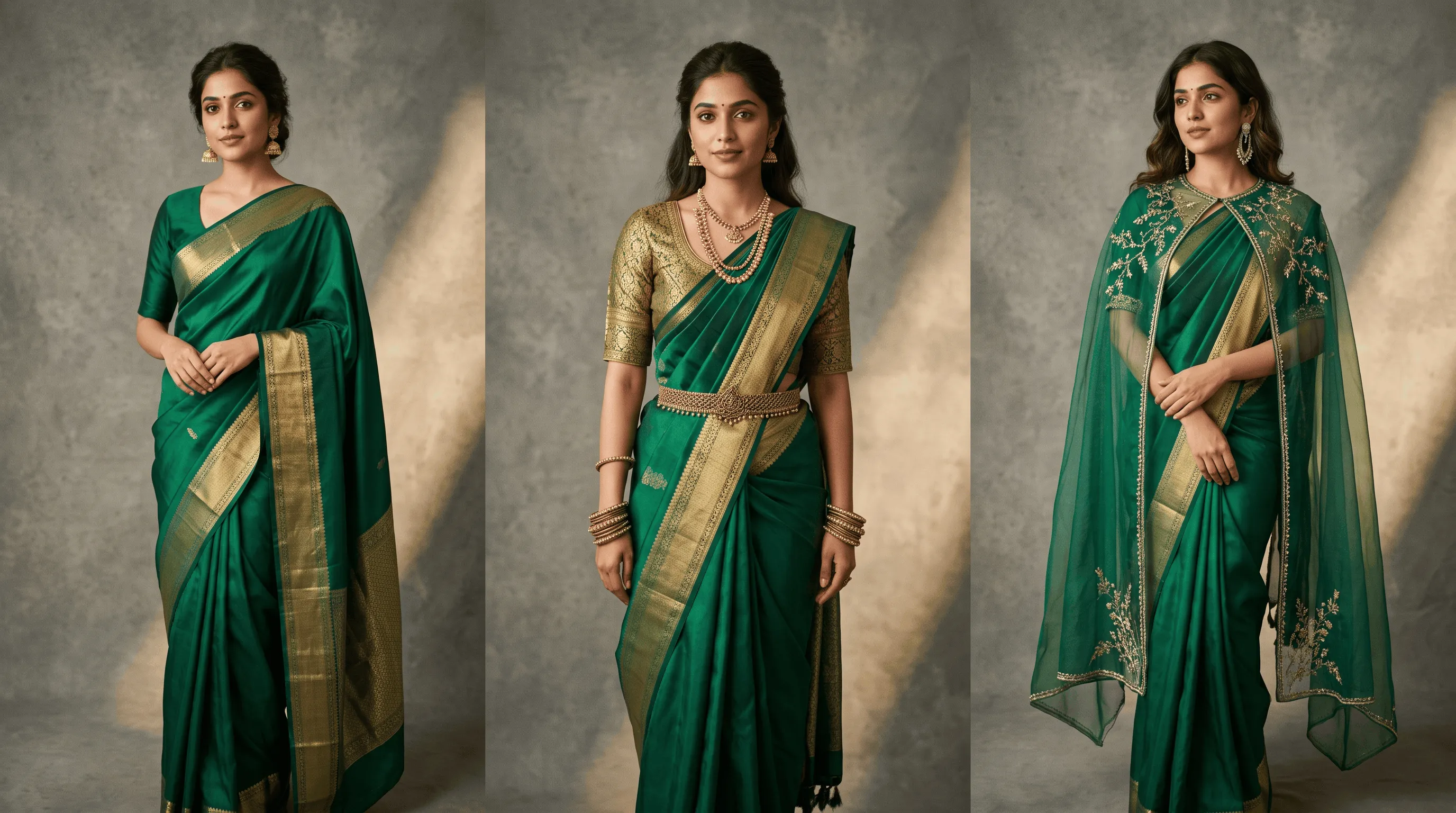
Choosing a Blouse as a Wedding Guest
Elbow-sleeve blouses suit traditional silk sarees.
Sweetheart and corset blouses look modern with organza and tissue for the sangeet and reception.
High-neck blouses create an elegant, formal look for ceremonies. See our high-neck blouse designs.
Contrast blouses add depth to single-colour sarees.
Jewellery for Wedding Guests
Keep jewellery elegant, but lighter than the bride's.
Gold, kundan and temple jewellery suit traditional silks.
Polki, pearls and diamonds suit receptions.
For haldi and mehendi, floral or light gota jewellery works best.
Choose one statement piece rather than layering everything at once.
Sarees for Destination and Outdoor Weddings
Destination and outdoor weddings bring their own challenges: sun, wind, sand, grass and long walks between venues.
Choose light fabrics such as organza, chiffon, georgette, Chanderi and soft silk that will not feel heavy in the heat.
Pastels, ivory with gold, coral and sea-inspired blues look beautiful in natural light and against beach or garden backdrops.
Pin the pallu securely so it does not fly in the wind, and keep the hem slightly shorter to avoid dragging on grass or sand.
Pack sarees rolled rather than folded to reduce creases, and carry a small travel steamer if you can.
Hair and Makeup to Match Your Saree
A silk saree with heavy zari looks best with a classic bun, fresh flowers and defined eyes.
Organza and tissue sarees suit soft waves, a sleek low bun and a dewy finish.
For sangeet nights, a braid or half-up style stays neat while you dance.
Keep makeup lighter for day functions and richer for evening ceremonies, and always check how it looks with your saree colour in daylight.
How to Keep Your Saree Neat Through a Long Wedding Day
Use a well-fitted petticoat and tie it firmly before draping.
Box-pleat the pallu and pin it at the shoulder, then add a second pin at the waist.
Pin the front pleats together at the top so they stay aligned when you sit.
Choose footwear before draping so the hem length is correct.
Practical Tips for Wedding Guests
Get the blouse fitted early, because wedding season is the busiest time for tailors.
Pre-pleat and pin your saree the day before, or book a professional draper.
Carry a small kit with safety pins, a mirror, tissues and a phone charger.
Wear block heels or embellished flats for long hours of standing, and carry flats for dancing.
Pin your pallu at the buffet so it does not drag through food.
Check the weather and carry a shawl for outdoor winter weddings.
Wedding Guest Saree Budget Guide
These are indicative 2026 ranges. Prices vary by city, seller and quality.
| Type | Indicative price range |
|---|---|
| Printed cotton or georgette (haldi, mehendi) | ₹800 – ₹3,000 |
| Sequinned georgette or shimmer saree (sangeet) | ₹2,000 – ₹8,000 |
| Organza or tissue (reception) | ₹2,000 – ₹15,000 |
| Soft silk or Chanderi silk | ₹3,000 – ₹15,000 |
| Pure Kanjivaram or Banarasi (wedding) | ₹10,000 – ₹50,000+ |
Common Wedding Guest Saree Mistakes
Wearing a red bridal-style look to the main ceremony is the mistake most guests want to avoid.
Another common mistake is wearing silk to the haldi and ruining it with turmeric.
Many guests also choose heavy sarees for the sangeet and struggle to dance.
Finally, do not leave blouse stitching or saree draping to the last minute.
How to Choose a Wedding Guest Saree You Will Wear Again
The smartest wedding guest saree is one you will reach for again and again.
Invest in one good silk saree in a versatile jewel tone, then change blouses, drapes and jewellery for different functions and future weddings.
Keep cotton and prints for the haldi and mehendi, something easy to dance in for the sangeet, your best silk for the ceremony and a glamorous look for the reception.
For more ideas this season, see our traditional wear trends 2026 guide and our Indian wedding edit.
Comments (0)
Leave a Thought
No comments yet. Be the first to share your thoughts!