Colour is the first thing anyone notices about a saree, and it often decides whether you glow or look tired.
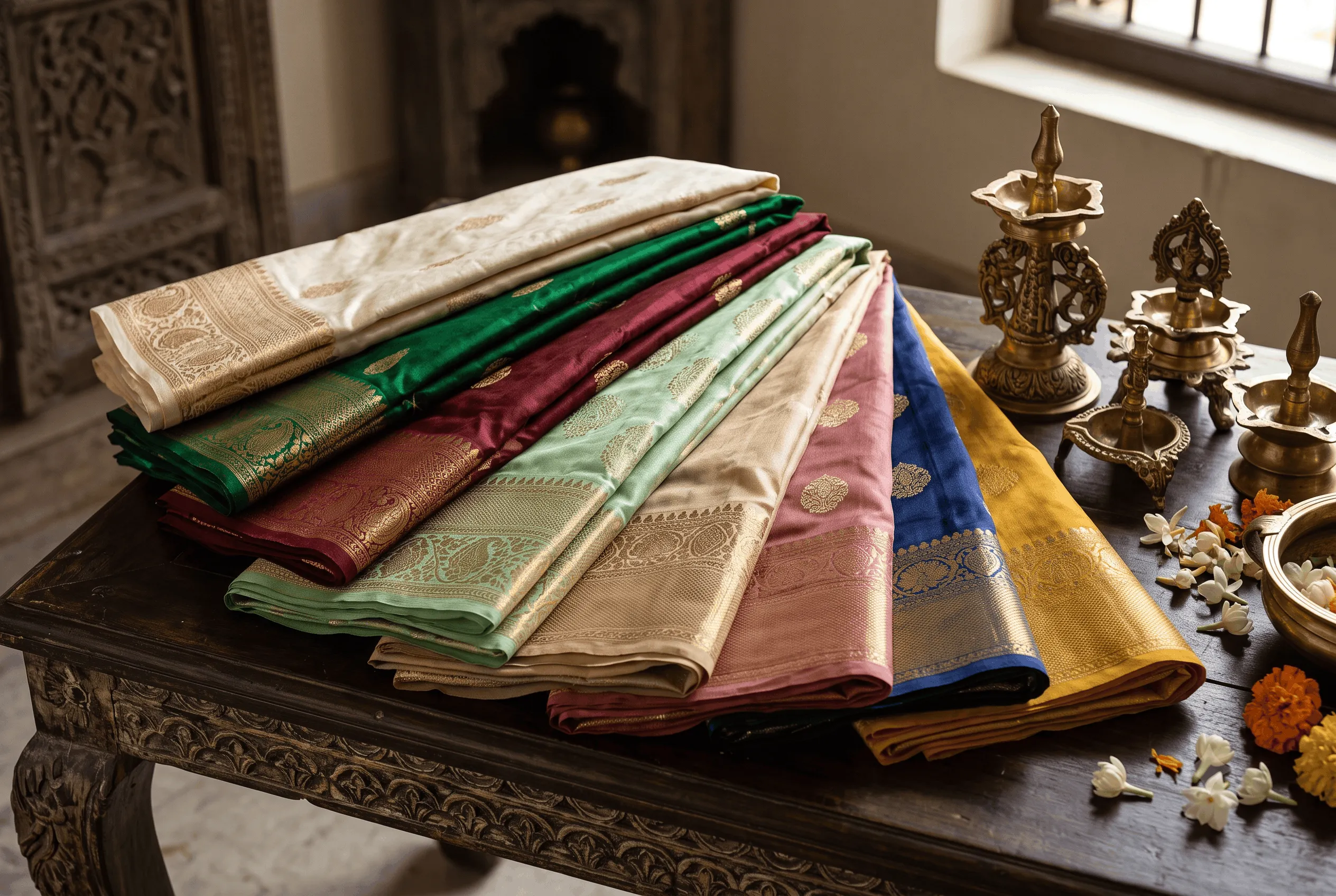
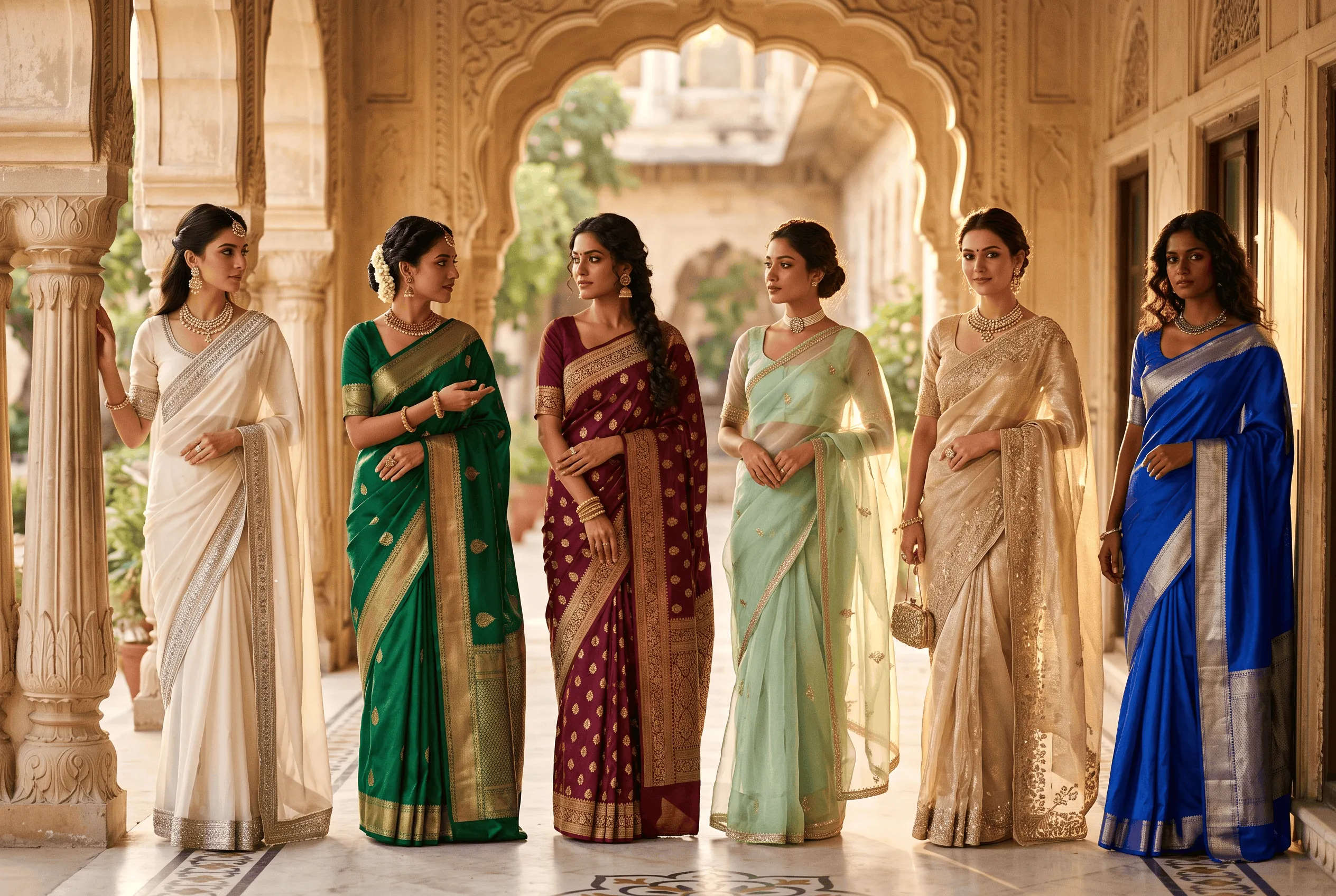
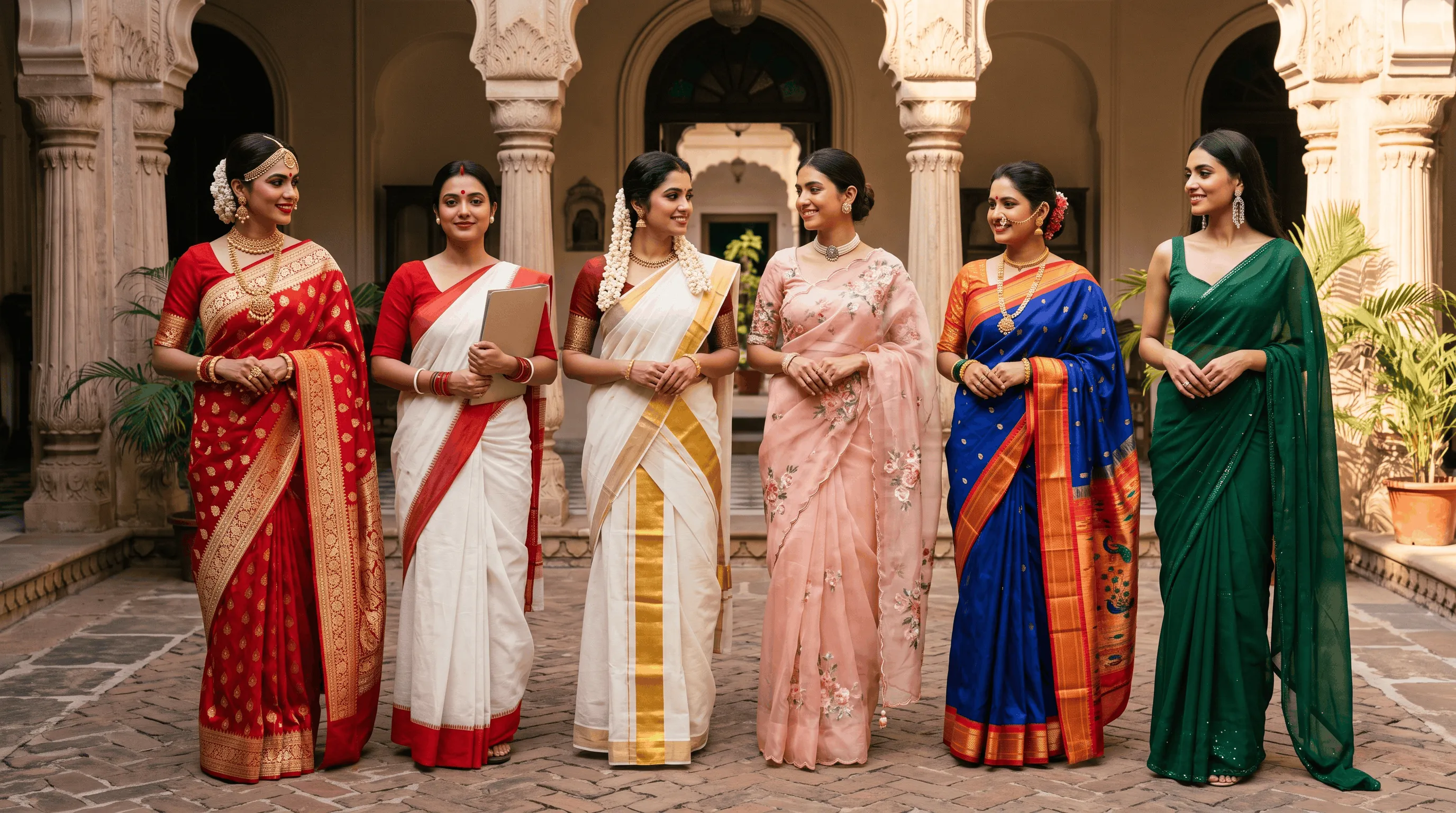
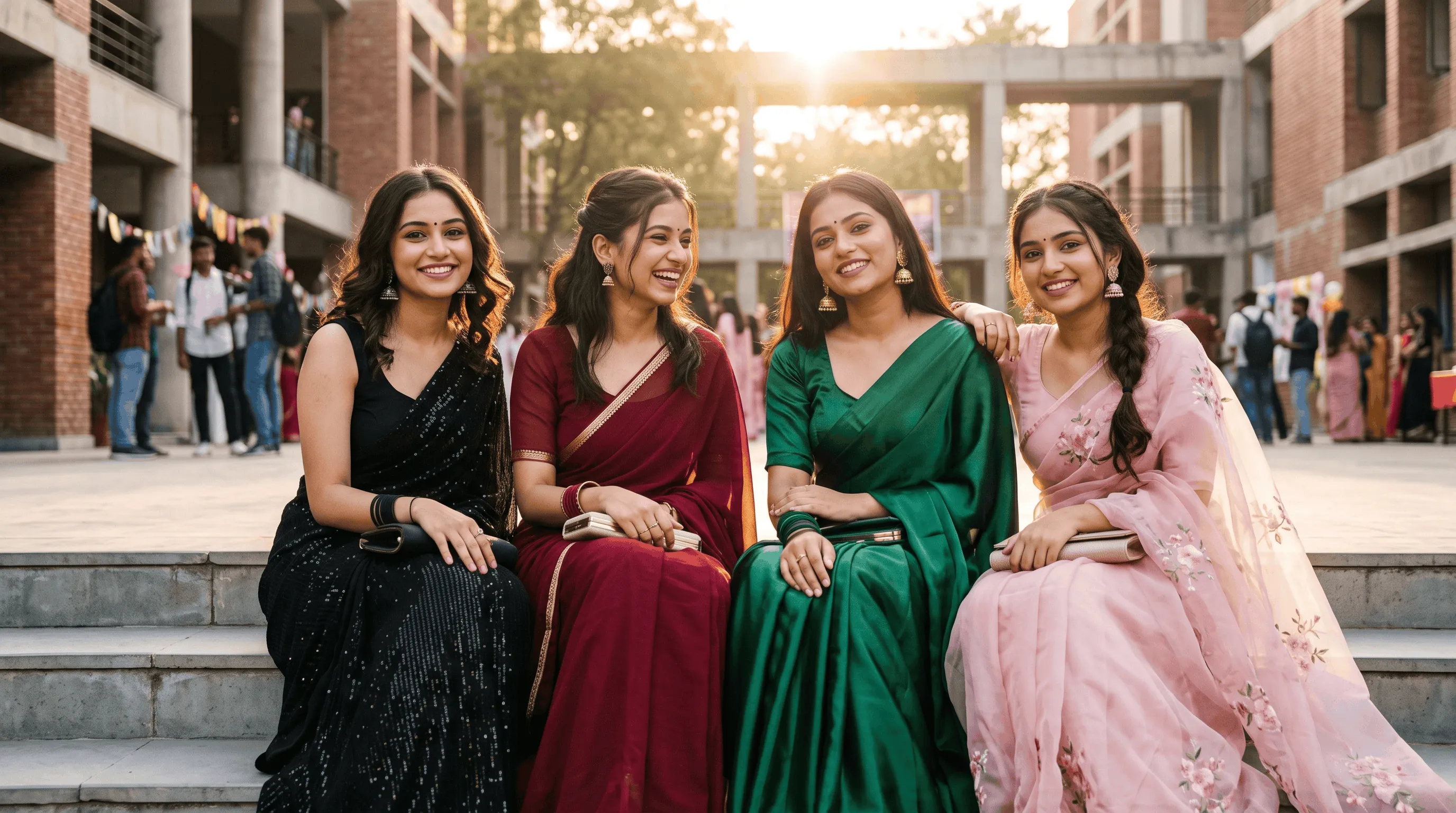
The trending saree colours 2026 brings a mix of calm, elegant neutrals such as ivory and champagne, rich jewel tones such as emerald and wine, and fresh pastels such as mint and dusty rose.
There is something for every skin tone and every occasion.
Trends are fun to follow, but the best saree colour is always the one that flatters your complexion and suits the event.
That is why understanding your skin tone and undertone matters just as much as knowing what is in fashion.
This guide lists the colours trending this year, explains how to find your undertone, suggests the best shades for fair, wheatish and dusky skin and shares blouse combinations that always work.
Trending Saree Colours 2026 at a Glance
| Colour | Mood | Best occasions | Looks best in |
|---|---|---|---|
| Ivory and off-white | Elegant, calm | Day weddings, temple functions, receptions | Kanjivaram, Banarasi, organza, tissue |
| Emerald and bottle green | Regal, rich | Weddings, Diwali, receptions | Silk, brocade, velvet borders |
| Wine and burgundy | Grown-up, warm | Evening weddings, Karwa Chauth, parties | Silk, georgette, velvet |
| Mint and sage | Fresh, soft | Day events, mehendi, engagements | Organza, chiffon, Chanderi |
| Champagne and soft gold | Glamorous, light | Receptions, cocktails | Tissue, satin silk |
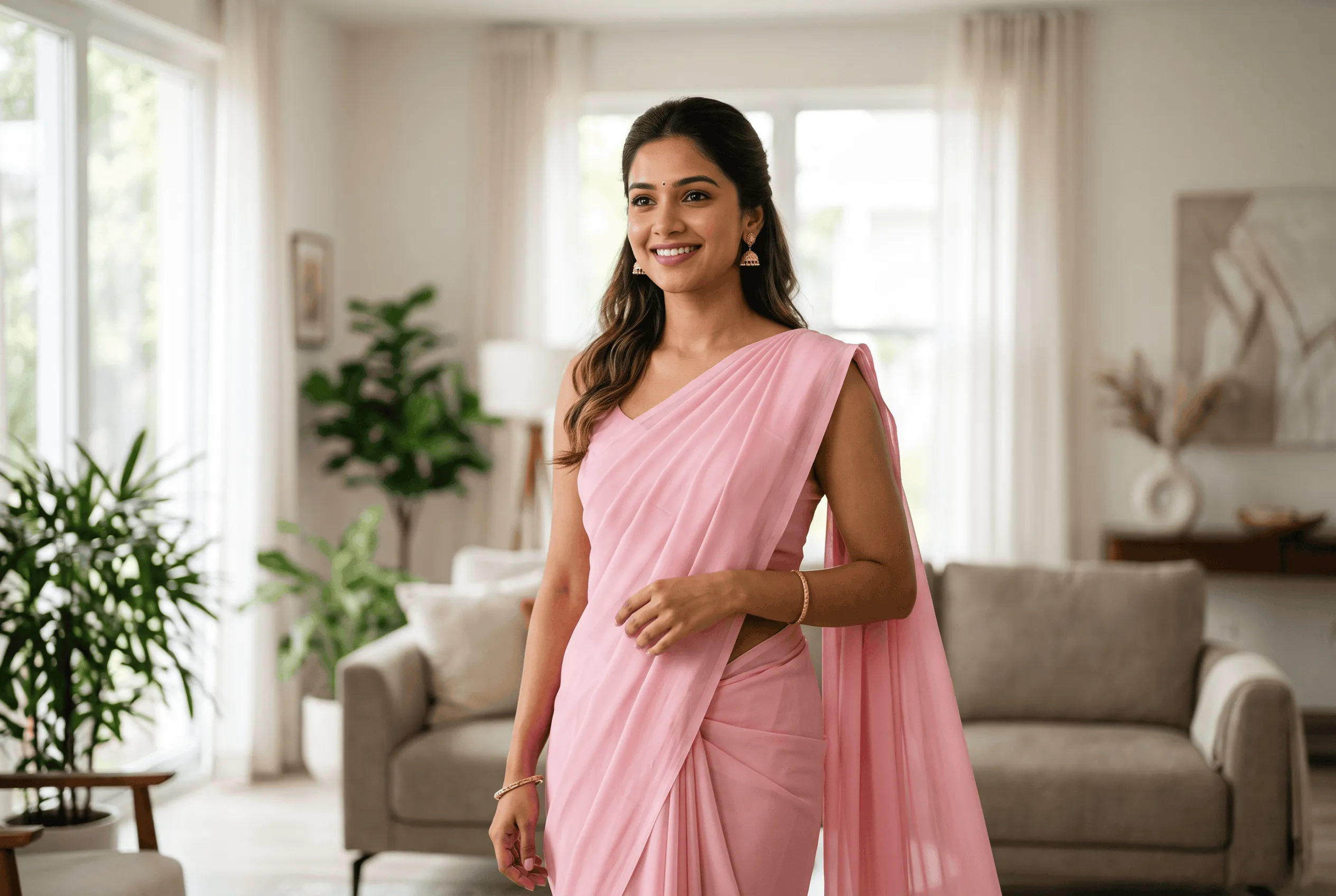
| Dusty rose and blush | Romantic | Engagements, day weddings | Organza, georgette |
| Sapphire and cobalt | Bold, festive | Weddings, Diwali | Silk, Banarasi |
| Mustard and ochre | Warm, traditional | Haldi, festivals, puja | Cotton silk, Bandhani |
| Rust and terracotta | Earthy, modern | Day functions, office festive wear | Handloom cotton, tussar |
1. Ivory and Off-White
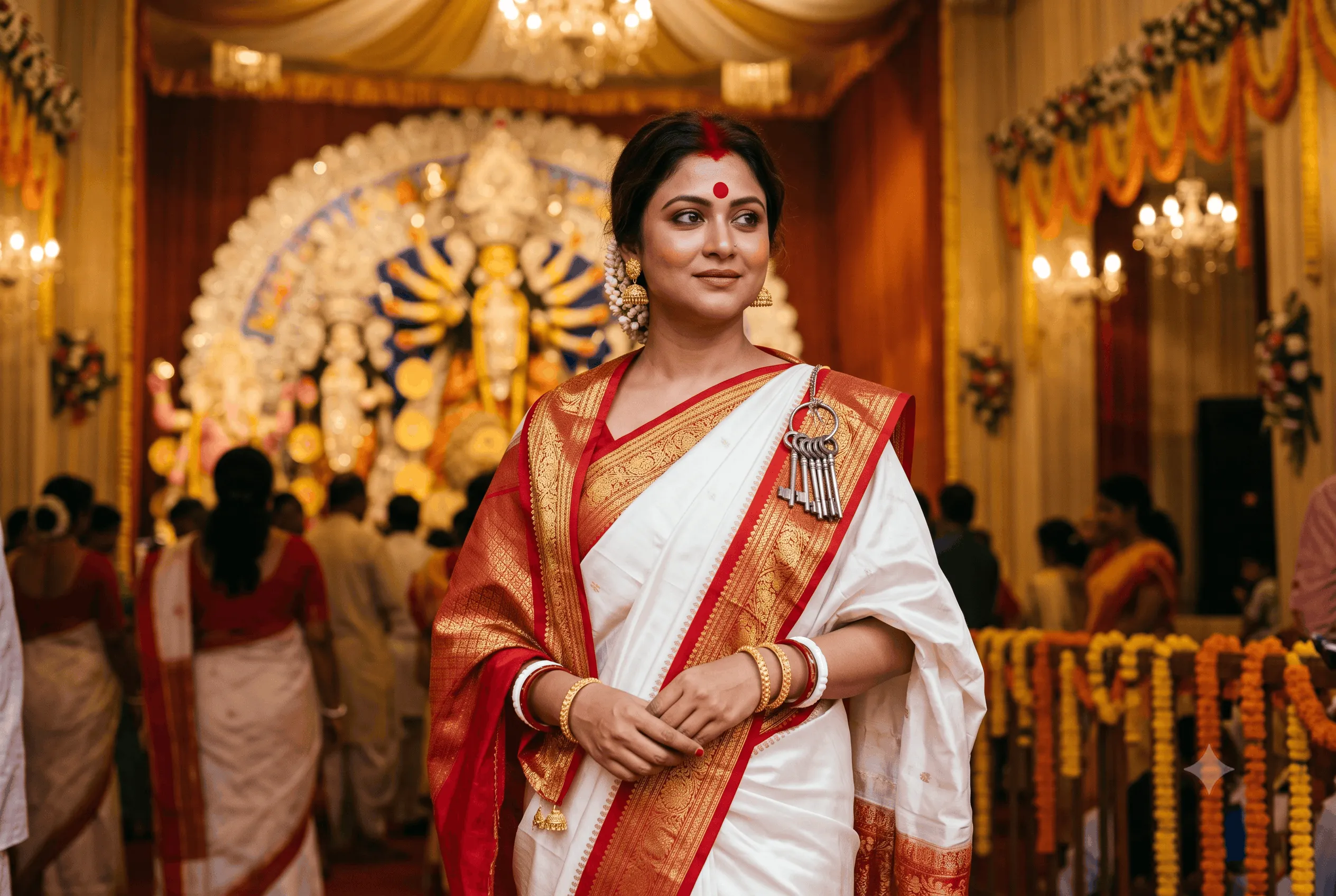
Ivory with gold zari is one of the defining looks of 2026.
It photographs beautifully in daylight, lets jewellery stand out and suits day weddings, temple ceremonies and elegant receptions.
Warm ivory and cream suit wheatish and dusky skin especially well, while off-white and soft white flatter cooler undertones.
Read our guide to ivory and white sarees for weddings for styling and customs.
2. Emerald and Bottle Green
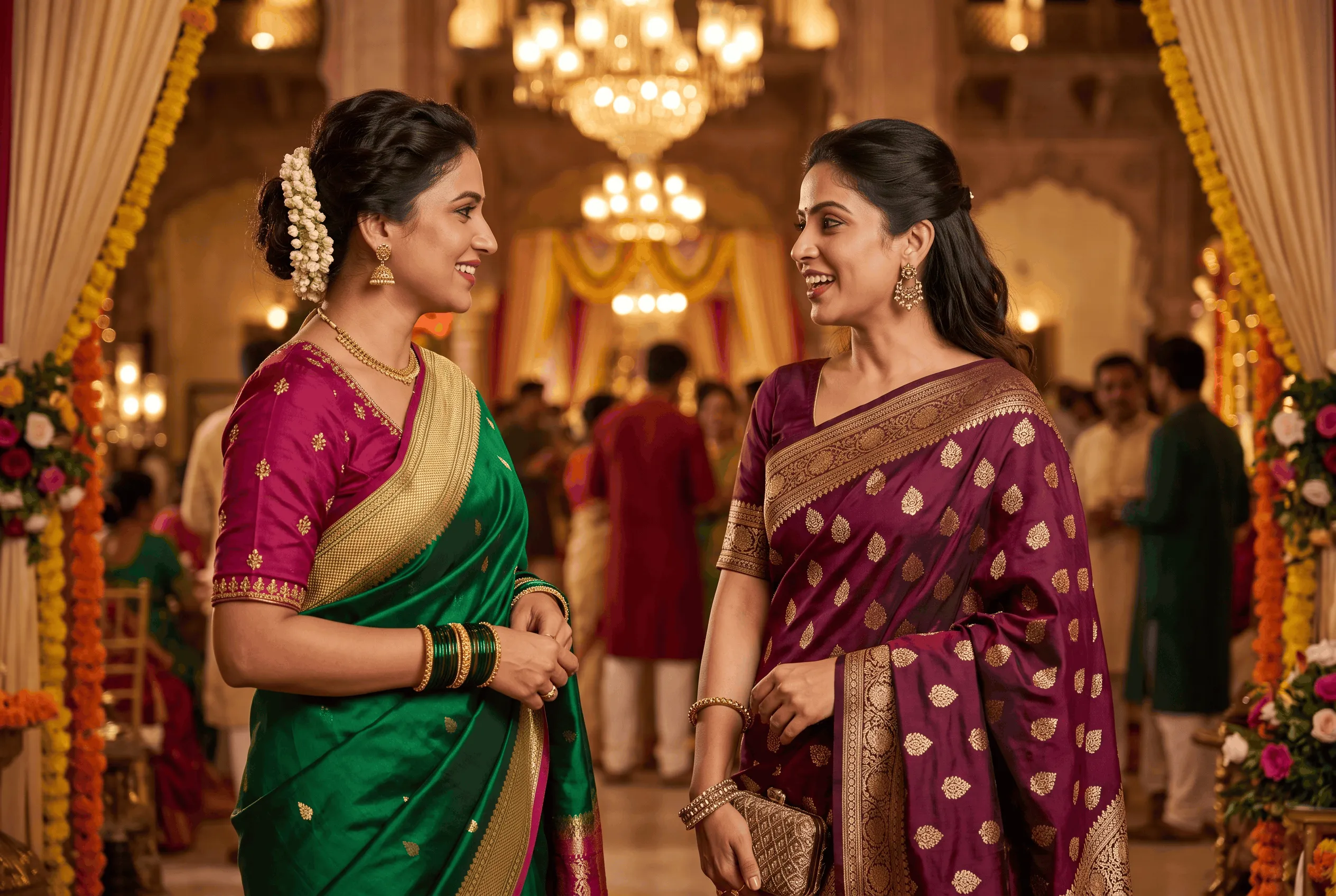
Few colours look as royal as emerald silk with gold.
Emerald flatters almost every skin tone, from fair to deep, and pairs beautifully with magenta, maroon or gold blouses.
It is a strong choice for weddings, Diwali and evening receptions.
3. Wine and Burgundy
Wine and burgundy are deeper, more modern alternatives to bridal red.
They look sophisticated at evening weddings, winter functions and Karwa Chauth.
These shades suit most skin tones and pair well with gold, blush pink and emerald blouses.
4. Mint and Sage
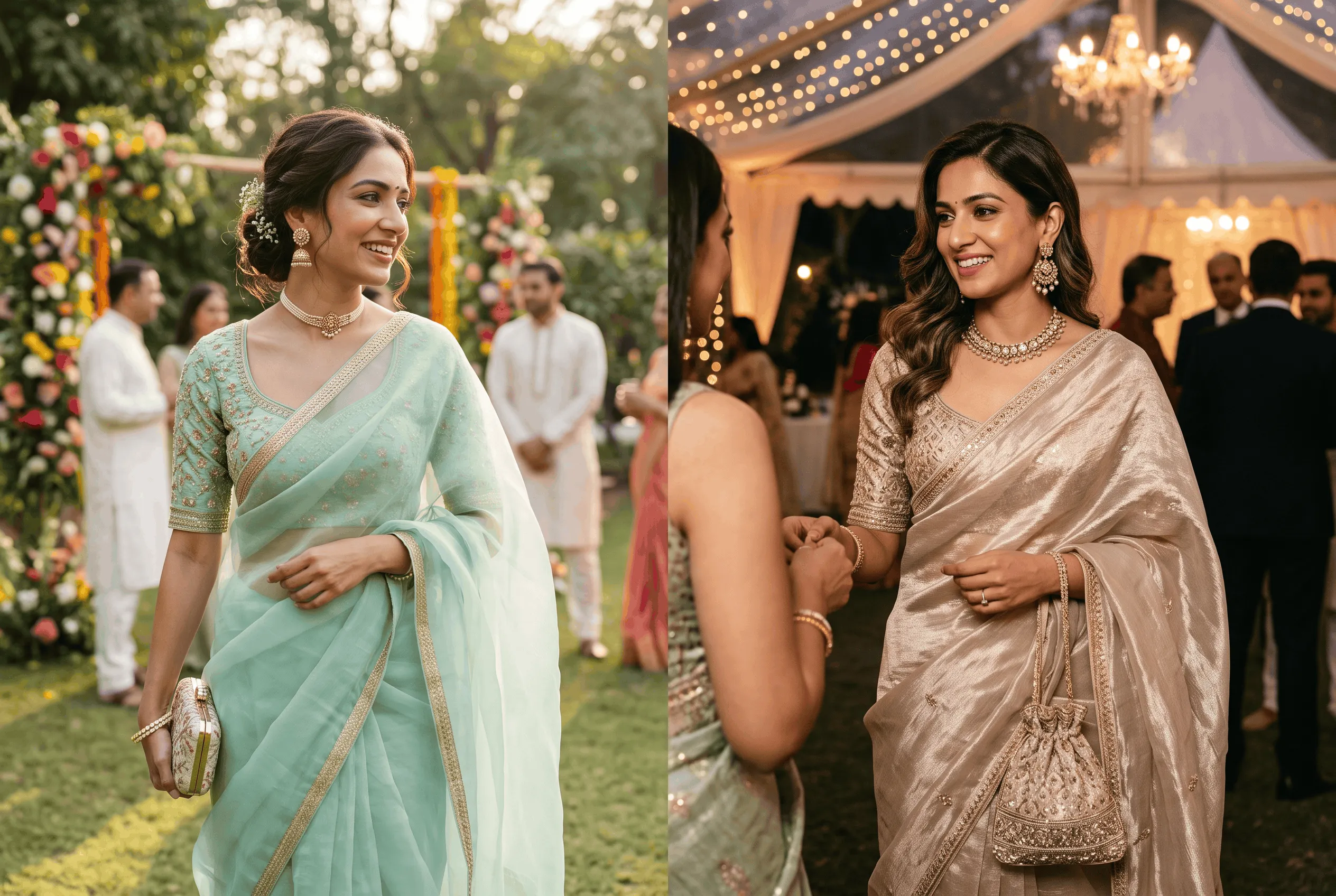
Mint and sage are pastels that look fresh rather than washed out, particularly with gold or silver borders.
They are ideal for day weddings, mehendi functions and engagements, especially in organza or chiffon.
Choose clear mint on dusky skin and slightly softer sage on fair skin.
5. Champagne and Soft Gold
Champagne is a soft metallic that photographs beautifully under evening lights.
It is often seen in tissue silk sarees and suits receptions and cocktail evenings.
Champagne flatters most skin tones and pairs well with velvet or brocade blouses in deeper shades.
6. Dusty Rose and Blush
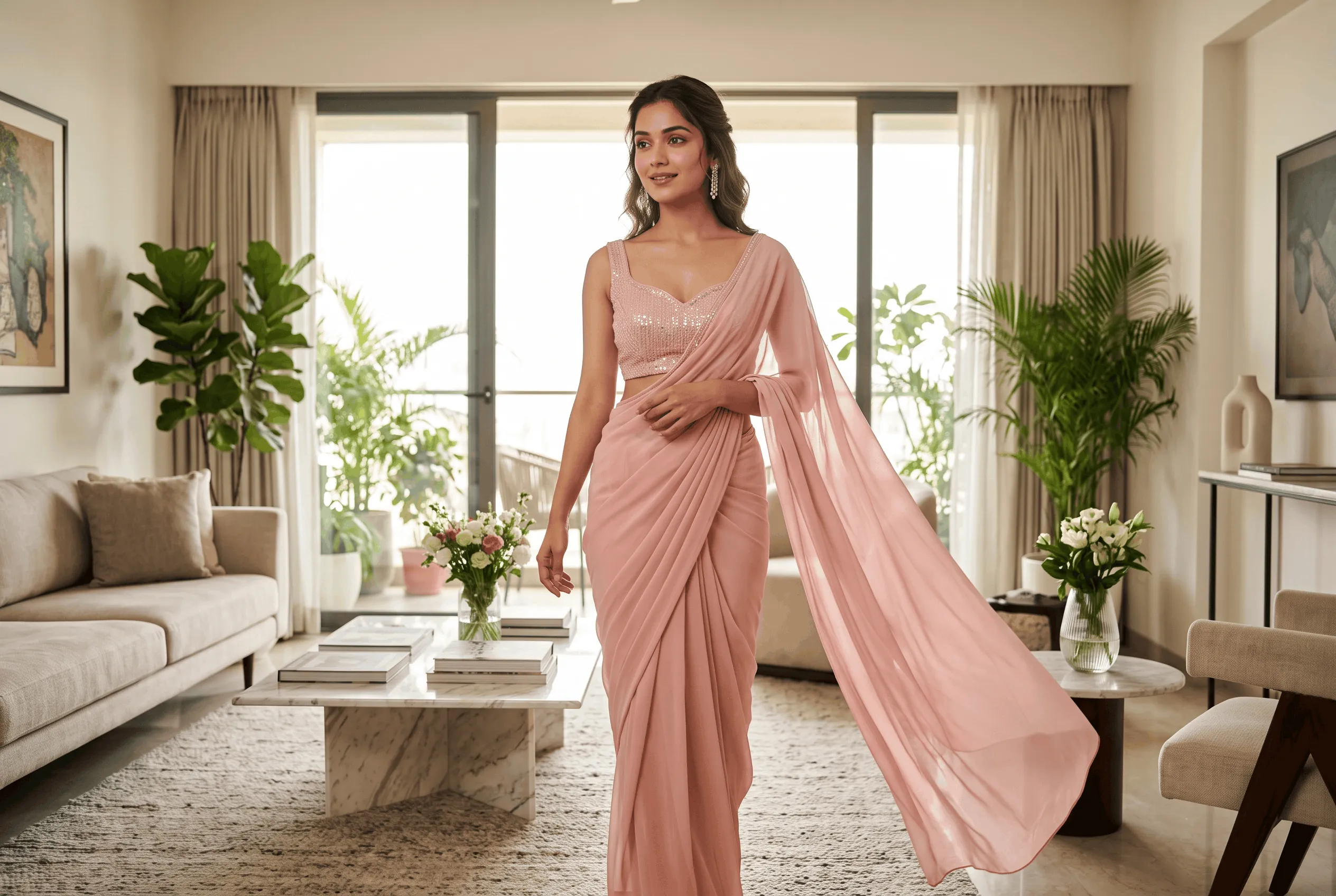
Dusty rose is a grown-up pink that feels romantic without being too sweet.
It works beautifully for engagements, day weddings and festive brunches.
Pearl jewellery and soft gold borders keep the look elegant.
7. Sapphire and Cobalt
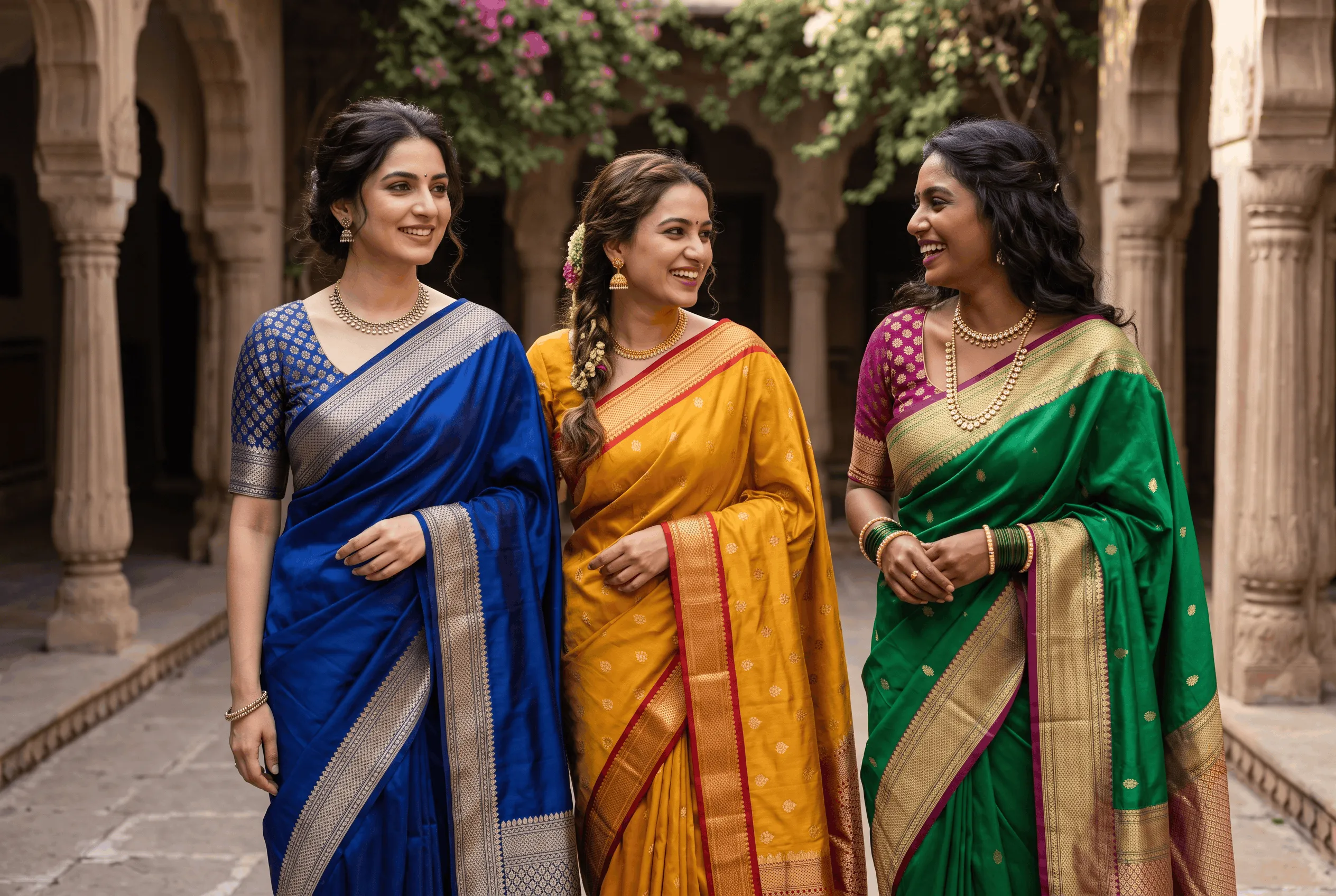
Sapphire and cobalt are bold, festive blues that stand out in a sea of warm colours at weddings.
They look especially striking on dusky and wheatish skin, paired with gold, pink or mustard blouses.
8. Mustard and Ochre
Mustard is warm, traditional and very flattering on wheatish skin.
It is a natural choice for haldi ceremonies, festivals and pujas, and it pairs well with maroon or bottle green borders.
9. Rust and Terracotta
Rust and terracotta bring an earthy, modern feel.
They look wonderful in handloom cotton, tussar and Chanderi for daytime functions and office festive days.
10. Classic Red
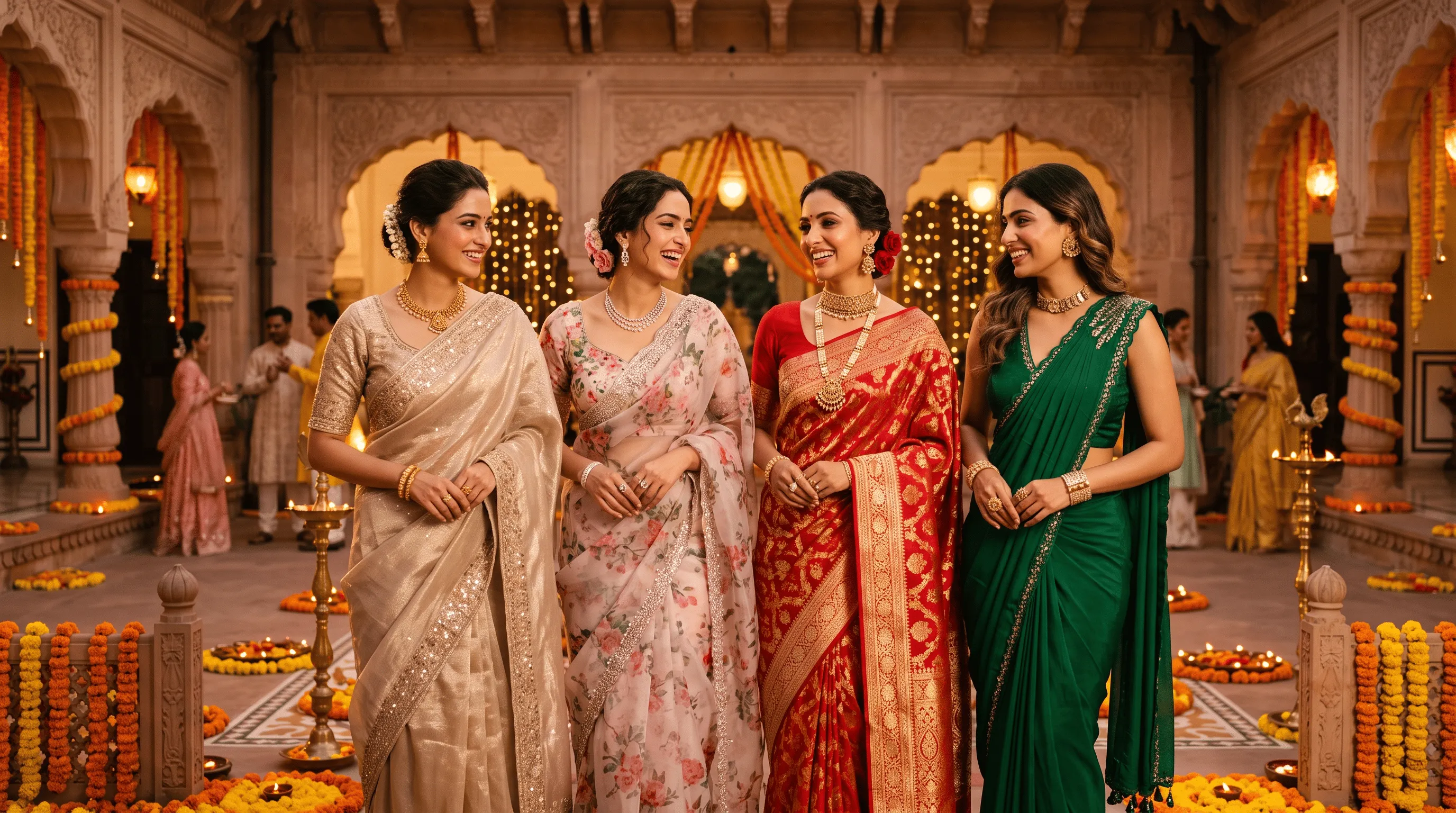
Red never goes out of style for weddings, Karwa Chauth and festivals.
In 2026, it is being refreshed with tonal embroidery, lighter fabrics and contrast blouses in green, gold or pink.
First, Know Your Undertone
Your skin tone is how light or deep your skin is. Your undertone is the colour beneath the surface, and it matters even more when choosing a saree.
Most Indian skin tones have warm or neutral undertones, although many people have cool undertones too.
Vein test: look at the veins on your inner wrist in daylight. Greenish veins usually mean warm undertones, bluish or purple veins suggest cool undertones and a mix suggests neutral.
Jewellery test: if gold makes your skin glow, you are probably warm. If silver looks better, you may be cool. If both work, you are likely neutral.
White test: if ivory or cream looks better on you than bright white, you are probably warm.
As a general rule, warm undertones shine in golden, earthy and warm jewel tones, cool undertones shine in blue-based shades and neutral undertones can wear almost anything.
Saree Colours for Fair Skin
Fair skin can look washed out in very pale colours and overpowered by neon brights.
Best colours: emerald, sapphire, wine, ruby red, deep teal, dusty rose, lavender and mint with a strong border.
Use with care: very pale beige or nude shades close to your skin colour, unless paired with a strong blouse or bold jewellery.
Tip: warm fair skin looks lovely in coral, peach and champagne, while cool fair skin suits icy pastels, silver and royal blue.
Saree Colours for Wheatish Skin
Wheatish skin, one of the most common tones in India, suits a very wide range of colours.
Best colours: mustard, rust, emerald, bottle green, magenta, maroon, ivory with gold, peacock blue, coral and champagne.
Use with care: muddy browns and greys can look dull, so lift them with gold zari or a bright blouse.
Tip: warm metallics such as gold and copper zari look especially flattering on wheatish skin.
Saree Colour for Dusky Skin
There is an old myth that deeper skin tones should avoid bright colours.
In reality, dusky skin looks stunning in rich, saturated shades.
Best colours: emerald, mustard, fuchsia, royal blue, cobalt, wine, deep orange, turquoise, ivory with gold and bright white.
Pastels: choose clear pastels such as mint, lilac and powder blue rather than greyish ones, and add a strong border or blouse.
Use with care: shades very close to your own skin colour, such as some tans and beiges, can blend in. A contrast blouse solves this.
Tip: gold zari and gold jewellery look radiant on dusky skin.
Saree Colour Combinations That Always Work
The blouse can change the whole look of a saree.
| Saree colour | Blouse colour | Effect |
|---|---|---|
| Ivory | Emerald, red or gold brocade | Rich, traditional |
| Emerald | Magenta, gold or maroon | Royal, festive |
| Wine | Gold, blush pink or emerald | Elegant, warm |
| Mint | Peach, gold or ivory | Fresh, soft |
| Mustard | Maroon, bottle green or black | Classic, earthy |
| Royal blue | Gold, pink or mustard | Bold, festive |
| Black | Gold, red or silver | Dramatic |
| Pastel pink | Mint, silver or ivory | Romantic |
| Red | Green, gold or black | Classic festive |
Choosing Colour by Occasion
Day weddings and temple functions: ivory, mint, mustard, peach and light pink.
Evening weddings and receptions: emerald, wine, sapphire, champagne and, where acceptable, black.
Diwali: jewel tones with gold. See our Diwali outfit ideas.
Haldi and mehendi: yellow, green, coral and multicolour.
Karwa Chauth: red, maroon and pink. See our Karwa Chauth saree ideas.
Office festive days: rust, teal, mustard and soft pastels in cotton or Chanderi.
Building a Versatile Saree Colour Wardrobe
If you are building a saree collection, a few well-chosen colours will cover almost every occasion.
One jewel tone, such as emerald, wine or sapphire, works for weddings, Diwali and receptions.
One warm traditional colour, such as red, maroon or mustard, suits pujas, Karwa Chauth and family functions.
One soft neutral, such as ivory or champagne, can be restyled endlessly with different blouses.
One pastel, such as mint or dusty rose, covers day weddings, engagements and brunches.
One black or navy saree is useful for evening parties, farewells and formal events.
With contrast blouses in gold, magenta, emerald and maroon, these five sarees can create dozens of different looks.
Saree Colours for Different Ages
Colour has no age limit, but preferences often change over time.
Teenagers and young women often enjoy pastels, ruffles, shimmer and bold contrasts.
Women in their thirties and forties frequently choose jewel tones, rich handlooms and elegant neutrals.
Many older women prefer soft silks in deep or muted shades, such as maroon, bottle green, mustard and cream, although bright colours look just as lovely at any age.
How Lighting Changes Saree Colours
Colours can look very different depending on the light.
Warm indoor lighting deepens reds, golds and maroons, while cool white lighting can make pastels look grey.
Daylight shows the truest colour, which is why it is best to check a saree near a window.
If your event is in the evening, choose slightly richer or brighter shades so the colour does not look dull under artificial lights.
How to Test a Colour in the Shop
Use daylight. Shop lights can make every colour look good, so step near a window or door.
Drape it near your face. Hold the saree under your chin rather than only on your arm.
Look without heavy makeup. You will see the true effect on your skin.
Take a photograph. Phone cameras show how the colour will look in pictures.
Check the border and pallu. The overall effect can be very different from the body colour.
Common Colour Mistakes
Choosing a colour only because it is trending, even when it does not suit you, is the most common mistake.
Another is matching the blouse exactly to the saree when a contrast would add depth.
Many people also forget to consider the time of day and lighting at the event.
Finally, pale sarees with pale makeup and pale jewellery can look flat in photographs.
Finding Your Colour in 2026
The trending saree colours 2026 offers range from calm ivory and champagne to rich emerald and wine, with fresh mint and dusty rose in between.
Trends are a wonderful starting point, but the best colour is the one that makes your skin glow and suits the occasion.
Learn your undertone, test colours in daylight near your face and use the blouse to balance a tricky shade.
For more styling ideas, explore our traditional wear trends 2026 guide and our guide to ethnic jewellery with silk sarees.
Comments (0)
Leave a Thought
No comments yet. Be the first to share your thoughts!