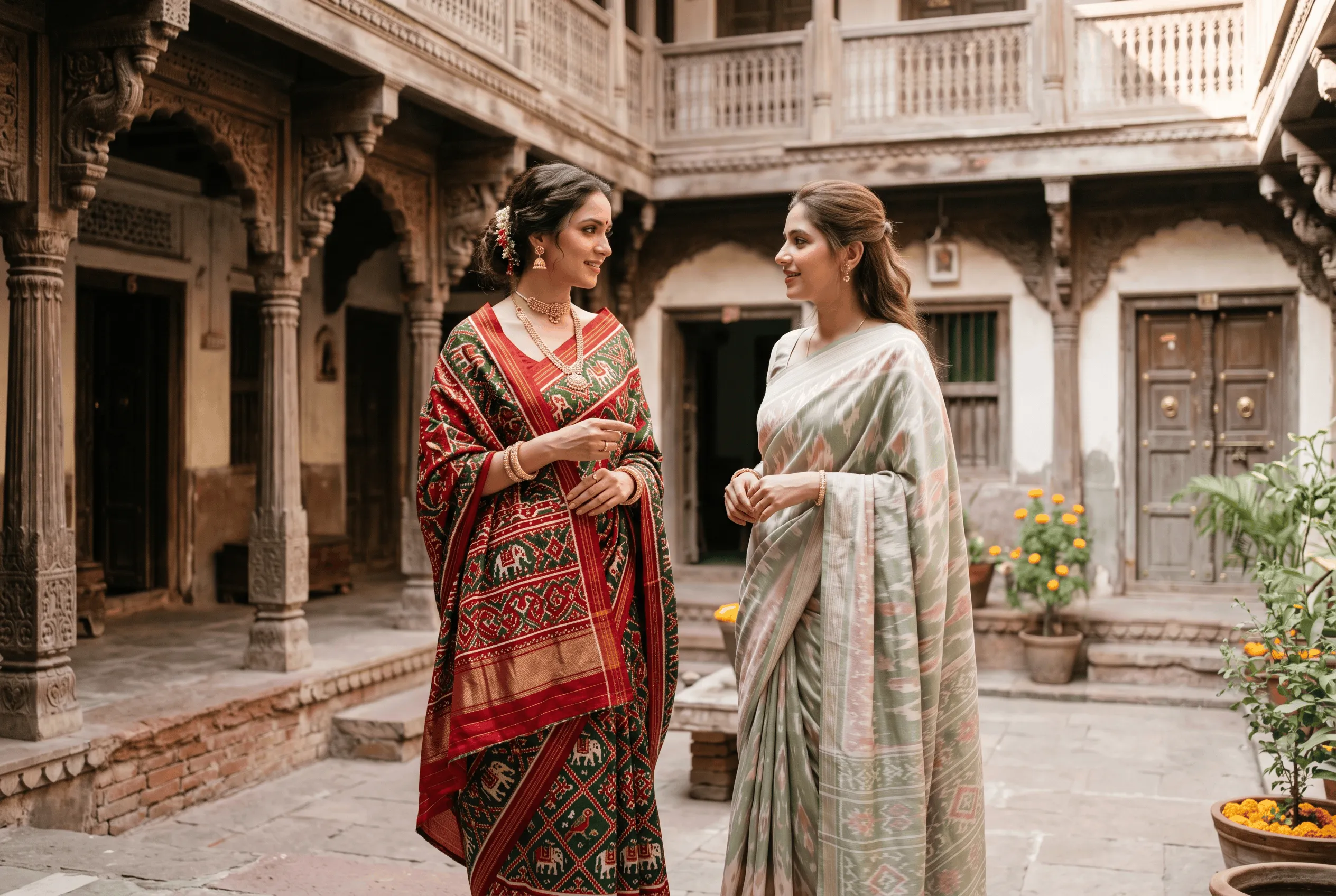
Few textiles in India carry as much prestige as the Patola of Gujarat.
These silk sarees, with their sharp geometric patterns, elephants, parrots and dancing women, have been treasured for centuries and are still passed down as family heirlooms.
A well-known Gujarati saying captures their reputation: a Patola may tear, but its design will never fade.
But when you start shopping, the patola saree price can range from under ₹2,000 to several lakh rupees, and almost everything is labelled "Patola".
That is why understanding the difference between Patan double ikat, Rajkot single ikat and printed or powerloom copies is so important.
This guide explains how Patola is made, how Patan and Rajkot Patola differ, what drives the price, current price ranges, the checks that help you identify a real one and how to care for it.
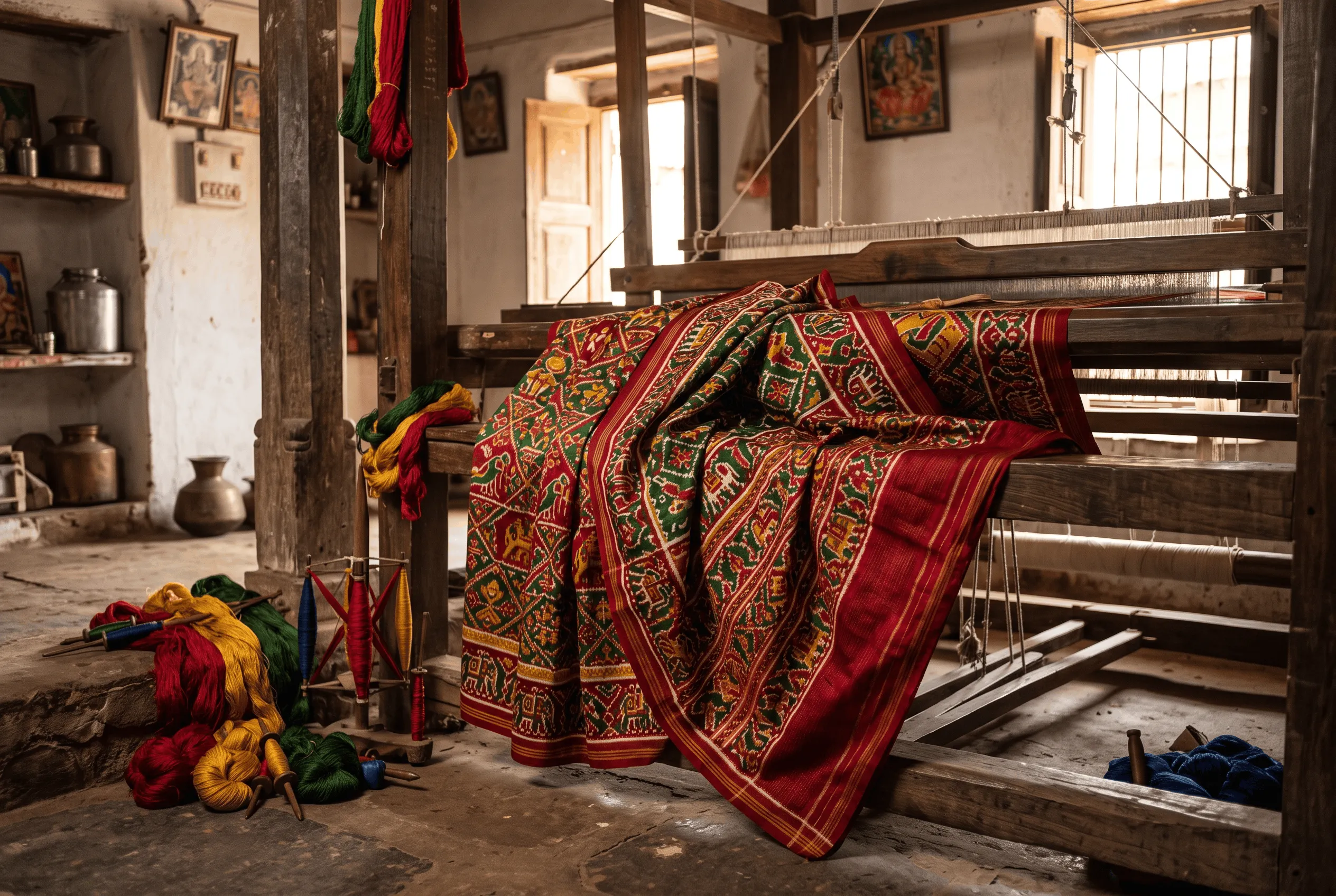
What Is a Patola Saree?
A Patola is a silk saree woven using the ikat technique.
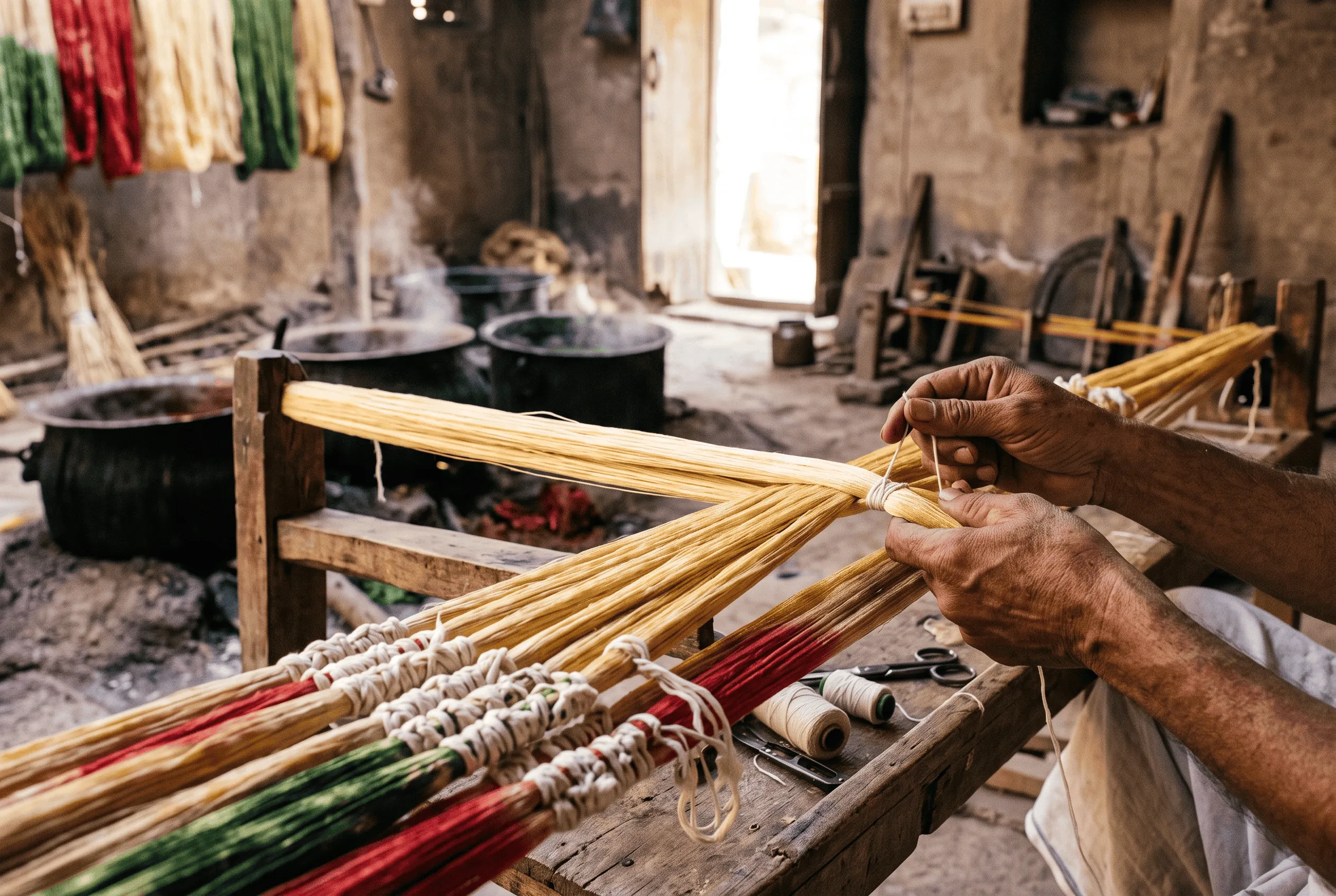
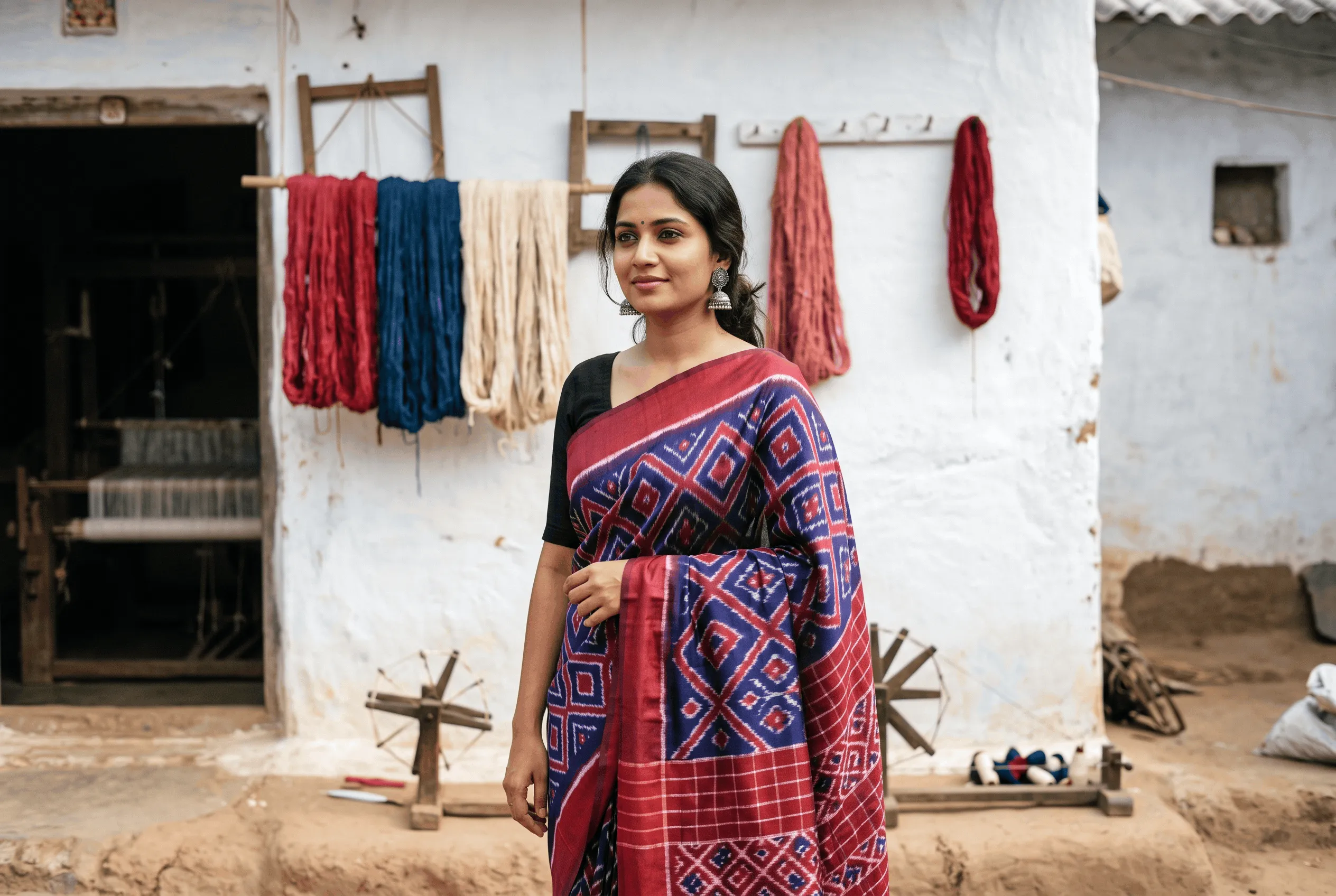
In ikat, the threads are tied and dyed according to the design before weaving begins.
Each section of thread that must stay a certain colour is tightly wrapped so the dye cannot reach it.
The threads are then dyed, re-tied and dyed again for every colour in the design.
When these pre-dyed threads are set on the loom and woven, the pattern appears in the cloth.
Because the design is built into the threads, the slightly blurred, feathered edges of each motif are a natural sign of real ikat. No two handwoven Patola sarees are exactly alike.
A Brief History of Patola
Patola weaving in Gujarat has a history of several centuries.
Patola were highly valued not only within India but also in trade across the Indian Ocean, particularly in parts of Southeast Asia, where they were treasured as prestigious textiles.
Within Gujarat, Patola became closely linked with weddings and important ceremonies, and families often kept them as heirlooms.
Over time, the double ikat tradition became concentrated in Patan, where a few families continue the craft today, while single ikat weaving grew in the Rajkot region.
Patan Patola: The Double Ikat
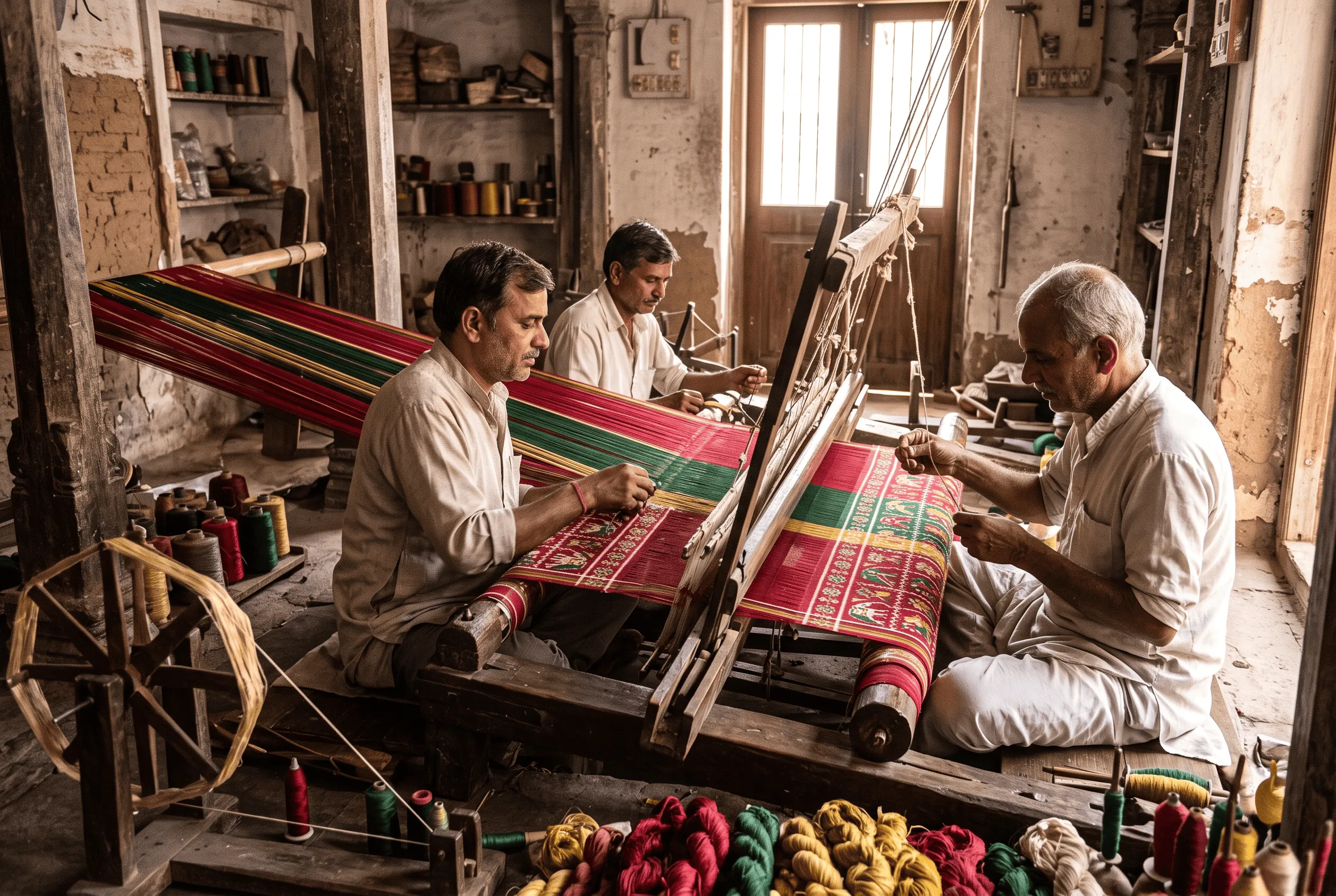
Patan, in north Gujarat, is famous for double ikat Patola.
Here, both the warp (lengthwise threads) and the weft (crosswise threads) are tie-dyed before weaving.
On the loom, the weaver must align every warp and weft thread so the colours meet exactly and form the motif.
The craft is practised by a small number of families of the Salvi community in Patan.
The pattern looks the same on both sides of the fabric, so the saree is fully reversible.
A single saree takes many months of tying, dyeing and weaving.
Patan Patola is also protected by a Geographical Indication (GI) tag.
Rajkot Patola: The Single Ikat
In and around Rajkot in Saurashtra, weavers mainly make single ikat Patola.
Usually only the weft threads are tie-dyed, while the warp is plain or simply coloured.
This makes Rajkot Patola faster to produce and far more affordable than Patan double ikat.
The front shows clear patterns, while the reverse is visibly less sharp.
Colours are often brighter and more varied, including pastels and contemporary shades.
A Rajkot Patola is still a genuine handwoven ikat textile and a wonderful way to own a real Patola.
Patan vs Rajkot Patola: Side-by-Side
| Feature | Patan Patola | Rajkot Patola |
|---|---|---|
| Technique | Double ikat (warp and weft dyed) | Mostly single ikat (weft dyed) |
| Reverse side | Same as the front | Less sharp than the front |
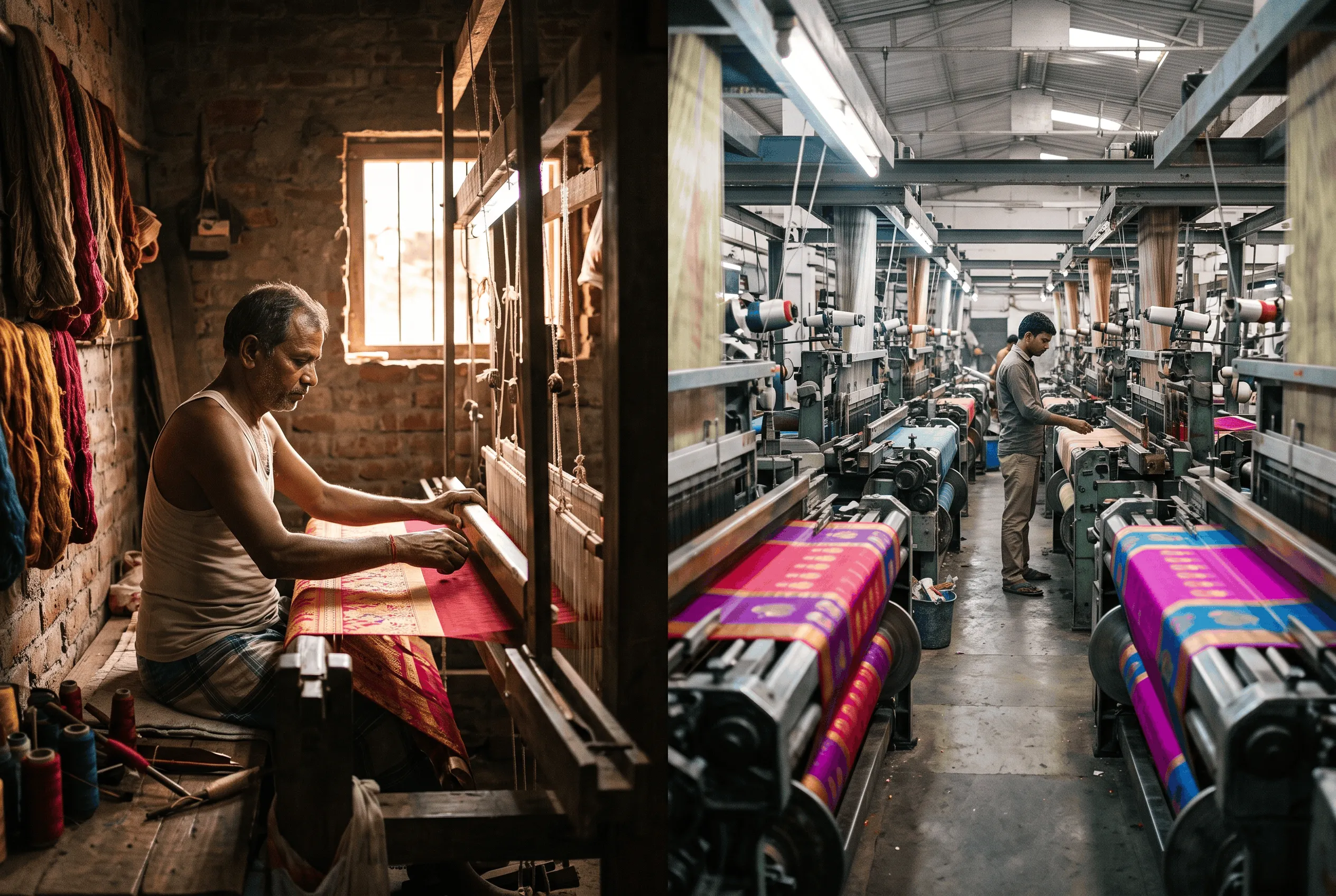
| Time to weave one saree | Many months | Weeks to a few months |
| Colours | Traditional deep reds, greens, yellows | Wider range, including pastels |
| Motifs | Traditional figurative and geometric | Traditional plus contemporary |
| Weight and feel | Firm, dense silk | Lighter, softer |
| Typical price | ₹1,50,000 and above | ₹12,000 – ₹60,000+ |
| Who buys it | Heirloom and bridal buyers | Festive, wedding and first-Patola buyers |
How Patola Is Made
Design planning: the motif is mapped onto graph paper, thread by thread.
Thread preparation: silk threads are sorted into bundles.
Tying: each bundle is tied with cotton thread at the exact points that must resist the dye.
Dyeing: the bundles are dyed, then some ties are opened and others added for the next colour. This repeats for every colour.
Setting the loom: for double ikat, the dyed warp is placed on the loom so its patterns line up perfectly.
Weaving: the weaver adjusts each weft pass so its colours meet the warp pattern exactly.
One mistake in tying can show up across the whole saree, which is why the craft requires years of experience.
Patola Saree Price in 2026
These are indicative ranges. Prices vary by weaver, design complexity, number of colours, silk quality and seller.
| Type | Indicative price range |
|---|---|
| Printed "Patola" design on art silk or rayon | ₹800 – ₹3,000 |
| Powerloom or machine-made Patola-style saree | ₹2,000 – ₹8,000 |
| Rajkot single ikat in silk (simple designs) | ₹12,000 – ₹25,000 |
| Rajkot single ikat in silk (fine or complex designs) | ₹25,000 – ₹60,000+ |
| Patan double ikat Patola | ₹1,50,000 and above |
Compare Patola with other handloom sarees in our saree price guide.
What Makes One Patola More Expensive Than Another?
Single or double ikat: double ikat takes far more time and skill.
Design complexity: dense figurative motifs cost more than simple geometric grids.
Number of colours: every additional colour means another round of tying and dyeing.
Silk quality and weight: finer, denser silk raises the price.
Weaver reputation: sarees from well-known weaving families often command higher prices.
How to Identify an Original Patola
1. Look at the Edges of the Motifs
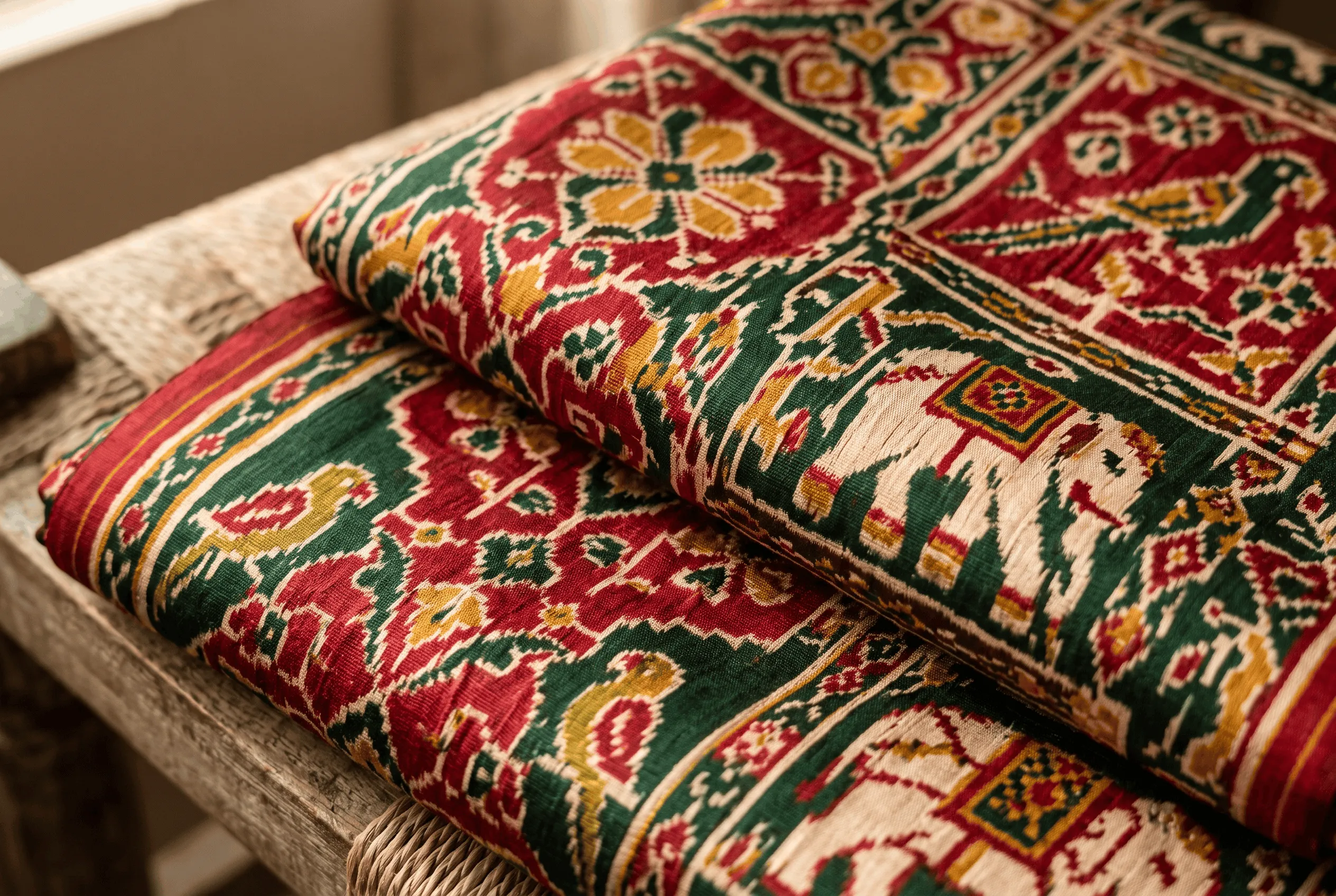
Real ikat has slightly blurred, stepped or feathered edges where the dyed threads meet.
Printed designs have crisp, clean edges.
2. Turn the Saree Over
In Patan double ikat, the pattern looks almost identical on the reverse.
In Rajkot single ikat, the pattern shows on the back but less sharply.
A printed saree is usually pale or plain on the back.
3. Check the Price Against the Claim
If a "Patan Patola" costs a few thousand rupees, it is not double ikat.
Real Patan Patola is expensive because of the months of skilled work behind it.
4. Feel the Silk
Real Patola silk feels firm and dense.
Very light, slippery or synthetic-feeling fabric is a warning sign.
5. Look at the Selvedge and Border
Handwoven sarees often show small irregularities along the selvedge and border.
Perfectly uniform machine edges can suggest powerloom production.
6. Ask the Seller Questions
Where was it woven? Is it single or double ikat? Who is the weaver? Is there a GI or Silk Mark label?
Genuine sellers are usually happy to explain.
7. Buy From Trusted Sources
Weaver families, cooperatives and established handloom sellers are the safest places to buy a high-value Patola.
For general silk tests, see our guide on how to identify pure silk.
Buying a Patola Saree Online
Online shopping makes Patola more accessible, but it requires extra care.
Ask for close-up photographs of the front and back of the fabric, especially the motif edges.
Check whether the listing clearly states single ikat, double ikat, printed or powerloom.
Look for the weaver's or seller's location, certification details and a clear return policy.
Be cautious when a listing uses the words "Patan Patola" with a price far below what double ikat costs.
For high-value purchases, consider visiting a trusted store or weaver in person, or asking for a video call to see the saree in natural light.
Patola Beyond Sarees
Patola weaving is also used for dupattas, stoles and smaller textiles.
A woven Patola dupatta is a more affordable way to own a genuine piece, and it pairs beautifully with plain silk outfits and Gharchola sarees.
Patola motifs also appear on printed fabrics, home décor and accessories, but these are inspired by the design rather than woven ikat.
Popular Patola Motifs
Nari kunjar: women and elephants.
Popat kunjar: parrots and elephants.
Chhabdi bhat: a basket-like pattern.
Ratanchowk: a geometric, jewel-like grid.
Phulwadi: flowers in a garden-like layout.
Pan bhat: leaf motifs.
Many families choose motifs for their meaning, such as elephants for prosperity and parrots for love.
Patola for Weddings and Gujarati Traditions
Patola has deep roots in Gujarati weddings.
It is often bought for a bride or worn by close family members at the main ceremony.
A Patola dupatta paired with a Gharchola or Panetar is a classic Gujarati bridal combination.
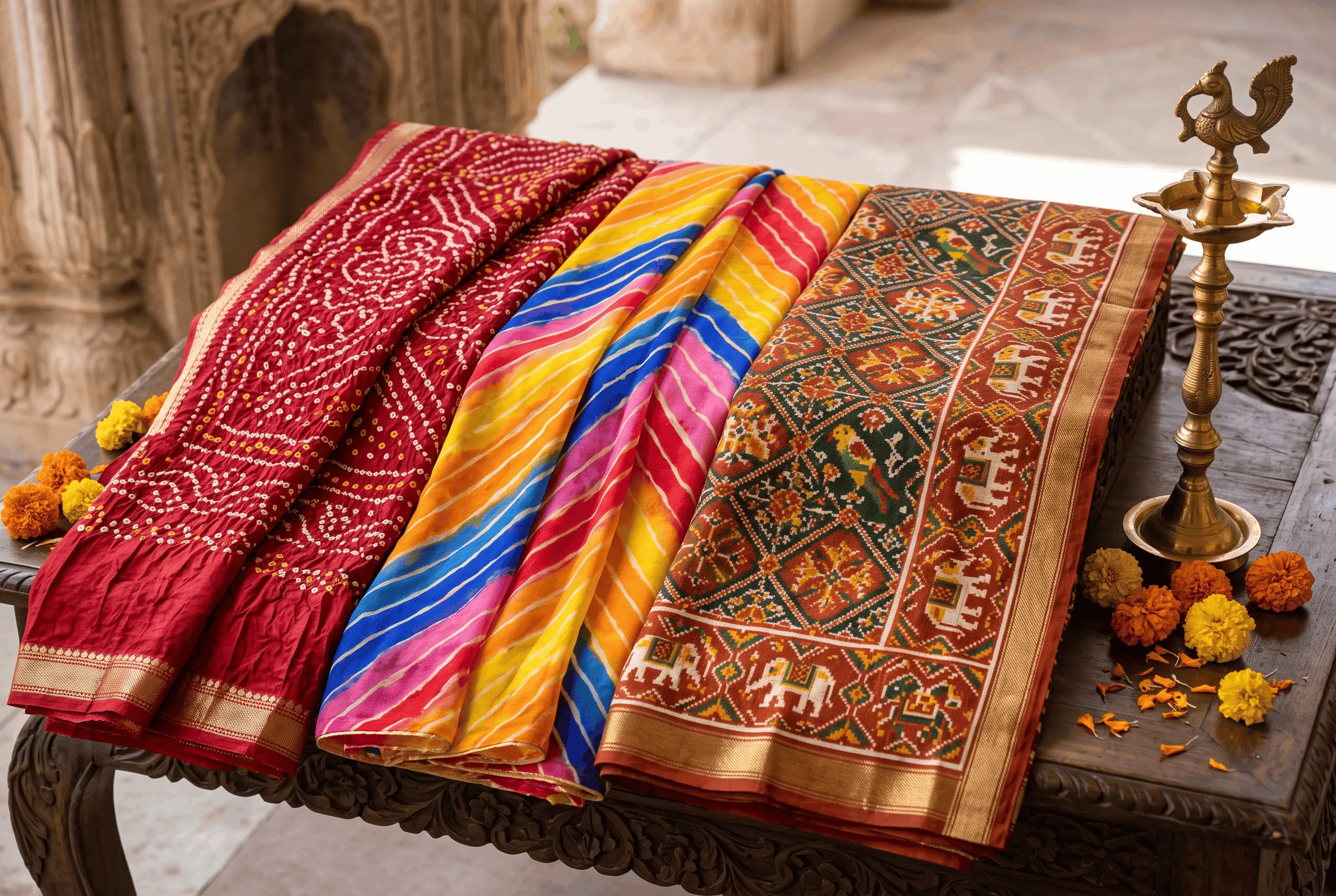
Read more about related textiles in our guide to Bandhani vs Leheriya vs Patola.
How to Style a Patola Saree
Patola needs very little decoration.
A plain silk blouse in one of the saree's colours, classic gold or kundan jewellery and a neat Nivi or Gujarati drape allow the woven pattern to speak for itself.
For a modern look, try a contrast brocade blouse or a structured high-neck blouse.
Caring for a Patola Saree
Dry-clean only, and only when necessary.
Store it wrapped in muslin or soft cotton, never in plastic.
Keep it away from direct sunlight and damp.
Refold every few months along different lines, and air it occasionally in the shade.
Our silk saree care guide has more tips for storing heirloom silk.
Common Misconceptions About Patola
"All Patola Is Double Ikat"
No. Patan Patola is double ikat, while Rajkot Patola is mostly single ikat.
"Printed Patola Is the Same as Woven Patola"
Printed designs only imitate the look. Real Patola is woven from pre-dyed threads.
"Rajkot Patola Is Not Real Patola"
Rajkot single ikat is a genuine handwoven ikat textile. It is simply made differently from Patan double ikat.
"A Heavier Saree Is Always More Authentic"
Weight alone does not prove authenticity. Check the weave, the reverse and the seller's information.
Is a Patola Saree Worth the Investment?
When you understand the craft, the patola saree price makes sense.
A Patan double ikat is a rare heirloom woven over many months by a handful of families, while a Rajkot single ikat is a beautiful, more affordable handwoven Patola.
Printed and powerloom versions are fine for casual wear, as long as you pay a fair price for what they are.
Check the motif edges, turn the saree over, ask the right questions and buy from trusted sellers.
For more Gujarati textiles, see our West India guide, and explore this season's looks in our traditional wear trends 2026 guide.
Comments (0)
Leave a Thought
No comments yet. Be the first to share your thoughts!