In many South Indian homes, a girl's festive wardrobe grows with her.
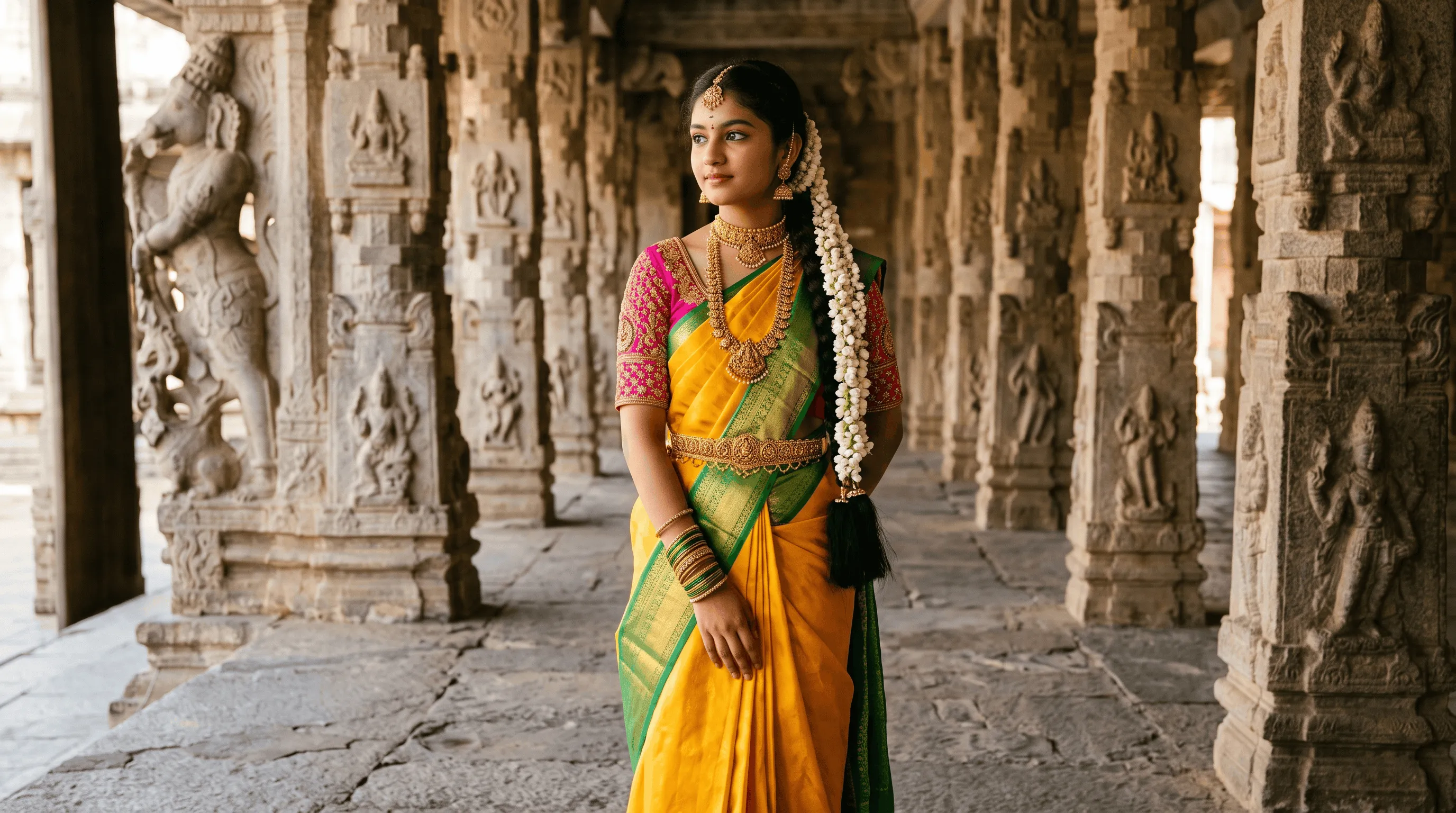
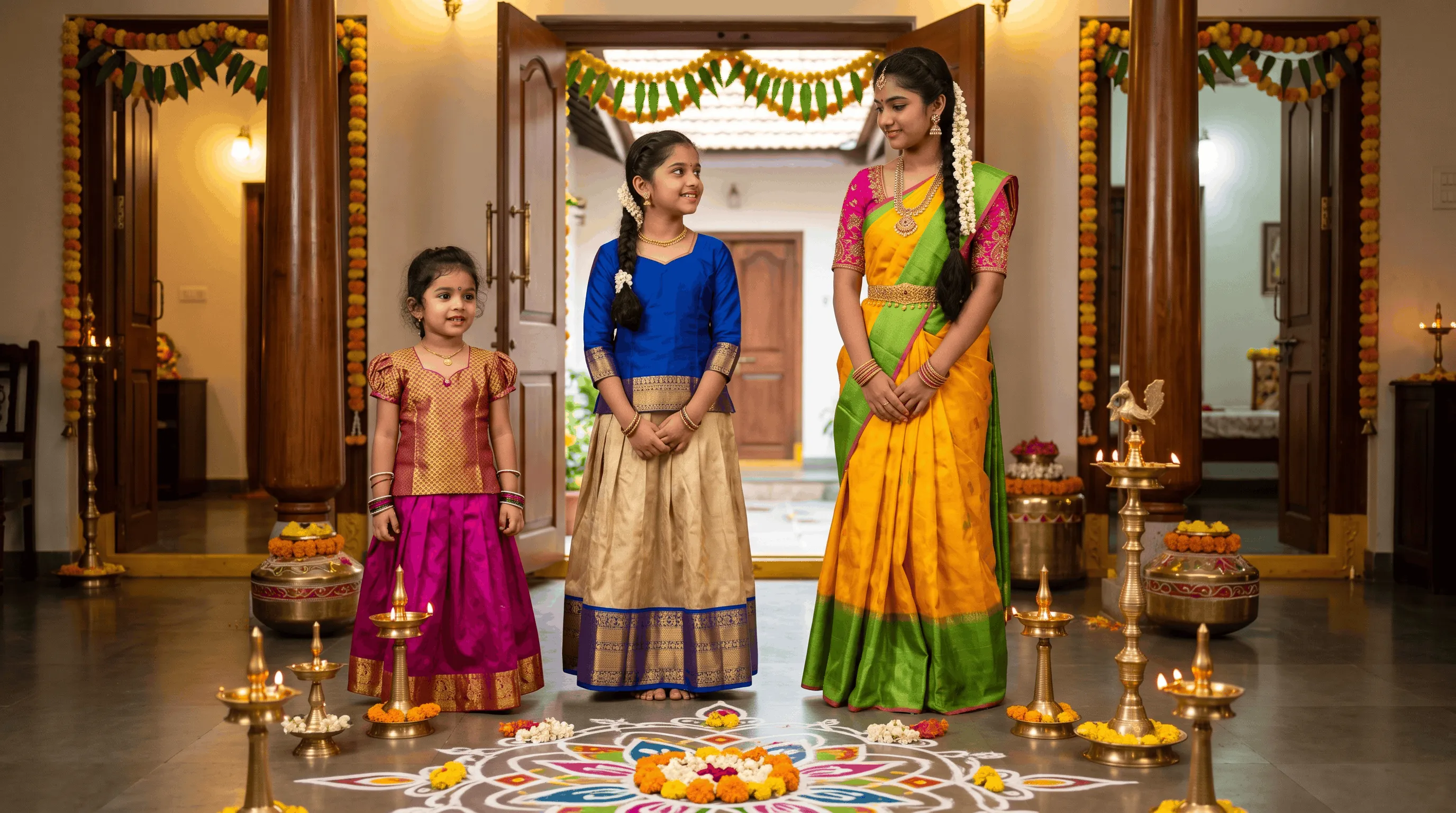
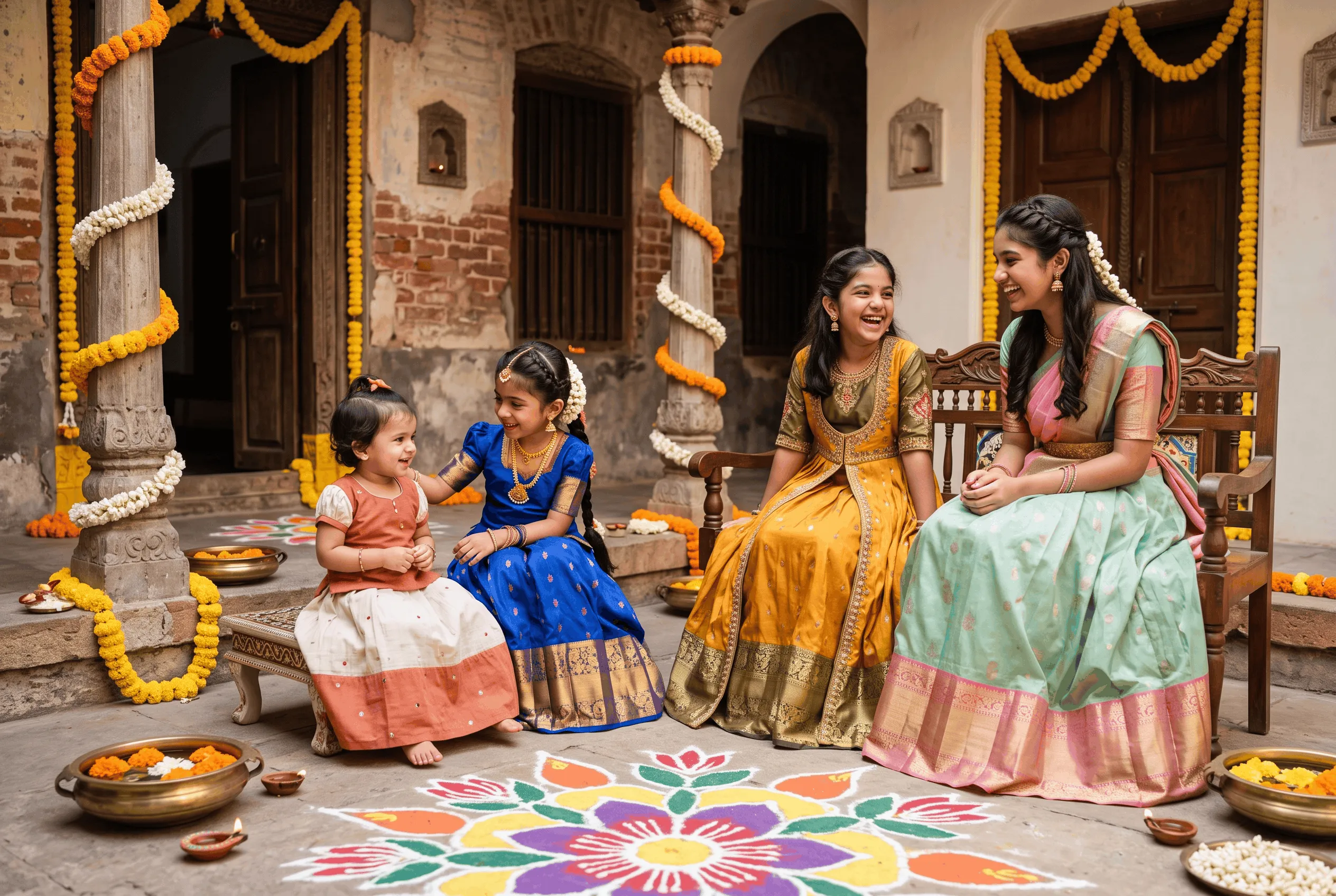
As a little girl she wears a pattu pavadai, a silk skirt with a blouse.
As a teenager she moves to the half saree, known as langa voni in Telugu and pavadai dhavani in Tamil, and later to her first full saree.
A half saree for girls is more than an outfit. It often marks an important family milestone and is worn with great pride at festivals, weddings and temple visits.
Today, both pattu pavadai and half sarees are also enjoying a style revival, with pastel colours, designer blouses and lighter silks appearing alongside the classic contrast-border looks.
This guide explains what they are, when they are worn, the silks used, traditional colours and motifs, how to drape a half saree, blouse and jewellery ideas, buying tips and price ranges.
What Is a Pattu Pavadai?
"Pattu" means silk and "pavadai" means skirt in Tamil.
A pattu pavadai is a long, flared silk skirt with a contrast border, worn with a matching or contrast blouse often called a sattai.
It is also known as pattu langa in Telugu and Kannada and pattu pavada in Malayalam.
Girls usually wear pattu pavadai from early childhood until their pre-teen years.
It is the traditional choice for temple visits, pujas, festivals such as Pongal, Onam, Ugadi, Varalakshmi Vratham, Navaratri and Diwali, family weddings, naming ceremonies and school cultural events.
What Is a Half Saree (Langa Voni)?
A half saree is a three-piece outfit.
The langa or pavadai is the long flared skirt.
The blouse is fitted, often with puff or elbow sleeves.
The voni, dhavani or davani is a half-length drape, usually about 2 to 2.5 metres, worn over the blouse and shoulder like a saree pallu.
| Region | Common name |
|---|---|
| Andhra Pradesh and Telangana | Langa voni, langa oni |
| Tamil Nadu | Pavadai dhavani |
| Karnataka | Langa davani |
| Kerala | Dhavani, pattu pavada with dhavani |
Half Saree for Girls: When Is It Worn?
Traditionally, the half saree is worn by girls in the years between childhood and adulthood, before they begin wearing a full saree.
The half saree function. In many South Indian families, a coming-of-age ceremony is held when a girl reaches puberty. It goes by different names in different communities and regions. At this ceremony, she is often gifted her first half saree, and in many families the maternal uncle plays a special role in this gift. Customs vary widely, so every family follows its own traditions.
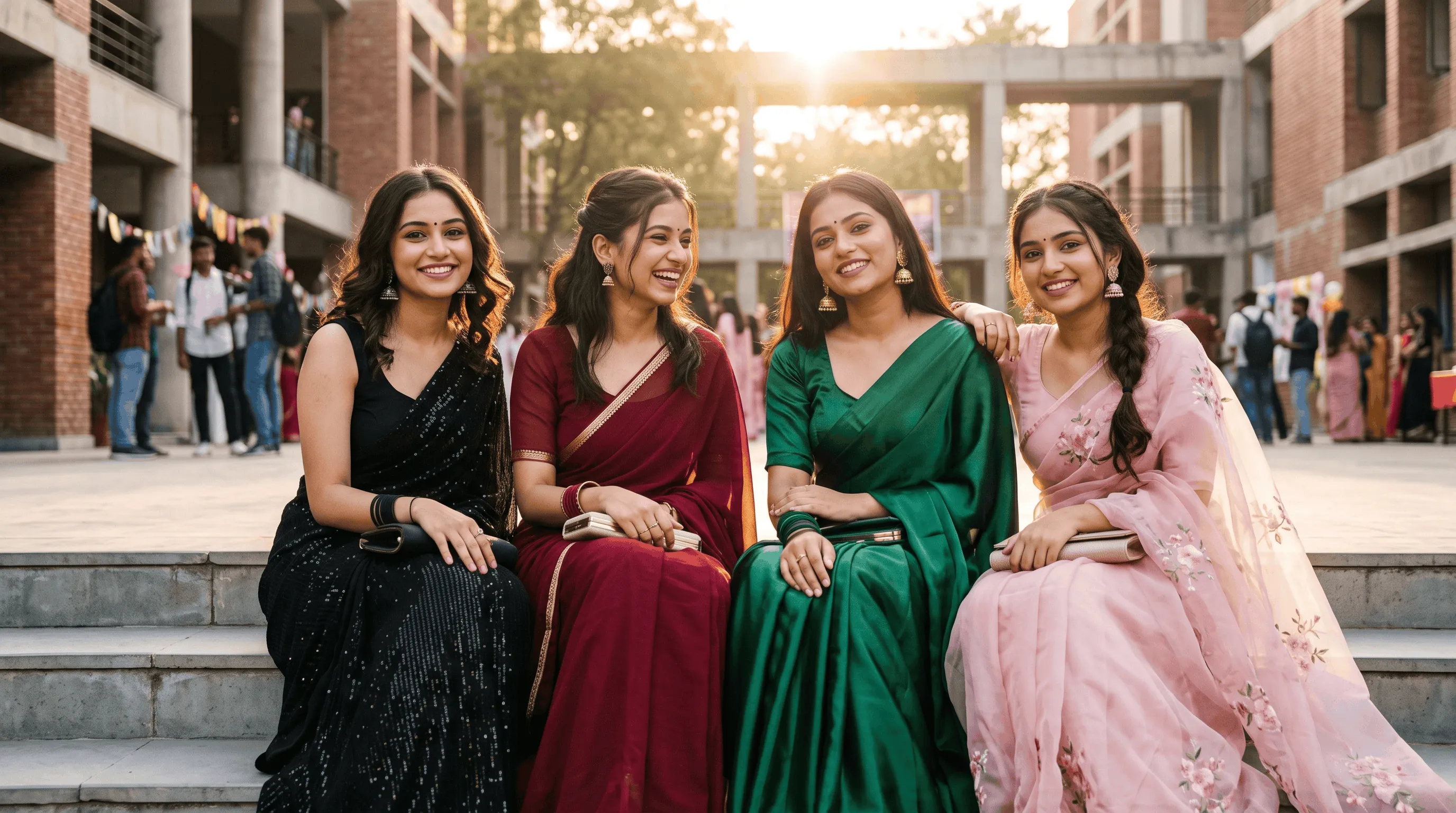
Festivals and weddings. Today, half sarees are also worn by teens and young women at festivals, weddings, engagement ceremonies and college traditional days, simply because they look beautiful.
A step towards the first saree. For many girls, the half saree is a comfortable way to get used to managing a drape before wearing a full saree. If she is preparing for her first full saree, our farewell saree ideas may help.
Silk Types for Pattu Pavadai and Half Sarees
| Silk | Look and feel | Best for | Notes |
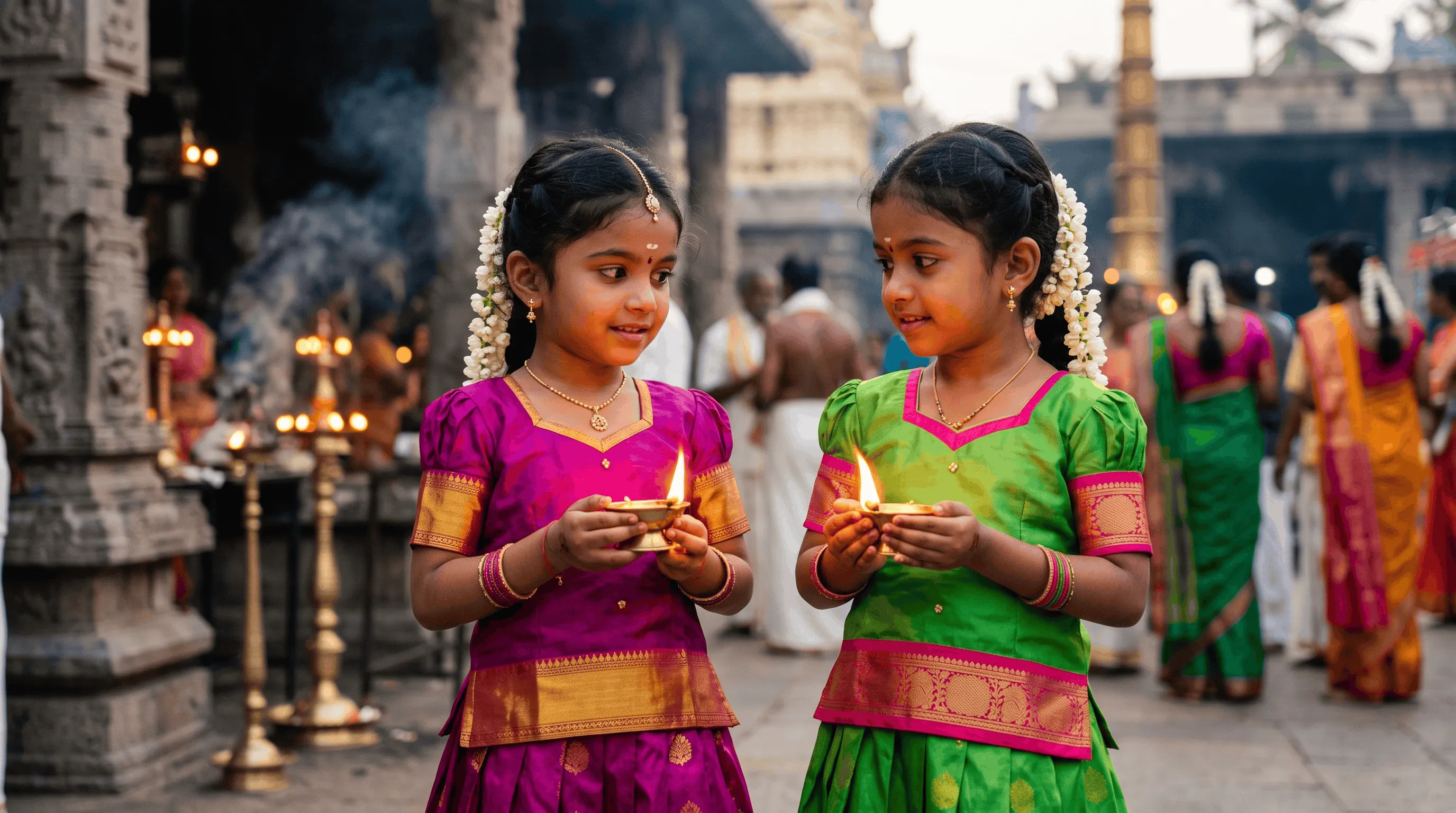
|---|---|---|---|
| Kanchipuram silk | Heavy, lustrous, bold contrast borders | Weddings, the half saree function | The most traditional and most expensive |
| Dharmavaram silk | Rich, broad borders, lighter than Kanchipuram | Festivals, weddings | Popular in Andhra Pradesh |
| Arani silk | Light, soft, affordable silk | Regular festivals, temple visits | Good everyday-festive choice |
| Mysore silk | Smooth, light, fine zari | Older girls, light functions | Elegant and easy to drape |
| Soft silk | Light and flowing | Teens who want comfort | Easy to manage |
| Silk-cotton | Light and breathable | Hot weather, younger girls | Comfortable and affordable |
| Art silk | Silk-like shine | Budget purchases, growing children | Not real silk |
Kanchipuram silk is the classic choice for the half saree function and weddings. To check purity, see our guide on how to identify pure Kanjivaram silk, and read our Kanchipuram silk guide for the weave's history.
Arani, soft silk and silk-cotton are far more practical for younger girls who are growing quickly and for regular festivals.
Mysore silk suits older girls who prefer a smoother, lighter drape. Our comparison of Mysore silk vs Kanjivaram explains the difference.
Traditional Colours and Borders
Bold contrast is the heart of South Indian silk.
Classic combinations include mango yellow with a green or maroon border, pink with a parrot green border, magenta with an orange or gold border, peacock blue with a magenta border, red with a gold border and parrot green with a pink border.
For a half saree, the langa, blouse and voni are often in three different colours that complement each other, such as a green langa, a pink blouse and a yellow voni.
This three-colour combination is one of the most recognisable and joyful looks in South Indian festive dressing.
Popular Motifs on Pattu Pavadai and Half Sarees
Mango (paisley) motifs are among the most common designs on borders and pallus.
Peacocks and parrots add a festive, playful touch.
Temple borders with triangular, tower-like patterns give a classic ceremonial look.
Checks and stripes on the body create a traditional, structured design.
Small buttas (buttis) scattered across the skirt keep the look elegant for younger girls.
Half Saree Trends for 2026
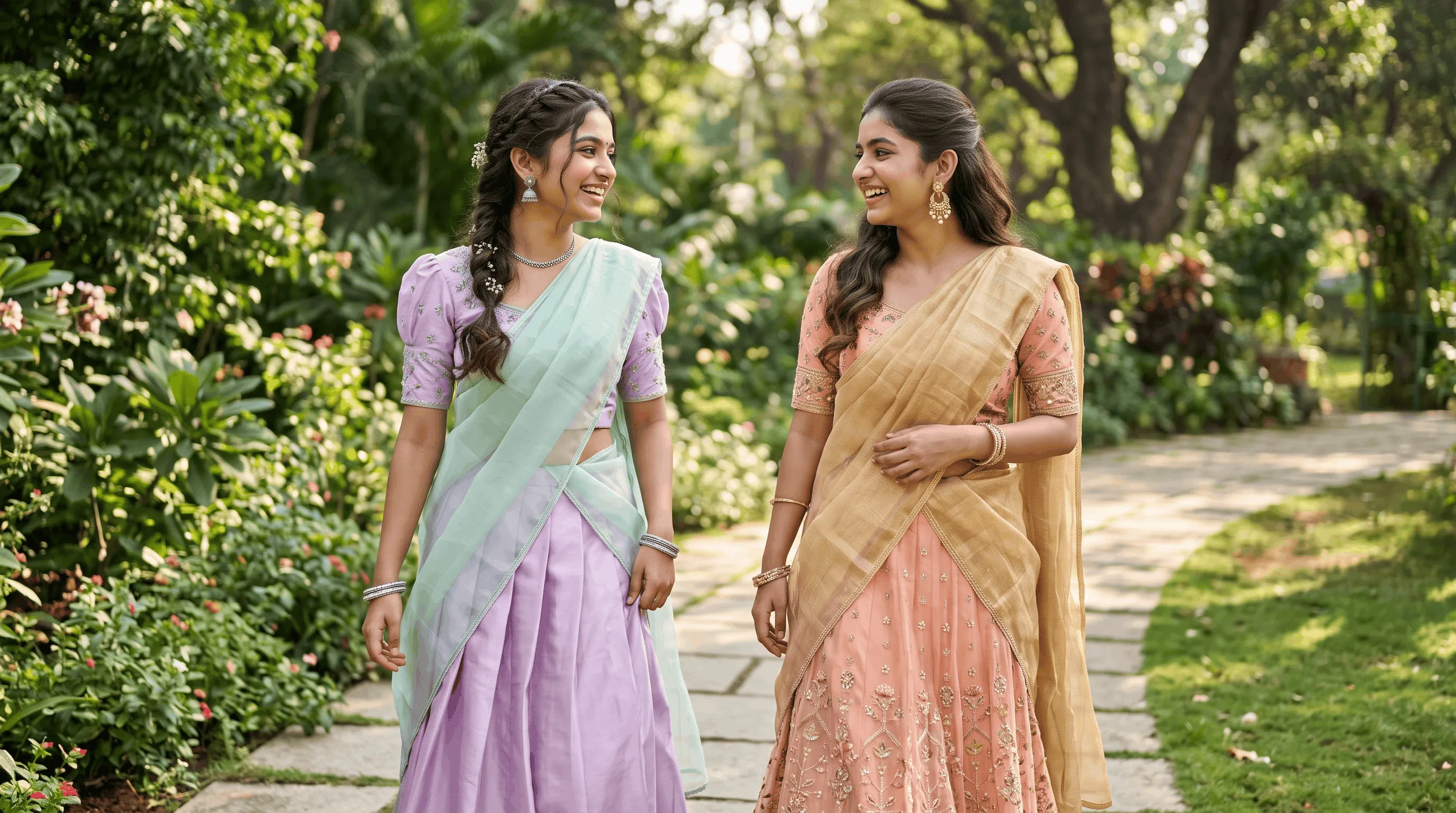
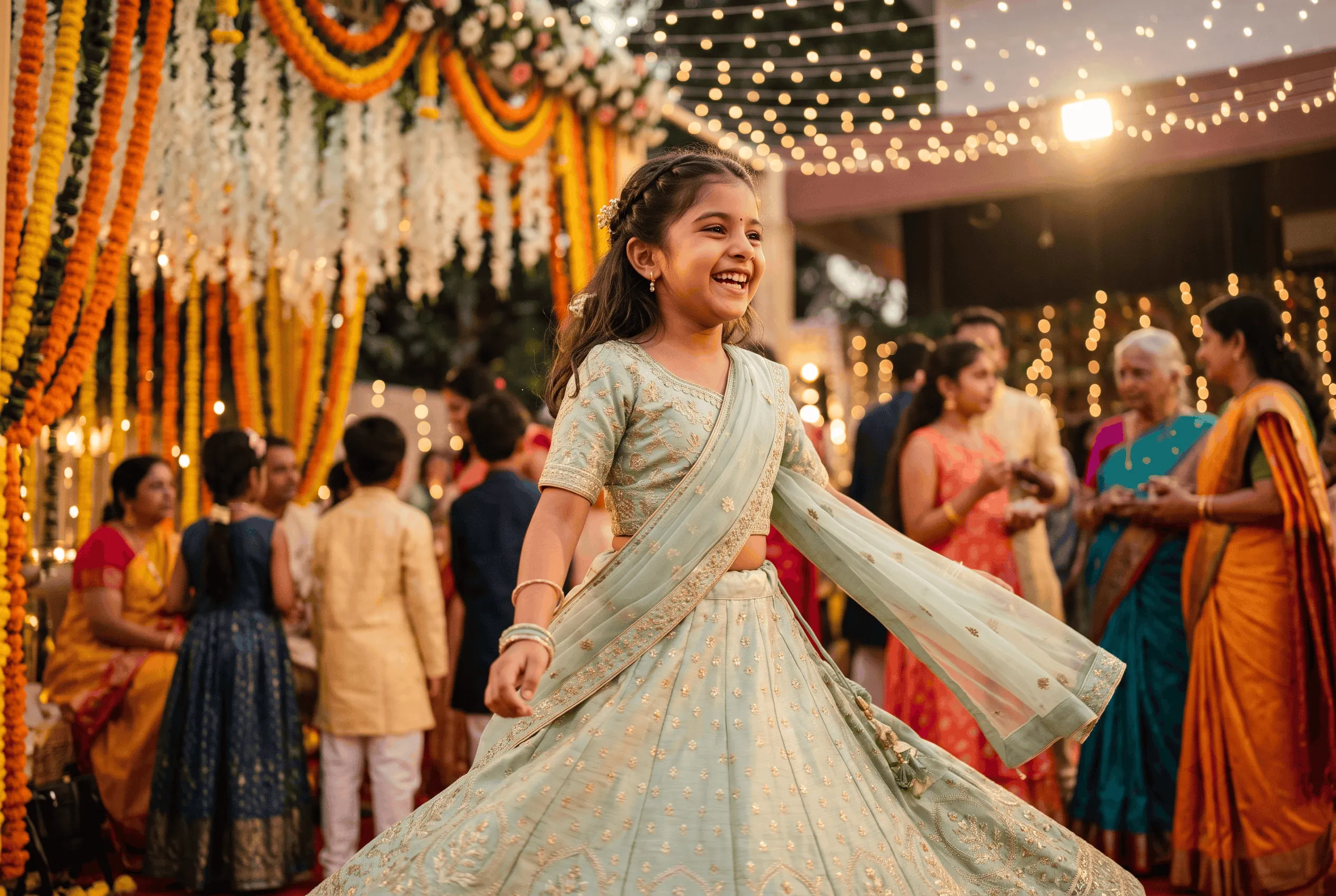
Pastel half sarees in mint, peach, lilac and powder blue with gold borders are very popular with teens.
Lehenga-style half sarees use a fuller, embroidered skirt with a silk voni for a more modern look.
Designer blouses with puff sleeves, high necks or sweetheart necklines add a contemporary touch.
Organza and tissue vonis paired with silk langas create a lighter, shimmering effect.
Mix-and-match sets let girls combine different langas, blouses and vonis to create several looks from a few pieces.
How to Drape a Half Saree (A Simple Method)
There are many regional ways to drape a half saree. Here is a simple, common method.
Step 1: Wear the blouse and langa, tying the langa firmly at the waist so it does not slip.
Step 2: Tuck one end of the voni into the langa waistband at the front, slightly to the left of the navel.
Step 3: Take the voni around your back from left to right, keeping the top edge at waist level.
Step 4: Bring it to the front at the right side and take it diagonally across the chest towards the left shoulder.
Step 5: Pleat the pallu into neat folds of about 4 to 5 inches and place them on the left shoulder.
Step 6: Pin the pleats to the blouse at the shoulder with a safety pin.
Step 7: Adjust the front. Some families tuck the lower edge of the diagonal drape at the right waist so more of the langa shows, while others leave it loose.
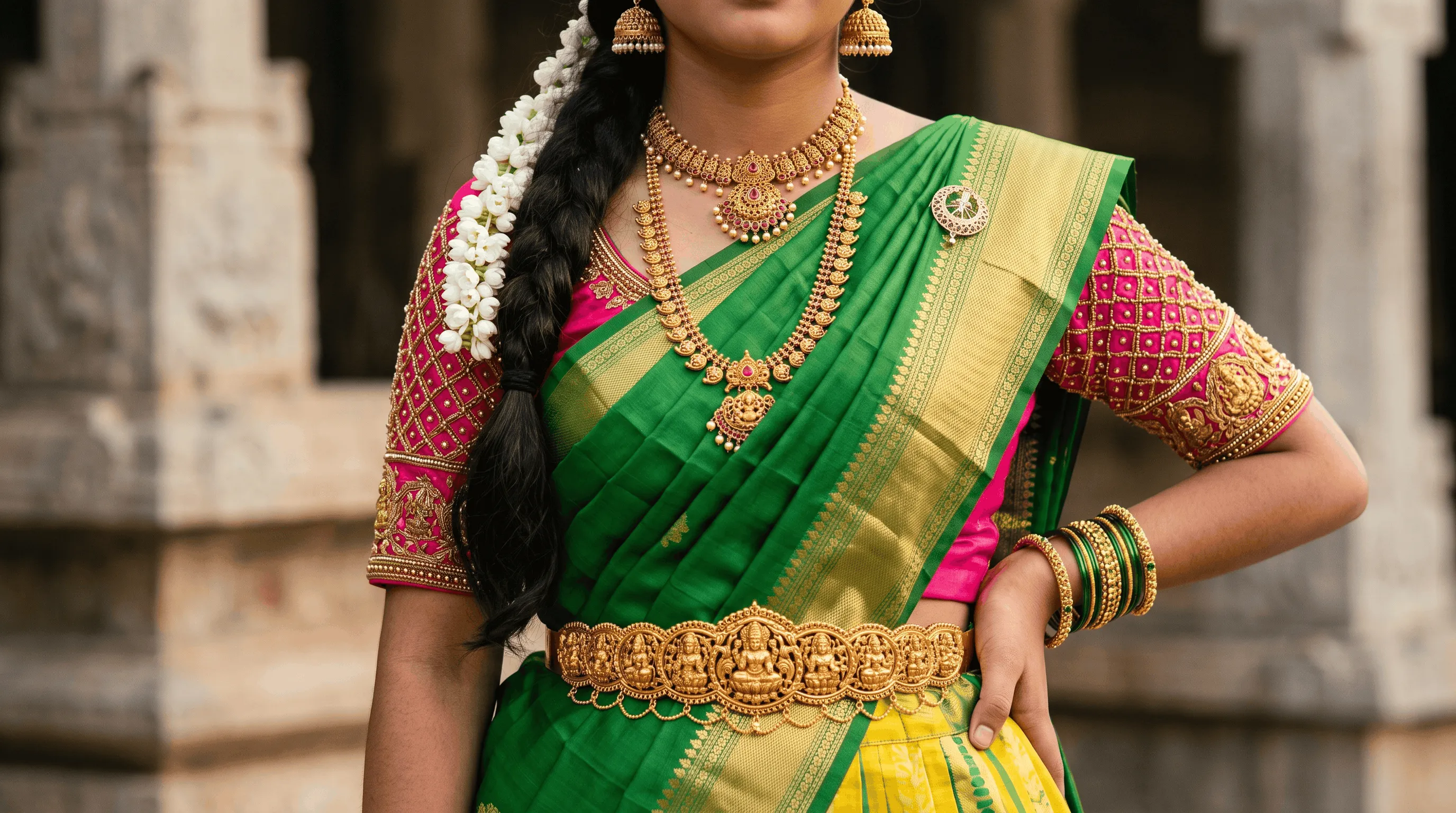
Step 8: Add a waist belt (vaddanam or oddiyanam) to hold everything neatly in place.
Practise once before the event. For help with other drapes, see our saree draping styles guide.
Blouse Designs for Pattu Pavadai and Half Sarees
Puff sleeves are a classic, youthful choice for both pattu pavadai and half sarees.
Elbow-length sleeves with a zari border look traditional and elegant for the half saree function.
High necklines look graceful and pair well with long necklaces.
Boat necks suit teenagers who want a slightly more modern look.
Contrast blouses in the border colour tie the whole outfit together.
Choose a soft lining for comfort, especially with heavy silk.
Jewellery to Complete the Look
Temple jewellery with deity and floral motifs is the classic choice for necklaces, jhumkas and bangles.
A vaddanam or oddiyanam (decorative waist belt) holds the half saree in place and adds a regal touch.
A jada or jadai billai (hair ornament) is worn along the braid, often with jasmine flowers.
A maang tikka or nethi chutti adorns the forehead.
A mango mala or kasu mala (longer necklace) is popular for the half saree function.
For younger girls, keep it light with small jhumkas, a simple chain and fresh flowers. Imitation temple jewellery is widely available and perfect for children.
Hairstyles for Pattu Pavadai and Half Sarees
A long braid decorated with jasmine flowers is the most traditional and loved hairstyle.
A jada or hair jewellery along the braid creates a festive look for weddings and the half saree function.
For shorter hair, a small bun with a flower gajra or a half-up style with a decorative clip works well.
Buying Tips
Measure carefully. The langa should reach the ankle, with some hem allowance for growth.
Stitched or unstitched. Many silk pattu pavadais are sold as fabric. Stitching gives a better fit, so allow two to three weeks before festivals.
Add a lining. Silk can feel rough on young skin, and a soft cotton lining helps.
Balance the flare. A good flare gives the classic look but adds weight, so keep it moderate for younger girls.
Consider ready-made sets. Ready-made half saree sets are convenient for teens who need something quickly.
Price Guide
These are indicative 2026 ranges. Prices vary by city, seller, silk and zari.
| Outfit | Indicative price range |
|---|---|
| Art silk or silk-cotton pattu pavadai | ₹800 – ₹3,000 |
| Soft silk or Arani silk pattu pavadai | ₹2,000 – ₹6,000 |
| Pure Kanchipuram pattu pavadai | ₹6,000 – ₹25,000+ |
| Ready-made half saree set (blend fabrics) | ₹2,500 – ₹10,000 |
| Pure silk half saree (Kanchipuram, Dharmavaram) | ₹12,000 – ₹50,000+ |
| Stitching charges for langa and blouse | ₹800 – ₹3,000 |
Caring for Silk Pattu Pavadai and Half Sarees
Dry-clean pure silk outfits rather than washing them at home.
Store them folded in muslin or cotton cloth, never in plastic.
Wrap zari borders in tissue paper to prevent tarnishing.
Refold every few months along different lines so creases do not weaken the silk.
Well-kept silk pavadais are often passed down to younger sisters and cousins. Our silk saree care guide has more detailed tips.
Common Mistakes to Avoid
Buying a langa much too long "to grow into" creates a tripping risk.
Choosing very heavy Kanchipuram silk for a young child can make long functions uncomfortable.
Skipping a lining often makes silk blouses scratchy.
Leaving the drape until the morning of the event, without a practice run, can cause stress.
Why Pattu Pavadai and Half Sarees Still Matter
A pattu pavadai and a half saree for girls carry a great deal of love and tradition.
From a little girl's first silk skirt at a temple festival to the half saree gifted at her coming-of-age ceremony, these outfits mark the years of a girl's life.
Choose a silk that suits her age and the occasion, celebrate bold colour combinations, practise the drape at home and complete the look with temple jewellery and fresh flowers.
For more about the textiles of the South, see our South India guide, and explore the season's looks in our traditional wear trends 2026 guide.
Comments (0)
Leave a Thought
No comments yet. Be the first to share your thoughts!