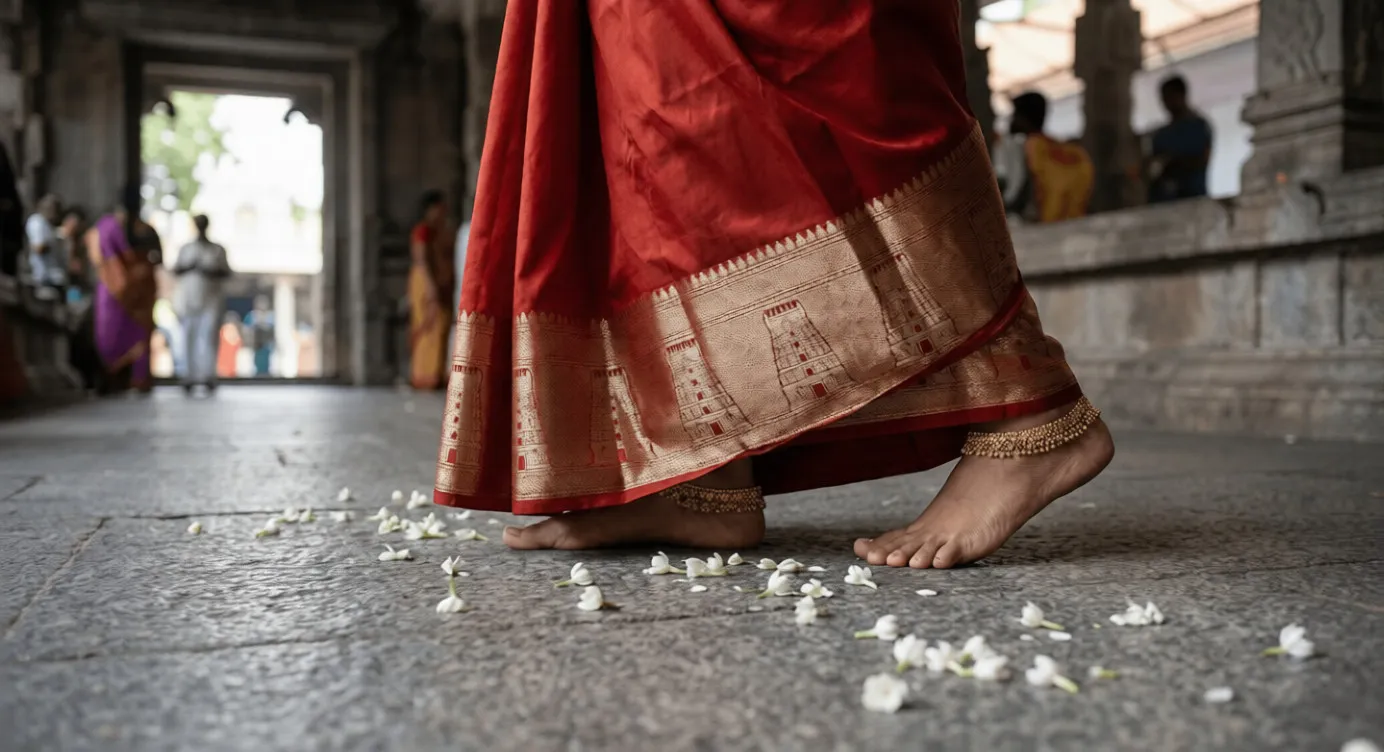
Introduction: Understanding South Indian Ethnic Fabrics
If you are searching for South Indian ethnic wear fabrics, you are likely trying to understand which fabrics are traditionally used in South India, how they differ from North Indian textiles, which ones are authentic, and how to choose the right fabric for weddings, festivals, or daily traditional wear.
Having worked closely with Kanchipuram silk weavers, Kerala handloom cooperatives, Andhra cotton clusters, and Tamil Nadu textile markets, I can say with certainty that South Indian fabrics are deeply rooted in temple culture, climate wisdom, ritual purity, and durability. These fabrics are not just about appearance—they are about longevity, symbolism, and respect for tradition.
This guide will help you understand the history, types, quality markers, uses, and care of South Indian ethnic wear fabrics so you can make informed, respectful, and value-driven choices.
History and Cultural Origins of South Indian Fabrics
South India’s textile tradition evolved very differently from the North due to climate, geography, temple-based economies, and maritime trade.
Key historical influences include:
- Temple culture: Fabrics were woven for rituals, deities, and ceremonial wear
- Hot and humid climate: Encouraged breathable cottons and later structured silks
- Maritime trade with Rome, Southeast Asia, and the Middle East introduced fine yarns
- Dynasties like Cholas, Pallavas, Vijayanagara Empire patronized silk weaving
Unlike Mughal-influenced northern textiles, South Indian fabrics emphasize strong borders, solid colors, symbolic motifs, and longevity.
Major Types of South Indian Ethnic Wear Fabrics
1. Kanchipuram Silk (Tamil Nadu)
Kanchipuram silk is the most iconic South Indian fabric, especially associated with temple weddings and bridal wear.
Key characteristics:
- Pure mulberry silk
- Real gold or silver zari (traditionally silver dipped in gold)
- Heavy silk body with contrasting borders
- Temple motifs, checks, stripes, and mythological symbols
A genuine Kanchipuram saree is woven in parts—the body and border are joined using a strong interlocking technique.
2. Mysore Silk (Karnataka)
Mysore silk is known for its smooth texture, minimalistic elegance, and soft sheen.
Key characteristics:
- Pure silk with less heavy zari
- Plain body with simple borders
- Lightweight compared to Kanchipuram
It is preferred for formal functions and women who want elegance without heaviness.
3. Kerala Kasavu Fabric (Kerala)
Kasavu is a traditional off-white or ivory fabric with a gold zari border, worn during festivals like Onam and Vishu.
Base fabric:
- Handwoven cotton or cotton-silk blend
Kasavu represents purity, simplicity, and cultural pride.
4. Ilkal Silk & Cotton (Karnataka)
Ilkal fabric is known for its distinctive border and pallu weaving technique.
Key traits:
- Cotton-silk blend
- Red pallu with white motifs
- Durable and affordable
Traditionally worn for daily wear and temple visits.
5. Pochampally Ikat (Telangana)
Pochampally is famous for its ikat dyeing technique, where yarns are dyed before weaving.
Key characteristics:
- Geometric patterns
- Cotton, silk, or silk-cotton blends
- GI-tagged fabric
The precision required makes authentic ikat highly valuable.
6. Chettinad Cotton (Tamil Nadu)
Chettinad cotton is a robust, breathable fabric traditionally worn by women for daily and semi-formal use.
Key traits:
- Bold checks and stripes
- Earthy colors
- Extremely durable
How to Identify Quality and Authenticity
1. Zari Examination
- Real zari is not overly shiny
- It ages gracefully instead of peeling
2. Silk Feel Test
- Pure silk feels warm when rubbed
- Synthetic silk feels slippery and cold
3. Weave Strength
- South Indian silks are heavier and denser
- Borders are tightly woven, never glued
4. GI Tags & Cooperative Labels
- Kanchipuram, Pochampally, Mysore silk often carry authenticity tags
Uses and Occasions
| Fabric | Common Uses |
|---|---|
| Kanchipuram Silk | Weddings, bridal wear, temple rituals |
| Mysore Silk | Formal events, receptions |
| Kasavu | Onam, Vishu, religious ceremonies |
| Ilkal | Daily traditional wear |
| Pochampally | Festivals, office ethnic wear |
| Chettinad Cotton | Daily wear, summer functions |
Care and Maintenance Tips
- Always dry clean pure silk sarees
- Store silk wrapped in cotton or muslin cloth
- Refold sarees every 6 months to avoid zari breakage
- Never spray perfume directly on silk or zari
- Kasavu cotton can be gently hand-washed
Common Myths and Buying Mistakes
Myth 1: All heavy silk sarees are Kanchipuram
→ False. Many powerloom sarees imitate Kanchipuram designs.
Myth 2: Brighter zari means better quality
→ False. Real zari is subtle, not flashy.
Mistake: Buying without checking borders
→ In authentic South Indian silks, borders are woven—not stitched.
Comments (0)
Leave a Thought
No comments yet. Be the first to share your thoughts!