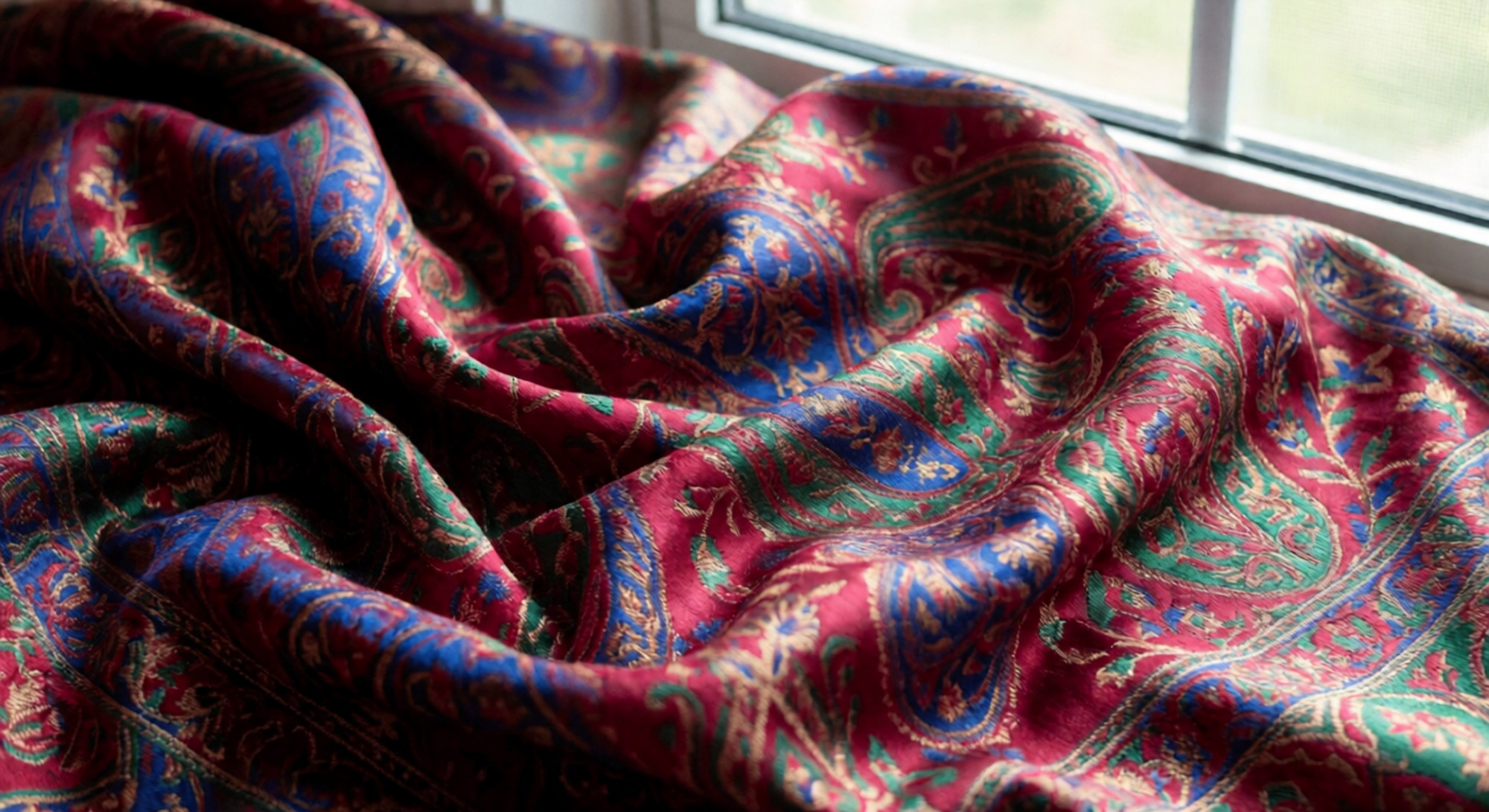
Introduction: Silk – A Fabric Fit for Royalty
In the grand tapestry of Indian textiles, silk reigns supreme. Revered for its luminous sheen, delicate softness, and unmatched elegance, silk has long been associated with royalty, divinity, and celebration. From ancient dynasties to modern-day fashion runways, silk has never lost its prestige.
In India, silk is more than a fabric—it is a symbol of prosperity, tradition, and cultural pride. Worn during weddings, religious rituals, festivals, and royal ceremonies, silk reflects the nation’s rich heritage and skilled craftsmanship passed down through generations.
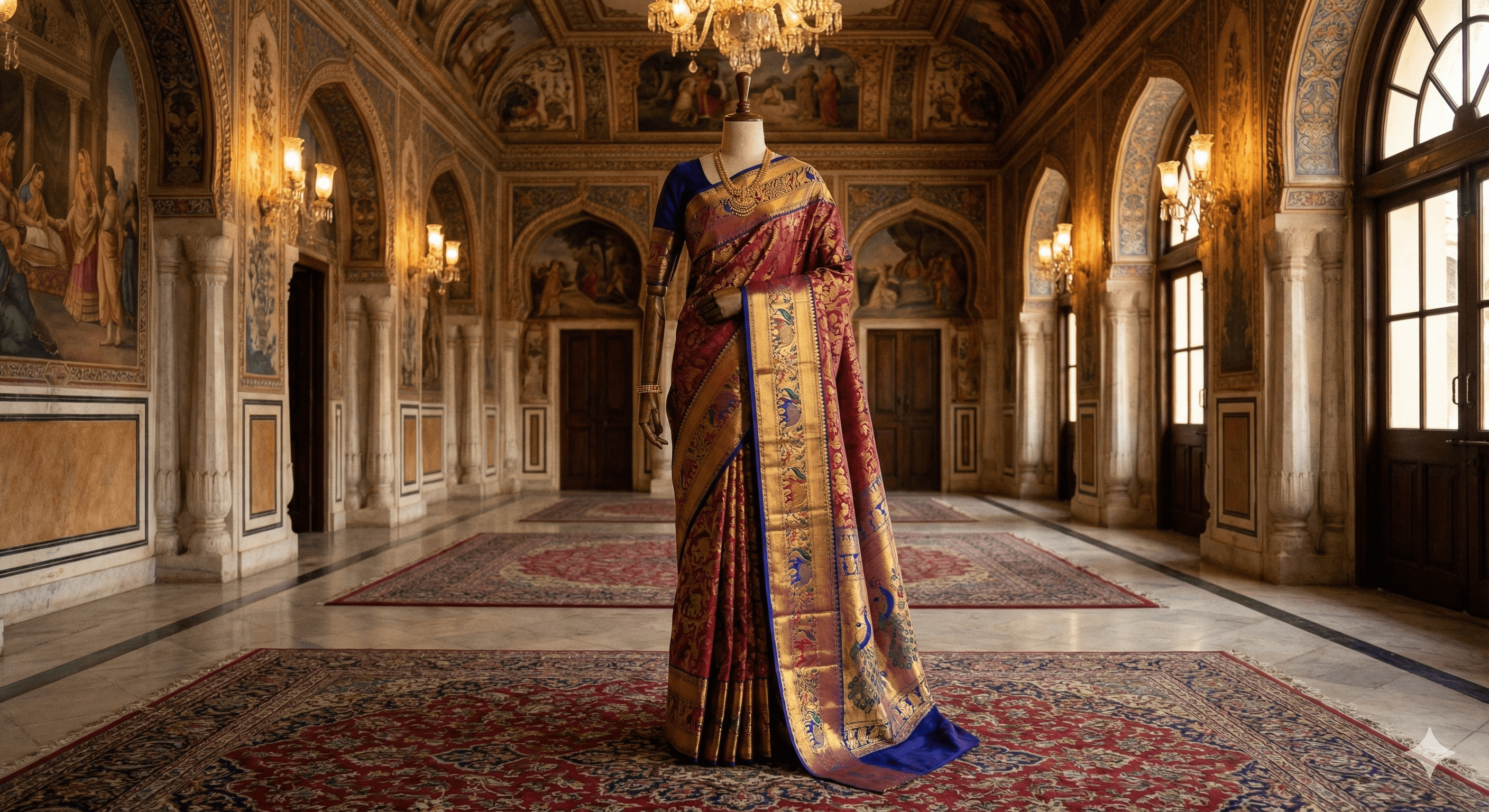
The Ancient Origins of Silk in India
India’s relationship with silk dates back over 5,000 years, making it one of the earliest silk-producing civilizations in the world. While China is often credited as the birthplace of silk, India independently developed its own silk traditions using indigenous silkworm species and weaving techniques.
Silk was extensively traded along ancient routes, reaching Rome, Persia, and Southeast Asia. Indian silk was prized for its:
- Rich colors
- Fine weaving
- Intricate motifs
- Superior durability
Royal courts and temples patronized silk weavers, elevating the fabric to a status of divine luxury.
Silk and Spirituality: A Sacred Connection
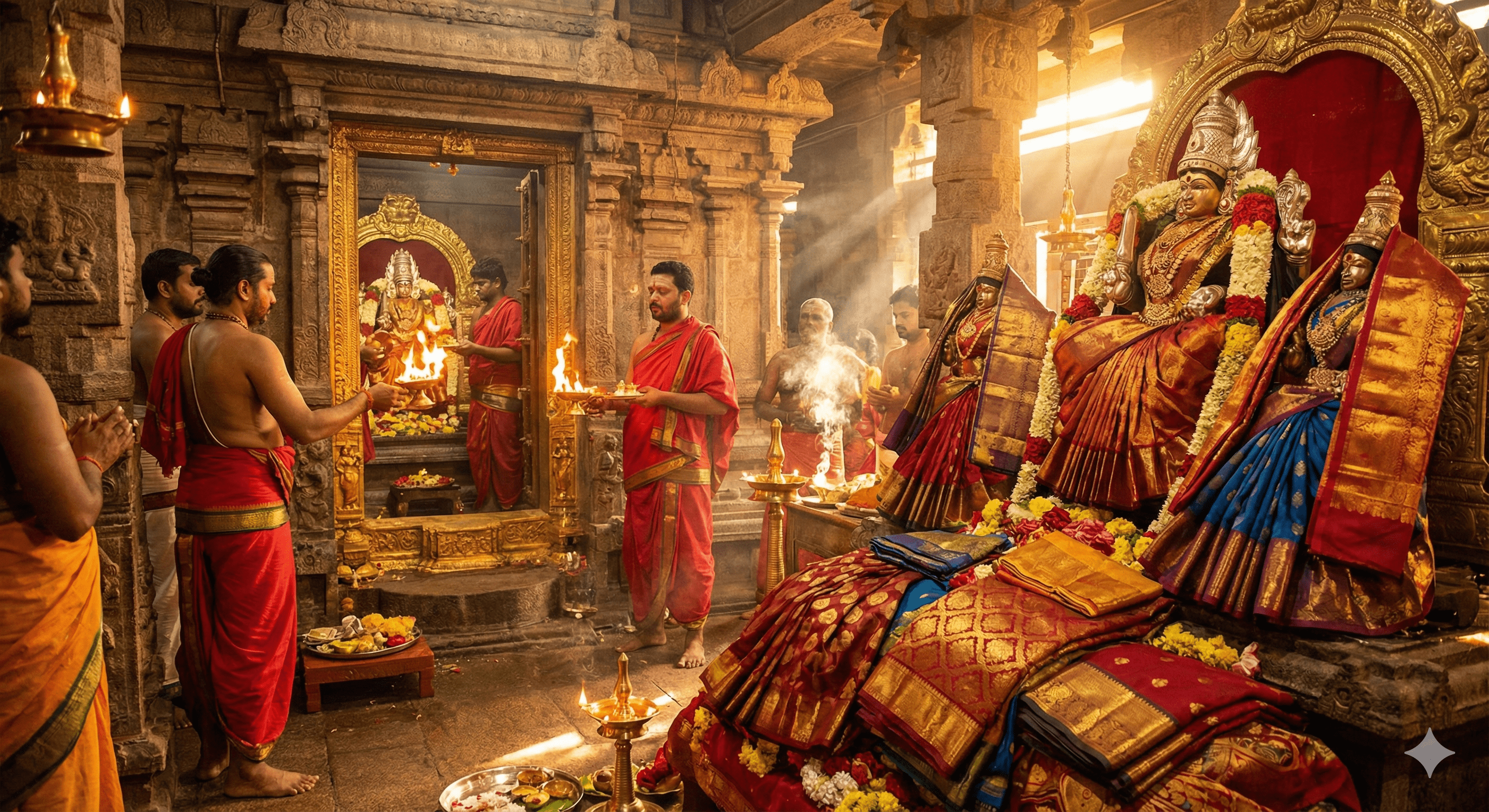
Silk holds deep spiritual significance in Indian culture. It is considered pure and auspicious, making it an essential fabric for:
- Temple offerings
- Idol draping
- Religious ceremonies
- Traditional rituals
In many Indian households, silk garments are worn for the first time during sacred milestones such as weddings, childbirth ceremonies, and festivals.
Regional Varieties of Indian Silk
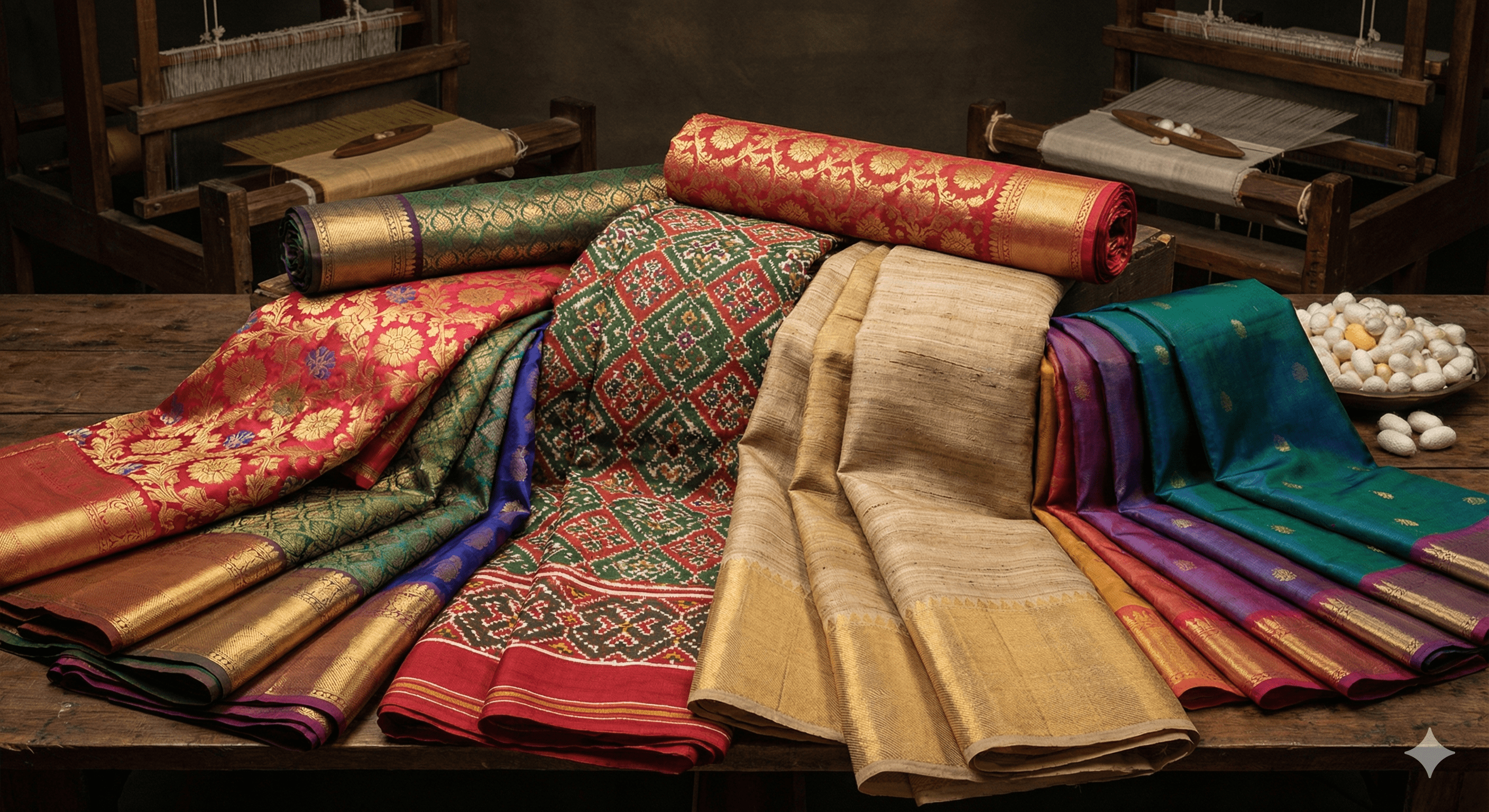
India’s geographical diversity has given rise to distinct silk traditions, each reflecting local culture, climate, and artistic expression.
1. Kanchipuram Silk – Tamil Nadu
Known as the queen of silk sarees, Kanchipuram silk is famous for:
- Thick pure silk yarn
- Heavy gold zari borders
- Temple-inspired motifs
These sarees are a staple for South Indian weddings and are often passed down as heirlooms.
2. Banarasi Silk – Uttar Pradesh
Banarasi silk is celebrated for its:
- Mughal-inspired floral designs
- Intricate brocade weaving
- Luxurious texture
Traditionally worn by brides, Banarasi silk symbolizes opulence and timeless beauty.
3. Patola Silk – Gujarat
One of the rarest silks in the world, Patola is created using the double ikat technique, where both warp and weft threads are resist-dyed before weaving. The result is perfect geometric symmetry and vibrant colors.
4. Tussar Silk – Eastern India
Also known as wild silk, Tussar is valued for its:
- Natural golden hue
- Rich texture
- Earthy elegance
It is often used for understated yet sophisticated garments.
5. Mysore Silk – Karnataka
- Mysore silk is known for its:
- Lightweight feel
- Exceptional smoothness
- Minimalistic zari work
Perfect for those who prefer elegance without excess ornamentation.
The Art of Silk Weaving: A Heritage Craft
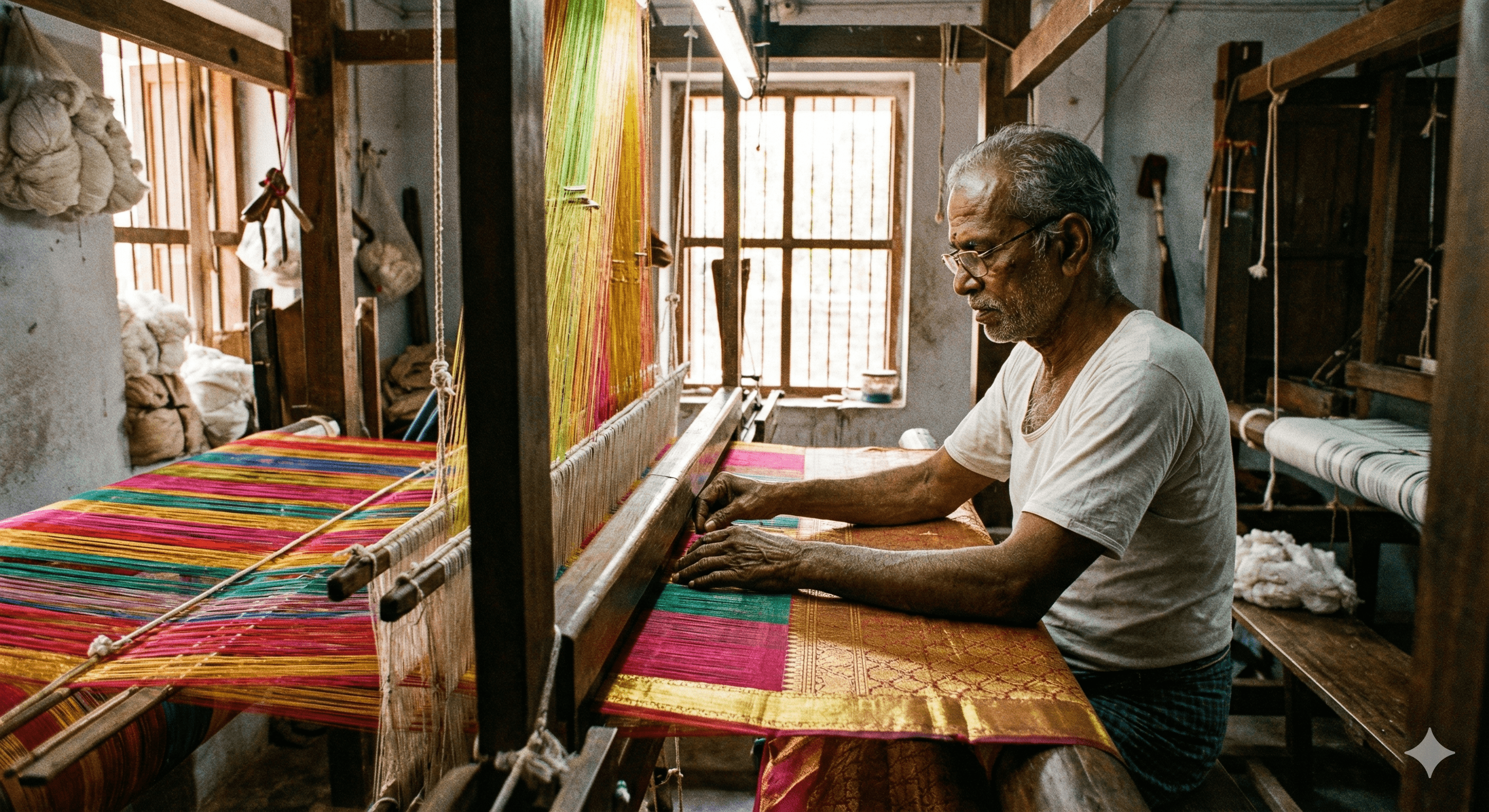
Silk weaving in India is a time-intensive, highly skilled art form. Many weaving families have practiced this craft for centuries, passing techniques from one generation to the next.
- The process includes:
- Silk yarn extraction
- Natural or chemical dyeing
- Designing motifs
- Handloom weaving
- Zari integration
A single silk saree can take 15 days to several months to complete, depending on complexity.
Why Silk Is the Most Luxurious Fabric
Silk stands apart from all other textiles due to its unique qualities:
✨ Natural luster that reflects light beautifully
🌿 Breathability, suitable for both summer and winter
🧵 Durability when properly maintained
👑 Regal appearance unmatched by synthetic fabrics
Unlike artificial fibers, silk ages gracefully, becoming softer and more elegant over time.
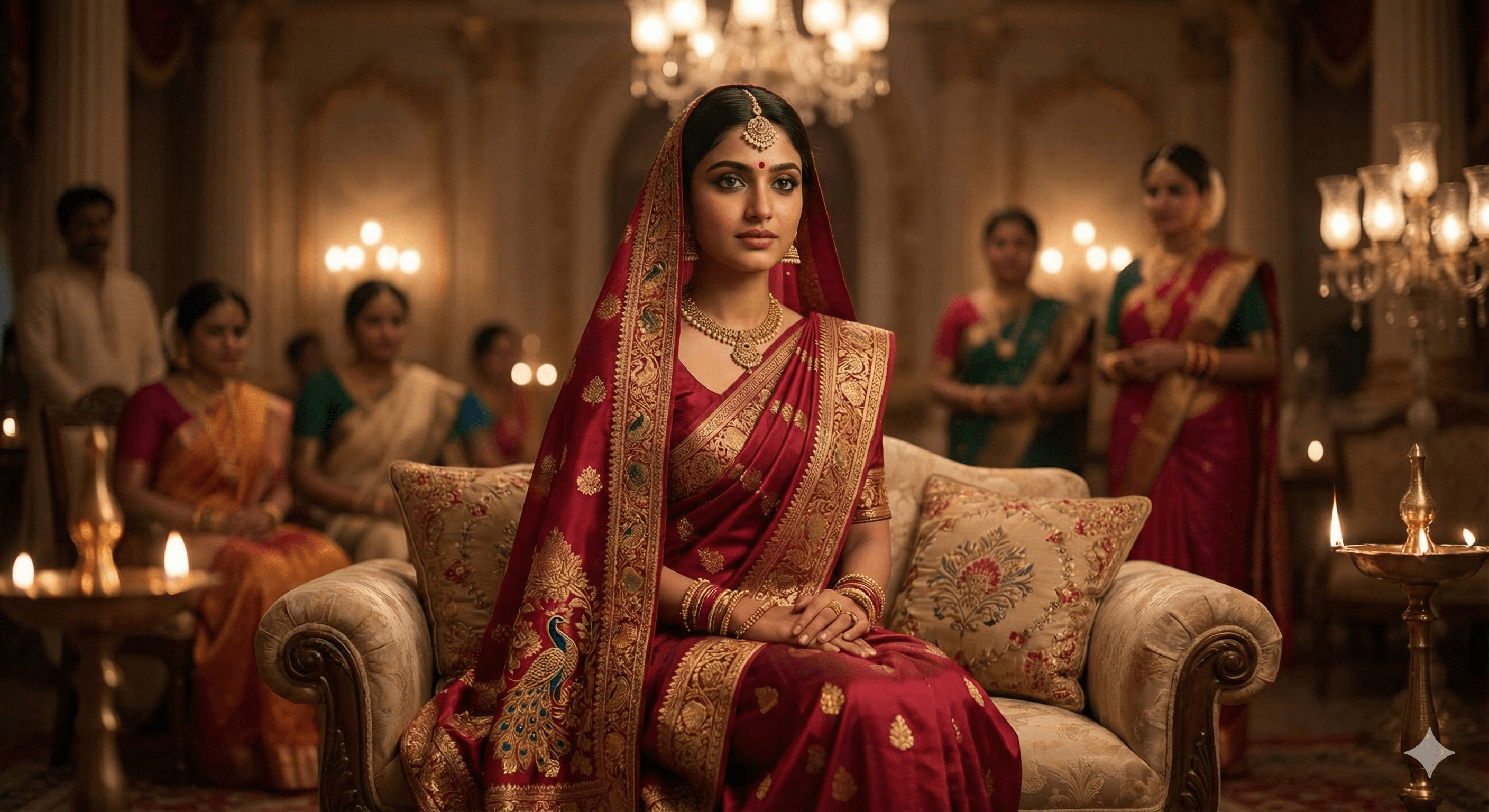
Silk in Weddings: A Symbol of Prosperity
In Indian weddings, silk is not optional—it is essential. Brides and grooms across regions wear silk to symbolize:
- Wealth
- Purity
- Blessings for a prosperous future
From bridal sarees to sherwanis and dupattas, silk remains the most preferred fabric for matrimonial ceremonies.
Silk in Contemporary Fashion
Modern designers are redefining silk beyond tradition. Today, silk appears in:
- Contemporary sarees
- Indo-western outfits
- Luxury kurtas
- Sustainable fashion collections
Silk blends tradition with innovation, making it relevant for modern wardrobes while preserving its heritage.
Care and Preservation of Silk
To maintain silk’s beauty:
- Always dry clean
- Store in breathable cotton covers
- Avoid direct sunlight
- Keep away from perfumes and moisture
Proper care ensures silk garments last for decades, becoming cherished family heirlooms.
Conclusion: A Legacy Woven Through Time
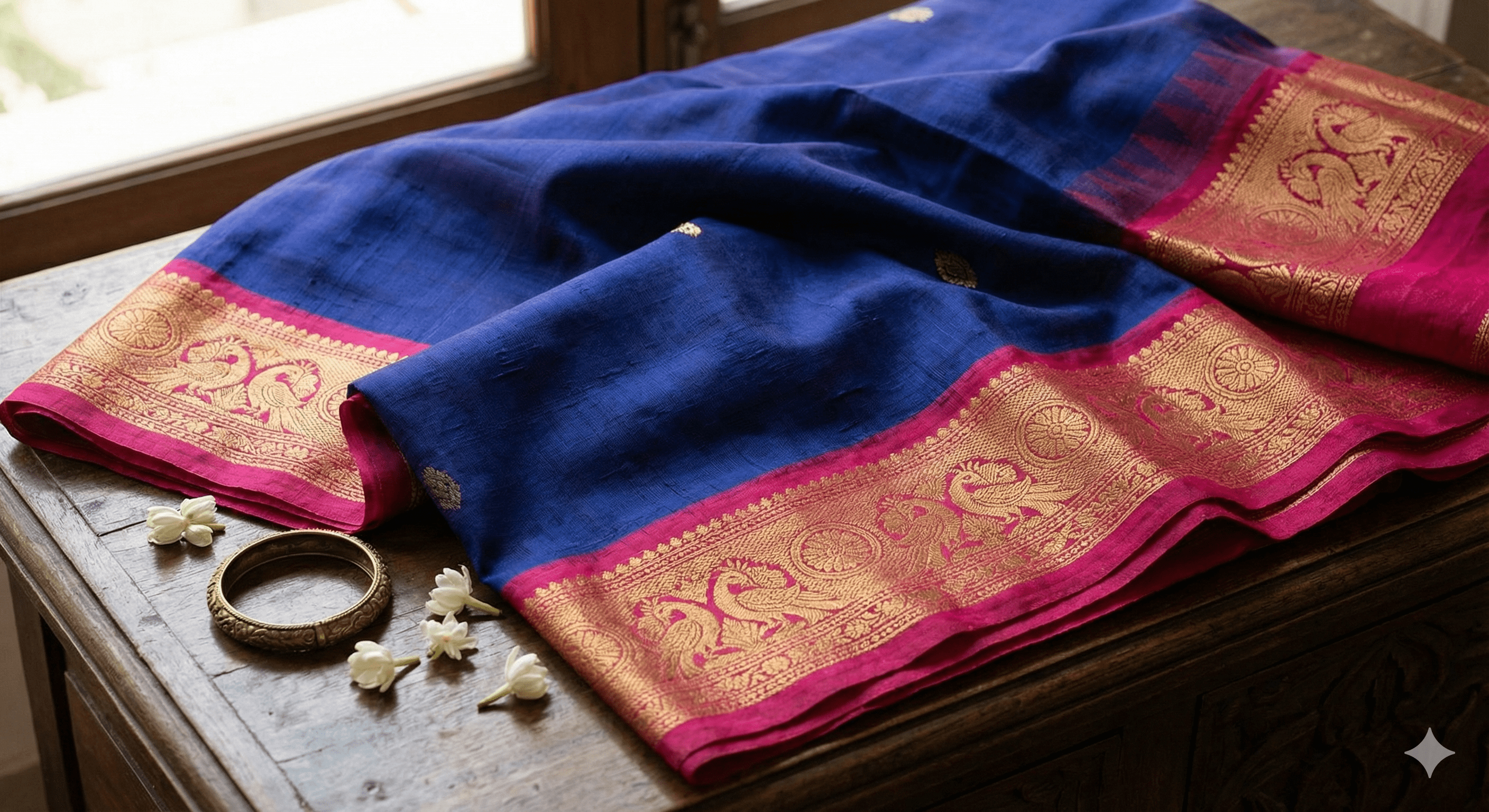
Silk is not merely fabric—it is India’s living heritage. Each thread carries stories of artisans, traditions, rituals, and royal elegance. From ancient kingdoms to modern fashion houses, silk continues to represent luxury, culture, and timeless beauty.
To wear silk is to wear history, craftsmanship, and royalty—woven together in a fabric that will forever define Indian tradition.
Comments (0)
Leave a Thought
No comments yet. Be the first to share your thoughts!