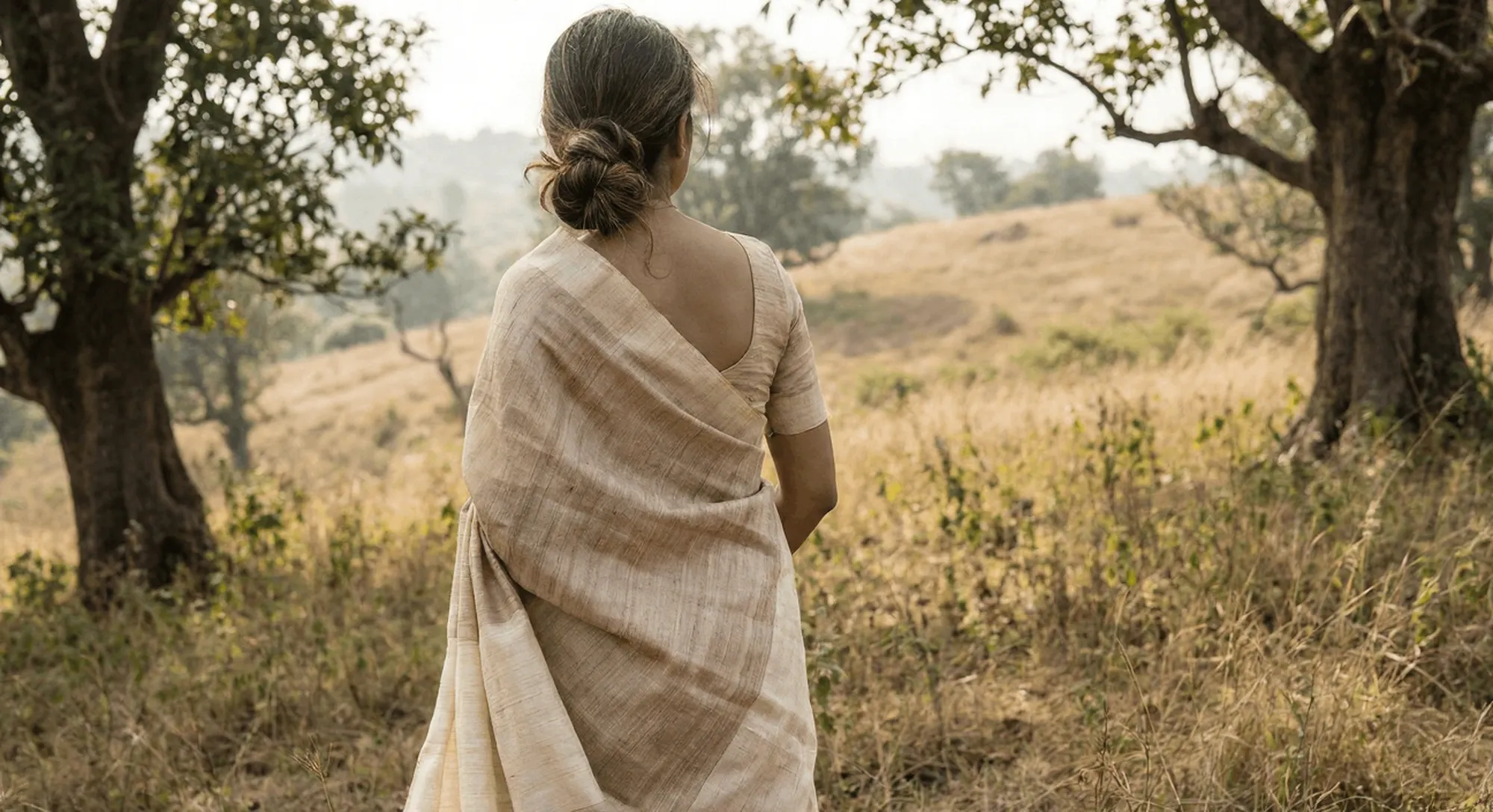
Introduction: Why Eri Silk Deserves Your Attention
In today’s conscious fashion world, buyers are no longer looking only for shine or luxury. They want ethics, comfort, durability, and cultural value. This is where Eri Silk, often called Ahimsa Silk or Peace Silk, stands apart from all other silks in India.
Eri silk is not just a fabric. It is a philosophy of non-violence, slow fashion, and sustainable livelihood for thousands of weaving families, especially in Assam, Meghalaya, Arunachal Pradesh, and parts of Central and Eastern India.
This blog is written for:
- Conscious buyers looking for ethical silk alternatives
- Designers & boutique owners sourcing sustainable fabrics
- Handloom learners and exporters understanding niche silks
- Daily silk wear customers who want comfort over shine
This guide will help you:
- Understand what makes Eri silk different from other silks
- Learn its history and cultural roots
- Identify genuine Eri silk in the market
- Choose the right use and care method
History & Origin: The Birth of Ahimsa Silk
What Makes Eri Silk “Ahimsa” (Non-Violent)?
Unlike Mulberry or Tussar silk, Eri silk is produced without killing the silkworm. The silkworm (Samia ricini) feeds on castor leaves and is allowed to complete its life cycle before the cocoon is processed.
This practice aligns with:
- Gandhian philosophy
- Buddhist and Jain principles
- Tribal ethics of North-East India
Regional Roots of Eri Silk
Assam – The Heartland
Eri silk has been woven in Assam for centuries and is traditionally known as “Endi” or “Errandi” silk. It is deeply linked with:
- Assamese households
- Winter shawls and wraps
- Daily-use silk garments
Meghalaya & Arunachal Pradesh
Tribal communities weave Eri silk into:
- Shawls
- Stoles
- Traditional attire for rituals
Expansion to Other Regions
In recent decades, Eri silk weaving has also spread to:
- Parts of West Bengal
- Select Central Indian clusters working with sustainable textiles
Types & Variations of Eri Silk
Eri silk is not glossy like Banarasi or Mulberry silk. Its beauty lies in softness, warmth, and matte elegance.
1. Pure Eri Silk
- Texture: Soft, wool-like
- Finish: Matte, non-shiny
- Use: Shawls, sarees, kurtas
2. Eri Cotton Blend
- Lighter and more breathable
- Ideal for summer wear
- Popular for daily ethnic wear
3. Eri Wool Blend
- Extra warmth
- Used in winter stoles and jackets
4. Natural Dyed Eri Silk
- Dyed using indigo, turmeric, lac
- Preferred in sustainable fashion markets
How Eri Silk Differs from Other Silks
| Feature | Eri Silk | Mulberry Silk | Tussar Silk |
|---|---|---|---|
| Shine | Matte | High gloss | Moderate |
| Feel | Soft, warm | Smooth, cool | Slightly coarse |
| Ethics | Non-violent | Silkworm killed | Silkworm killed |
| Season | All-weather | Summer-heavy | Winter-friendly |
| Use | Daily to formal | Bridal, luxury | Ethnic, formal |
How to Identify Pure & Authentic Eri Silk
1. Touch & Feel Test
- Feels warm, not cool
- Slightly heavy but breathable
2. Visual Appearance
- No artificial shine
- Natural uneven texture
3. Burn Test (Expert Level)
- Smells like burning hair
- Leaves soft ash (not plastic bead)
4. Weave Clues
- Handloom Eri silk has slight irregularities
- Powerloom versions look too uniform
Common Market Tricks
- Polyester blends sold as “soft silk”
- Chemical finishing to mimic smoothness
- Mixing Eri with acrylic fibers
Uses & Occasions: Where Eri Silk Truly Shines
Daily Wear
- Eri silk sarees for long office hours
- Comfortable kurtas and dupattas
Winter & All-Season Wear
- Shawls, wraps, stoles
- Ideal for Indian winters without heaviness
Ethical & Sustainable Fashion
- Preferred by eco-conscious designers
- Export demand in Europe and Japan
Spiritual & Minimalist Dressing
- Temple visits
- Meditation and wellness clothing
Care & Maintenance: Made for Real Life
One of Eri silk’s biggest advantages is easy maintenance.
Washing
- Hand wash in cold water
- Mild detergent only
- Do not wring
Drying
- Dry in shade
- Avoid harsh sunlight
Ironing
- Medium heat
- Iron while slightly damp
Storage
- Fold and store in cotton cloth
- No need for heavy moth repellents
Common Myths & Buying Mistakes
- Eri silk is rough – ❌ (It softens with use)
- It is only for winter – ❌
- Matte silk is low quality – ❌
- All Eri silk is handloom – ❌
- It should be very cheap – ❌
Comments (0)
Leave a Thought
No comments yet. Be the first to share your thoughts!