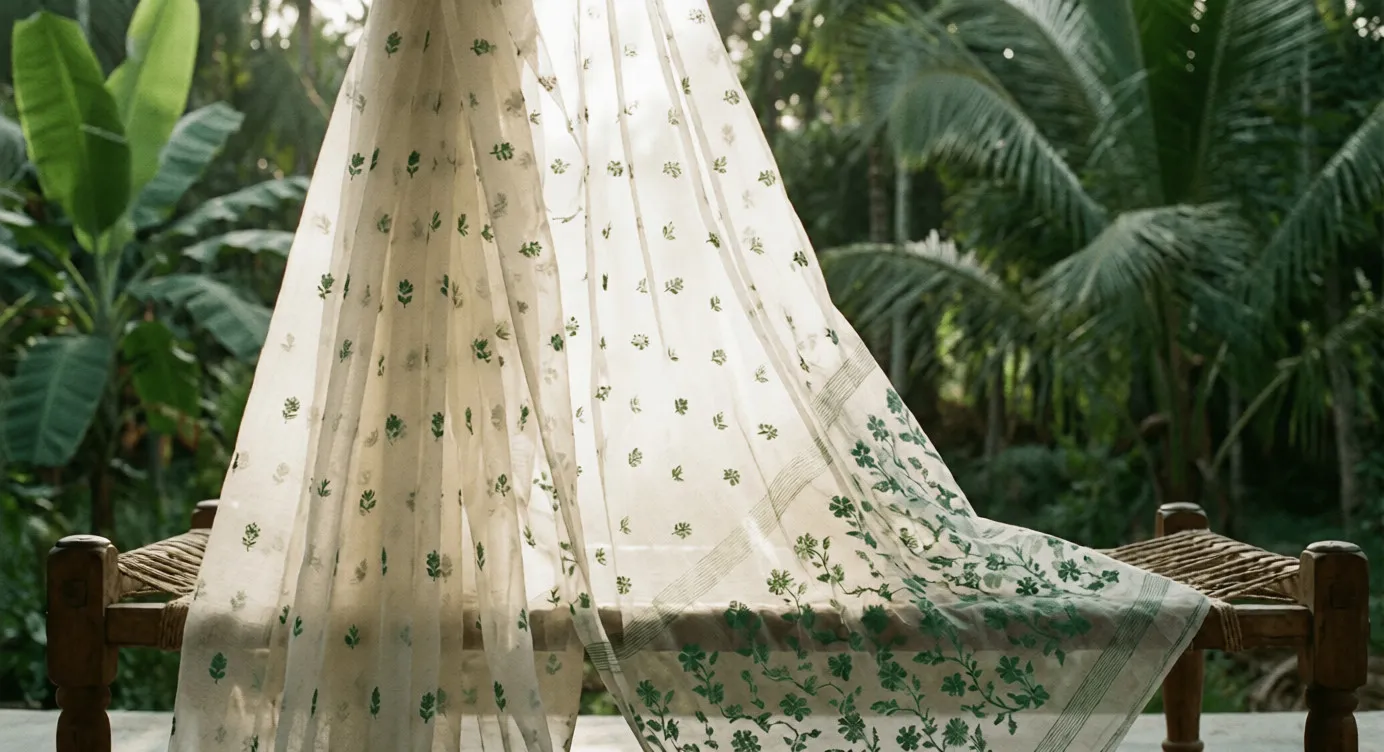
Introduction: Why People Search for East Indian Ethnic Wear Fabrics
If you are searching for East Indian ethnic wear fabrics, you are most likely trying to understand what fabrics originate from Eastern India, how they differ from North and South Indian textiles, which ones are authentic, and which fabric suits weddings, festivals, or daily ethnic wear.
Having worked closely with weaving clusters in West Bengal, Odisha, Bihar, and Assam, and having sourced fabrics directly from Shantiniketan, Sambalpur, Murshidabad, Bhagalpur, and Sualkuchi, I can confidently say that East Indian fabrics are among the most artistic and soulful textiles in India.
Eastern Indian fabrics are defined by hand-dyeing, storytelling motifs, natural fibers, and deep cultural symbolism. These are fabrics that feel alive—each piece carries the weaver’s rhythm, regional identity, and centuries of tradition.
This guide will help you understand their history, types, authenticity checks, uses, and care, so you can buy and wear them with knowledge and respect.
History and Cultural Origins of East Indian Fabrics
Eastern India has one of the oldest textile traditions in the world, dating back to ancient trade routes with Rome, Southeast Asia, and China.
Key historical influences include:
- River-based civilizations (Ganga, Brahmaputra, Mahanadi) that supported cotton and silk production
- Buddhist and tribal influences that shaped minimalist and symbolic designs
- Temple and folk traditions that inspired storytelling motifs
- British colonial trade that popularized muslin, tussar, and baluchari globally
Unlike the grandeur-driven textiles of North India or the ritual-heavy silks of the South, East Indian fabrics focus on artistry, comfort, and narrative weaving.
Major Types of East Indian Ethnic Wear Fabrics
1. Bengal Handloom Cotton & Tant (West Bengal)
Tant is one of the most widely worn East Indian fabrics, especially for daily and festive wear.
Key characteristics:
- Lightweight, breathable cotton
- Crisp texture suitable for humid climate
- Woven borders and pallus
- Floral, paisley, or geometric motifs
Tant sarees are deeply rooted in Bengali daily life and festivals like Durga Puja.
2. Baluchari Silk (West Bengal)
Baluchari is a heritage silk known for its storytelling pallus, often depicting mythological scenes.
Key characteristics:
- Silk base with elaborate woven narratives
- Motifs inspired by Ramayana, Mahabharata, and royal life
- Used mainly for ceremonial wear
This fabric once dressed royalty and is now considered a cultural treasure.
3. Tussar (Tasar) Silk (West Bengal, Jharkhand, Bihar)
Tussar silk is one of Eastern India’s most important contributions to Indian textiles.
Key characteristics:
- Produced from wild silkworms
- Naturally textured with a matte sheen
- Golden-beige base color
- Breathable and eco-friendly
It is widely used for sarees, dupattas, and ethnic suits.
4. Sambalpuri Ikat (Odisha)
Sambalpuri is a famous ikat fabric, where yarns are tie-dyed before weaving.
Key characteristics:
- Sharp geometric and traditional motifs
- Cotton or silk base
- Designs inspired by nature, temples, and tribal art
- GI-tagged textile
The precision required makes authentic Sambalpuri fabric highly valuable.
5. Bomkai Fabric (Odisha)
Bomkai is a blend of ikat and embroidery, traditionally worn during festivals and rituals.
Key characteristics:
- Cotton or silk base
- Borders with tribal-inspired motifs
- Rich yet wearable aesthetic
6. Bhagalpuri (Tussar) Silk (Bihar)
Bhagalpur is known as the “Silk City of India”.
Key characteristics:
- Tussar silk production
- Simple, earthy elegance
- Popular for sarees, stoles, and dupattas
7. Assam Silk (Muga, Eri, Pat – Assam)
Though often classified separately, Assam’s silks are culturally part of Eastern India.
Types:
- Muga silk – natural golden hue, extremely durable
- Eri silk – soft, warm, and ethical
- Pat silk – bright white, ceremonial
How to Identify Quality and Authenticity
1. Texture & Feel
- Authentic East Indian fabrics feel natural, never plastic-like
- Tussar silk has slight irregularities—this is a quality sign
2. Design Precision
- Ikat motifs should be sharp and symmetrical
- Blurred designs indicate powerloom or imitation
3. Natural Color Tones
- Original fabrics use earthy, muted shades
- Overly bright colors often indicate chemical dyes
4. GI Tags & Weaver Labels
- Sambalpuri, Baluchari, Bhagalpuri often carry authenticity tags
Uses and Occasions
| Fabric | Best Uses |
|---|---|
| Tant Cotton | Daily wear, festivals |
| Baluchari Silk | Weddings, cultural ceremonies |
| Tussar Silk | Festive wear, office ethnic |
| Sambalpuri | Traditional events, gifting |
| Bomkai | Festivals, rituals |
| Assam Silk | Weddings, formal functions |
Care and Maintenance Tips (From Experience)
- Always dry clean silk fabrics
- Store silk wrapped in cotton or muslin cloth
- Avoid plastic covers to prevent moisture damage
- Cotton fabrics can be hand-washed in cold water
- Refold sarees every few months to avoid crease damage
Common Myths and Buying Mistakes
Myth 1: East Indian fabrics are simple and plain
Reality: Many have complex storytelling and advanced weaving techniques.
Myth 2: Tussar silk is low quality
Reality: It is one of the most sustainable and durable silks.
Common Mistake:
Buying ikat fabric without checking pattern alignment on both sides.
Comments (0)
Leave a Thought
No comments yet. Be the first to share your thoughts!