
Introduction: Understanding Crepe Before You Buy
Crepe fabric is not just a “flowy material” used in sarees or dresses. It is a fabric structure defined by yarn twist, surface tension, and finishing methods. Many buyers select crepe based only on appearance, which often results in wrong seasonal choice, poor durability, or discomfort.
If you are a:
- Fabric buyer or retailer
- Fashion designer or tailor
- Textile student
- Website owner creating a fabric knowledge base
this blog will help you understand crepe scientifically yet simply, so you can choose, explain, and use it correctly.
History & Regional Background of Crepe Fabric
The term crepe originates from the French word crêpe, meaning crinkled or curled. Originally woven using silk in Europe, crepe was valued for its matte elegance and refined texture, often worn for formal and ceremonial garments.
Crepe in the Indian Textile Context
Crepe entered India during the colonial period and was later adapted by Indian weavers using silk, rayon, and synthetic fibers to suit tropical climates and local fashion.
Major Indian Crepe Production Regions:
- Karnataka (Bangalore, Ramanagara): Pure silk crepe sarees
- Surat (Gujarat): Polyester crepe, blended crepe
- Varanasi: Silk crepe with zari work
- Tamil Nadu: Crepe blends for sarees and salwar suits
Fiber Composition & Weaving Techniques
Crepe is not defined by fiber alone. The defining factor is high-twist yarn engineering.
Fibers Used in Crepe Fabric
- Silk: Natural, breathable, luxurious
- Rayon (Viscose): Semi-natural, soft, affordable
- Polyester: Strong, wrinkle-resistant
- Wool: Elastic, structured
- Blends: Balanced cost and performance
How Crepe Texture Is Created
Crepe fabric uses yarns twisted much tighter than normal yarns. These yarns are alternated between:
- S-twist (left twist)
- Z-twist (right twist)
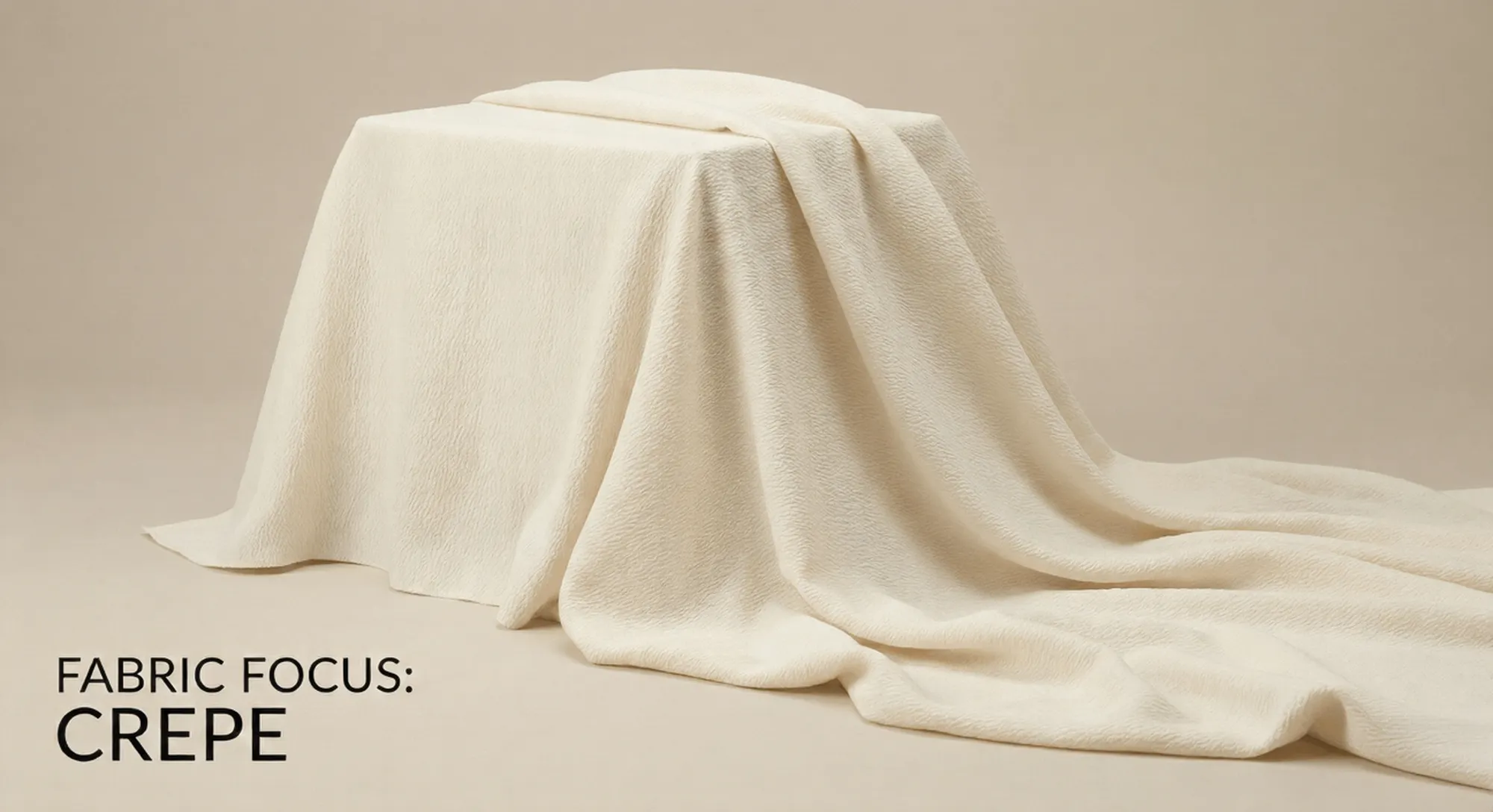
When woven together, these opposing twists create internal tension, producing the signature crinkled or pebbled surface.
Weaving & Finishing
- Plain weave with high-twist yarns
- Controlled shrinkage process
- Degumming (silk crepe)
- Heat setting (polyester crepe)
Types of Crepe Fabric (Detailed Explanation)
1. Silk Crepe
- Made from pure silk filament
- Soft matte finish
- Excellent drape and breathability
- Used in premium sarees and gowns
2. Crepe de Chine
- Smoothest crepe variety
- Subtle grain, lightweight
- Ideal for dresses, blouses, scarves
3. Georgette Crepe
- Higher twist than normal crepe
- Slightly sheer and grainy
- Perfect for layered garments
4. Polyester Crepe
- Uniform texture
- High durability and wrinkle resistance
- Best for daily and office wear
5. Wool Crepe
- Elastic and resilient
- Holds structure well
- Used in suits and winter wear
Fabric Performance Comparison
| Property | Silk Crepe | Rayon Crepe | Polyester Crepe |
|---|---|---|---|
| Breathability | High | Medium | Low |
| Drape | Excellent | Very good | Good |
| Durability | Medium | Medium-Low | High |
| Maintenance | High care | Medium | Low |
| Cost | High | Medium | Low |
Quality Parameters & Authenticity Tests
Quality Parameters
- Uniform crepe texture
- Natural recovery after crushing
- Even dye penetration
- Balanced fabric weight
Simple Authenticity Tests
- Burn Test:
Silk smells like burnt hair; polyester melts - Crush Test:
Quality crepe regains texture - Touch Test:
Silk feels cool initially
Comfort, Durability & End-Use Performance
Comfort
- Reduced cling due to textured surface
- Good airflow in silk and rayon crepe
- Suitable for Indian climates
Durability
- Polyester crepe lasts longest
- Silk crepe needs careful handling
- Rayon crepe weaker when wet
Use Cases
- Sarees and dupattas
- Kurtis and dresses
- Indo-western wear
- Office wear
- Formal suits (wool crepe)
Care & Maintenance (Fabric Science Based)
- Washing
- Silk: Dry clean
- Rayon: Hand wash cold
- Polyester: Gentle machine wash
Drying
- Shade dry
- Avoid wringing
Ironing
- Low heat
- Steam preferred
Storage
- Fold, do not hang
- Use breathable fabric covers
Common Technical Myths About Crepe
- Crepe is always synthetic – ❌
- Crepe wrinkles badly – ❌
- Crepe cannot be embroidered – ❌
Crepe performance depends on fiber + twist + finishing, not assumptions.
Comments (0)
Leave a Thought
No comments yet. Be the first to share your thoughts!